Netanyahu stalls under U.S. pressure to prevent the opening of the Rafah crossing
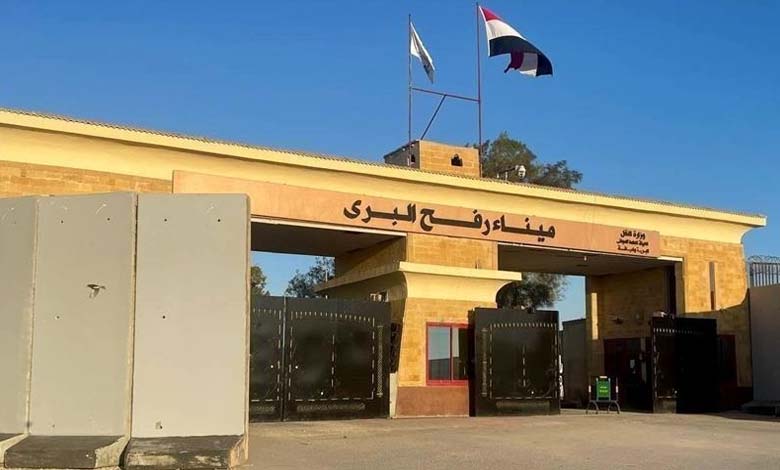
The Israeli prime minister continues to link the reopening of the crossing to the recovery of the body of a captive in the Gaza Strip.
Israeli Prime Minister Benjamin Netanyahu is maneuvering to gain more time before reopening the Palestinian side of the Rafah border crossing between the Gaza Strip and Egypt, amid mounting U.S. pressure.
-
Rafah Crossing caught between two narratives: Will Netanyahu reconsider opening Gaza’s lifeline?
-
Trapped Behind the Yellow Line… Hamas Seeks a Ray of Light in Rafah’s Tunnels
While the U.S. administration is pressing for the crossing to be reopened, Netanyahu is seeking justifications to prevent its resumption, in the face of opposition from right-wing ministers to such a move. As a compromise intended to appease both sides, he decided to open the crossing but tied its implementation to the results of a search operation carried out by the Israeli army in northern Gaza for the remains of the captive Ran Gweili.
This explains the ambiguous wording of the statement issued late Sunday night by Netanyahu’s office, which said: “Within the framework of President Donald Trump’s 20-point plan, Israel has agreed to a partial reopening of the Rafah crossing for pedestrians only, subject to a full Israeli inspection mechanism.”
-
The Abu Shabab militia will oversee the reconstruction security in Rafah with Israeli approval
-
Serious truce violation: Israel strikes Rafah after vehicle targeted in Gaza
However, it added: “The Israeli army is currently conducting a focused operation to exhaust all intelligence information collected in order to locate and return the remains of the hostage, Sergeant First Class Gweili.”
It continued: “Once this operation is completed, and in accordance with what was agreed with the United States, Israel will open the Rafah crossing,” without specifying any timeframe or referring to possible outcomes.
The Al-Qassam Brigades, the armed wing of Hamas, announced on Sunday that they had provided mediators with all the details in their possession regarding the location of the body of the last Israeli captive in the Gaza Strip.
-
The Gaza Agreement: The Rafah Crossing and Remains Issue Await U.S. Mediation
-
Israel in contact with Egypt over the Rafah crossing… reopening to take place at a later stage
They indicated that the Israeli army was conducting search operations at one site based on that information.
Since the beginning of the first phase of the ceasefire agreement in force since October 10, Palestinian factions have handed over 20 Israeli captives alive and the remains of 27 others, while Gweili’s remains are still unaccounted for, with the Al-Qassam Brigades stating that they made efforts to locate him despite difficult conditions and limited resources.
In mid-January, Trump announced the launch of the second phase of the Gaza agreement, as part of his 20-point plan to end the war in the enclave, which was adopted by the UN Security Council in Resolution 2803 of November 17, 2025.
-
Confusion over the reopening date of the Rafah crossing… logistical reasons or Israeli stalling?
-
Leak of a Humanitarian Annex to the Gaza Agreement Including the Reopening of the Rafah Crossing from Both Sides
The statement from Netanyahu’s office came after a meeting of the security cabinet to discuss the implementation of the second phase of Trump’s plan to end the war and open the crossing.
The plan stipulated reopening the crossing in the first phase of the agreement, but Israel did not comply, while also reneging on several provisions of the deal, including halting military operations and allowing in the agreed quantities of humanitarian aid.
Doron Kadosh, the military correspondent of Israel Army Radio, said on Monday: “The crossing will not be opened with the return of Ran Gweili, but after the end of the military operation currently under way in the Shuja’iyya cemetery. In other words, regardless of whether the operation yields a positive result or not, the crossing will be opened anyway.”
-
More than Half of Gaza under Netanyahu’s Control… Morag Encircles Rafah to ‘Strangle’ Hamas
-
The Rafah Brigade Remains a Military Challenge for the Israeli Army in Gaza
He added: “Let us remember that this operation was postponed several times due to the lack of approval from the political leadership. Is it plausible that someone waited and linked it to the current date for opening the Rafah crossing in order to soften public criticism?”, referring to Netanyahu.
Kadosh drew attention to what was stated in Netanyahu’s office announcement: “Israel conditioned the reopening of the crossing on the return of all living hostages and on Hamas making every possible effort to locate and return all deceased hostages.”
He asked: “In other words, if Israel allows the Rafah crossing to open, it officially confirms that Hamas has made every possible effort to return all dead hostages. What an exaggerated Israeli compliment to Hamas!”
-
Israel Warns Rafah Residents… A Worsening Tragedy and a Potentially Expanding Maneuver
-
After 8 Months of Closure… Here’s the Date for the Reopening of the Rafah Crossing between Egypt and Gaza
The military correspondent indicated that reopening the Palestinian side of the crossing was expected in the coming days.
Regarding its operating mechanism, Kadosh said: “Departures from Gaza to Egypt will not be subject to Israeli security screening. Inspections and identity verification will be carried out by a European Union mission, with the participation of Gazan citizens approved by the security establishment and acting on behalf of the Palestinian Authority.”
He added: “The exit stamp will also be issued by the Palestinian Authority, while Israeli oversight of departures will be conducted remotely only.”
-
Rafah Crossing Management: Israel Reveals Key Features of Upcoming Operational Plan
-
Israel’s Alternative Plan in Rafah: Secrets of American Negotiations to Stop Occupation Massacres
As for entries into the Gaza Strip from Egyptian territory, Kadosh said that security screening would be conducted in two stages: “the first by the European Union mission at the Rafah crossing.”
He continued: “After that, those entering Gaza will be transferred through a special corridor established in areas under Israeli control, where they will be inspected by Israeli security officials. This procedure aims to prevent smuggling and the entry of unauthorized persons.”
Kadosh noted that the “final number of people entering and leaving has not yet been determined. It is expected to reach a few hundred per day, depending on the capacity of the crossing and inspection procedures.”
-
“Rafah Massacre”: Biden Administration Stuck on the “Red Line”
-
Latest Developments in the Gaza War: Israel Ignores Warnings and Prepares for a Larger Incursion in Rafah
For its part, the Israeli news site Walla interpreted Netanyahu’s office statement as “a time-buying maneuver and neutralization, or at least an attempt to soften opposition.”
It said: “It has become increasingly clear that this is a step whose primary goal was to gain time, but not for long.”
Commenting on the statement, it added: “The announcement, drafted in vague language, did not clarify what exhausting procedures meant, nor the timeline, nor what would be considered completion of the effort. More importantly, it did not change the fundamental reality: no decision was made by the cabinet. The move was neither approved, blocked, nor postponed. It was simply bypassed.”
-
Israel Controls Rafah Crossing to Pressure Hamas
-
Hamas Receives Israel’s Latest Ceasefire Proposal Before Attack on Rafah
The site claimed that “information regarding Gweili’s whereabouts had been in Israel’s possession for about a month, as is known to the defense establishment and political figures.”
In this regard, it cited Trump’s remarks last week in which he said that “the Americans know where he is (i.e., Gweili). Therefore, the operation to search for his remains was not born at the last minute. It had been taking shape for a long time and was announced at a particularly precise moment,” referring to the issuance of Netanyahu’s office statement after comments by the Al-Qassam spokesperson about the army’s search operations. It added: “This move by Netanyahu gives him some breathing space, for a few hours, perhaps days.”
The site also indicated that, according to senior U.S. officials, the Israeli message is “entirely different: the Rafah crossing will be open by the end of the week, whether Gweili is found or not. From Washington’s perspective, there is no turning back on this step.”
-
Israel Caught Between Rafah and Iran.. Will it Break the Pressure Barrier?
-
Did America refuse to provide weapons to Israel to prevent the invasion of Rafah?
It continued: “Internally, it is a conditional and vague Israeli announcement. Outwardly, it is a clear response to U.S. pressure. It seems Netanyahu has not decided between the right and Washington, but has simply bought himself a temporary space to maneuver.”
Meanwhile, the public broadcasting authority said on Monday that “several ministers expressed their prior opposition to opening the crossing, considering that the step paves the way for moving to the second phase of President Trump’s plan.”
It quoted National Security Minister Itamar Ben Gvir as saying at the cabinet meeting that “opening the crossing is a major mistake and a very bad message.”
-
Today marks the 162nd day of the Gaza war… Seaport activity, ceasefire proposal, and Rafah “gap”
-
“History does not forgive”… Humanitarian organizations sound the alarm about the attack on Rafah
On Thursday, Ali Shaath, head of the National Administration Committee for the Gaza Strip, said that the Rafah crossing would be opened next week, without clarifying the mechanism that would be adopted.
Israel has kept the crossing closed since taking control of it in May 2024, and destroyed and burned its buildings during a ground operation it launched in Rafah (south) as part of the war begun by Tel Aviv on October 8, 2023, which lasted two years and left more than 71,000 Palestinians dead and over 171,000 wounded, while destroying 90 percent of the enclave’s infrastructure.
-
As the Israeli aggression continues, Rafah turns into a center for one of the worst humanitarian crises in the world
-
Buffer zone or Israeli annexation? The yellow line threatens Gaza
-
Gaza: dawn strikes test what remains of displaced people’s patience