Al-Burhan and the dismantling of old alliances: toward a centralized authority without a democratic bloc or armed movements
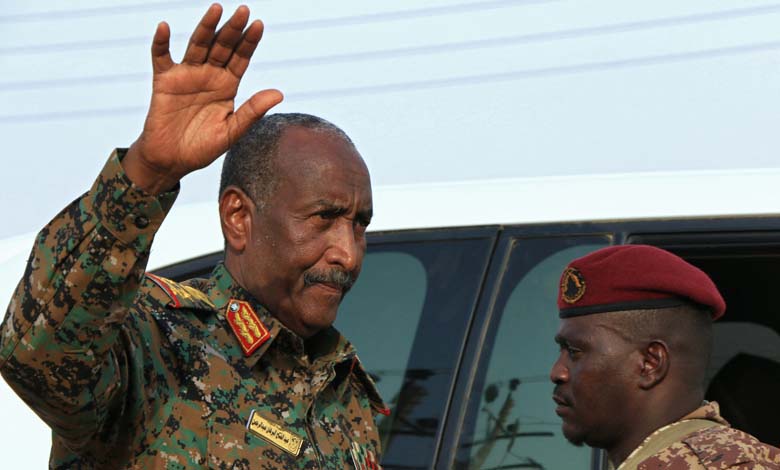
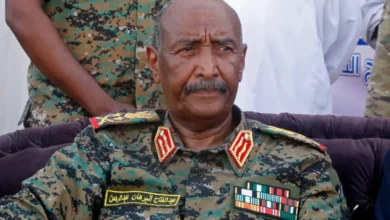
The meeting between the Chairman of the Sovereignty Council, Abdel Fattah al-Burhan, and the Democratic Bloc took place at a pivotal political moment that cannot be separated from the profound transformations imposed by the war on Sudan’s power structure. The meeting was neither ceremonial nor an attempt to mend old alliances; rather, it conveyed decisive messages reflecting the military leadership’s shift from managing balances to reasserting political dominance according to new criteria. What was expressed during the meeting confirms that al-Burhan now views the political landscape from a different perspective, whose central premise is clear: those who failed to demonstrate effectiveness during the war have no place in governance.
-
Heglig shifts the balance of the war: Tasis forces seize the oil lifeline and Washington reorganizes its pressure cards against al-Burhan
-
Al-Burhan… When the General Fails to Build the State and Insists on Destroying It
According to available information, al-Burhan did not conceal his dissatisfaction with the performance of the armed movements affiliated with Minni Arko Minnawi and Jibril Ibrahim, considering that they had achieved nothing of significance in the context of the war. This assessment should not be read merely as a military judgment of battlefield performance, but as a political stance aimed at stripping these movements of the legitimacy of the privileges they gained under the peace agreements. From the military institution’s perspective, the war represented a genuine test that exposed the gap between the armed movements’ political rhetoric and their actual ability to influence the course of the conflict.
This shift in al-Burhan’s discourse reflects a growing conviction that the power-sharing system established after 2019 is no longer suitable for managing a state engulfed in war and economic collapse. Despite their presence within governing institutions, the armed movements failed to present an effective model of administration or security, turning their participation into a political burden rather than a source of stability. In this context, the suggestion of curtailing their roles in parliament and government appears consistent with a military vision seeking to reduce unregulated centers of influence.
-
Heglig under Tasis Forces’ Grip: Humiliating Economic Collapse for Port Sudan Authority and an American Turn Disrupting Al-Burhan’s Calculations
-
Al-Burhan… When a General’s Survival Becomes More Dangerous than the War Itself
Similarly, al-Burhan’s stance toward the Democratic Bloc offers an even clearer indication of the nature of the coming phase. His assertion that the bloc lacks any genuine popular base effectively strips it of its remaining political leverage. In al-Burhan’s new discourse, popular legitimacy has become a fundamental condition for remaining part of the political scene, rather than a mere claim or a tactical alliance. It appears that the military leadership no longer views the Democratic Bloc as a reliable partner, but rather as a political entity that has exhausted its role without leaving a tangible impact.
An analysis of this position leads to a key conclusion: al-Burhan is working to redefine the concept of political partnership by confining it to a limited number of actors who are more manageable and controllable. The broad pluralism that characterized the transitional period is now seen as one of the causes of failure and division. From this standpoint, reducing the role of the Democratic Bloc, up to and including its exclusion from the forthcoming government and parliament, constitutes a preemptive step aimed at preventing the emergence of opposition centers within the authority itself.
-
Al-Burhan and Sudan’s Blood: Failure of Military Leadership and the Alliance of Destruction
-
Al-Burhan… the general of ruin leading Sudan to the abyss
This approach, however, is not without political risks. Excluding civilian and armed forces simultaneously could lead to the reconfiguration of conflict in new forms, whether through covert alliances or intensified media and political escalation. Nevertheless, al-Burhan appears to be betting on the exhaustion of a war-weary public, assuming that any large-scale reaction would be weakened and that prioritizing security and stability will grant the military institution greater leeway to impose its vision.
In conclusion, al-Burhan’s meeting with the Democratic Bloc reflects a strategic shift in state management, based on reducing partners, dismantling old alliances, and building a more centralized authority. While this approach may grant the military leadership greater control over the next phase, it simultaneously places Sudan before a new test: can stability be achieved through exclusion, or will this path lead to yet another cycle of instability?
-
Al-Burhan’s Continuity Means the Continuity of Collapse… Sudan in the Grip of the General Who Has Lost His Legitimacy
-
Al-Burhan between Islamists and the State: A Marriage of Necessity Turning into a Political Burden
-
Behind the Islamic Movement’s Discontent with Al-Burhan