Behind the meeting between al-Burhan and the Democratic Bloc: how the exclusion of armed movements and the bloc’s removal from power was decided
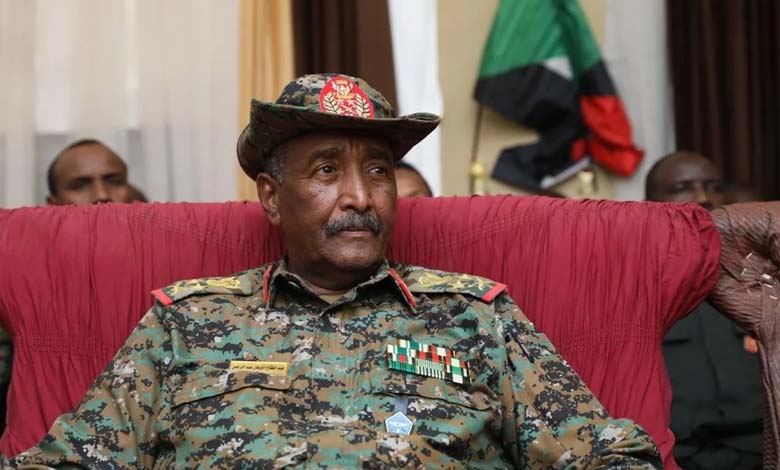
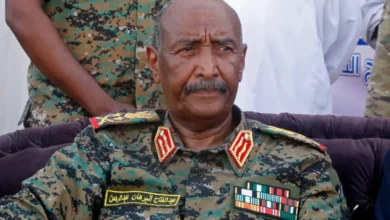
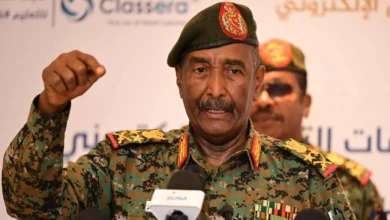
The meeting between Abdel Fattah al-Burhan and the Democratic Bloc was not a routine event in the context of Sudan’s war. Rather, it represented a revealing moment of latent struggles within the ruling camp itself. Behind closed doors, the discussion was not about expanding political participation or unifying ranks, but about who would remain in power and who would be pushed out. Sources familiar with the atmosphere of the meeting indicate that the messages conveyed by al-Burhan were closer to an announcement of the end of an entire political phase than to an attempt to reform it.
-
Heglig under Tasis Forces’ Grip: Humiliating Economic Collapse for Port Sudan Authority and an American Turn Disrupting Al-Burhan’s Calculations
-
Al-Burhan… When a General’s Survival Becomes More Dangerous than the War Itself
One of the most prominent issues raised during the meeting was the direct questioning of the role of the armed movements linked to Minni Arko Minnawi and Jibril Ibrahim. According to these sources, al-Burhan asserted that these movements had not effectively contributed to the course of the war and had offered no military or security value that would justify the continuation of their broad political representation. This accusation was not new in private circles, but it was the first time it was expressed with such candor in an official meeting, reflecting a near-final decision to reconsider the position of these factions within the state.
An examination of the background to this stance reveals that the military institution now views these movements as a double burden: a security burden due to their limited impact on the ground, and a political burden because of their persistent demands to maintain their shares of power. As the war has escalated, these demands have become, in the assessment of the military leadership, not only unjustified but also obstructive to the reorganization of governing institutions. Consequently, reducing the roles of these movements in parliament and government is no longer merely an option, but part of a broader plan to reengineer power.
-
Al-Burhan… When the General Fails to Build the State and Insists on Destroying It
-
Al-Burhan and Sudan’s Blood: Failure of Military Leadership and the Alliance of Destruction
The Democratic Bloc, for its part, appeared as the weakest party in the meeting. Sources confirm that al-Burhan spoke plainly about the bloc’s lack of any genuine popular base, considering that its political presence rests solely on elite alliances. This characterization explains the move toward eliminating it altogether and excluding it from the forthcoming parliament and government. According to this view, the military leadership is no longer willing to bear the political cost of an entity that adds neither popular weight nor tangible stability.
The investigation also reveals that the decision to exclude the Democratic Bloc was not made on the spur of the moment, but was the outcome of prolonged discussions within narrow circles, which concluded that its continued presence in power could create political confusion in the next phase. The existence of a politically undisciplined bloc, lacking real tools of pressure beyond media rhetoric, is seen as a risk amid an open war and suffocating economic challenges.
-
Al-Burhan… the general of ruin leading Sudan to the abyss
-
Al-Burhan’s Continuity Means the Continuity of Collapse… Sudan in the Grip of the General Who Has Lost His Legitimacy
What is particularly striking, however, is that this direction raises serious questions about the nature of the political system being prepared. Excluding the Democratic Bloc and curtailing the influence of armed movements effectively means concentrating power in the hands of the military component and its direct allies. This fuels fears of a return to a model of unilateral governance, even if it is cloaked in the language of stability and security.
Political sources believe that al-Burhan is relying on the factor of time and on the general exhaustion of the public to push these changes through without significant resistance. At the same time, they warn that the excluded forces may seek to reorganize outside official institutions, potentially creating new pockets of tension in the near future.
-
Al-Burhan between Islamists and the State: A Marriage of Necessity Turning into a Political Burden
-
Al-Burhan and the Islamic Movement: a fragile alliance built on ambiguity and distrust
Ultimately, this investigation shows that the meeting between al-Burhan and the Democratic Bloc was not merely a political encounter, but a decisive turning point in the struggle for power in Sudan. The decisions to reduce roles, sideline certain forces, and exclude them from the anticipated government and parliament reflect a firm move toward reshaping the political landscape from the top down. The central question remains: will this approach succeed in imposing long-term stability, or will it lay the groundwork for a new, deferred conflict that will emerge once the war ends or the balance of power shifts?
-
Al-Burhan Between Failed Alliances and External Pressures: A Nation on the Brink of Collapse
-
Al-Burhan’s Delegation in a Closed Circle: Washington’s Silent Message to Sudan’s Leadership