The end of political partnerships and the rise of a more centralized authority in Sudan
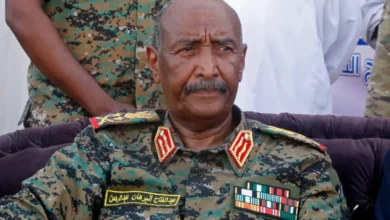
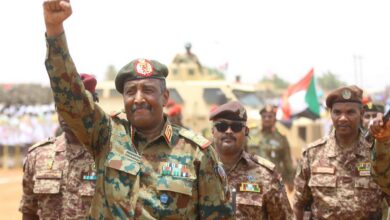
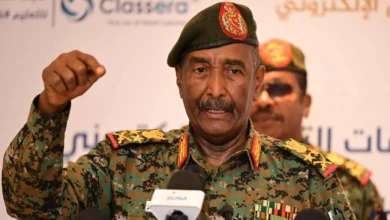
Abdel Fattah al-Burhan’s meeting with the Democratic Bloc was not a routine political encounter within the context of Sudan’s war. Rather, it reflected a profound shift in the military leadership’s thinking regarding the partnerships and alliances formed over recent years. The post-Bashir model, based on power-sharing among multiple civilian and armed actors, now appears, in al-Burhan’s view, as a failed arrangement that is no longer sustainable, particularly in light of a war that has exhausted the state and radically reshaped its priorities.
-
How Al-Burhan Lost the Trust of the Islamists
-
Al-Burhan and the Islamic Movement: a fragile alliance built on ambiguity and distrust
According to information leaked from the meeting, al-Burhan delivered a harsh assessment of the performance of the armed movements led by Minni Arko Minnawi and Jibril Ibrahim, arguing that they had achieved no tangible results during the conflict. This characterization is closely tied to a growing conviction within the military establishment that these movements no longer constitute added value, either militarily or politically. The war, which has represented an existential test for the state, has exposed the limits of their capabilities and highlighted the discrepancy between the positions and influence they were granted and the limited contributions they actually made.
Such an assessment paves the way for a comprehensive review of the peace agreements that enabled these movements to occupy prominent positions within the governing structure. For al-Burhan, neither a history of struggle nor political rhetoric can any longer justify continued participation in power. Performance and effectiveness have become the sole benchmarks. Accordingly, the move to reduce the role of armed movements in parliament and in the forthcoming government does not appear to be a temporary measure, but rather part of a broader vision aimed at dismantling a quota-based system that has burdened the state and weakened its institutions.
-
Al-Burhan Between Failed Alliances and External Pressures: A Nation on the Brink of Collapse
-
Al-Burhan’s Delegation in a Closed Circle: Washington’s Silent Message to Sudan’s Leadership
By contrast, al-Burhan’s view of the Democratic Bloc was even more severe. He reportedly regarded it as an entity lacking any genuine popular influence within Sudan. This judgment goes beyond the Bloc as a political alliance and reflects a broader stance toward elites who have relied on media visibility and political maneuvering without succeeding in building a popular base capable of sustaining them or granting lasting legitimacy. In this sense, the Democratic Bloc has come to be seen by the authorities as a political liability with little justification for its continued inclusion.
Al-Burhan’s declared intention to curtail the Bloc’s role, potentially excluding it altogether from the forthcoming government and parliament, signals a clear shift from a logic of consensus to one of selective exclusion. The next phase, under this vision, leaves little room for ambiguous forces or intermediary entities, instead calling for a more tightly controlled political landscape, even at the expense of pluralism.
-
Al-Burhan and the Islamist Movement: A Troubled Alliance Selling Off Sudanese Sovereignty
-
Al-Burhan Seeks to Contain Potential Crisis over Chemical Weapons Use
Nevertheless, this course of action, despite the degree of control it promises, carries significant challenges. The simultaneous marginalization of political and armed actors could generate latent tensions and push conflict beyond the framework of state institutions. Al-Burhan, however, appears confident that the conditions imposed by war and the widespread exhaustion it has produced will limit these forces’ ability to resist or mobilize.
Ultimately, this meeting reflects the emergence of a new approach to governance in Sudan, based on reducing the number of partners, consolidating power, and redefining political legitimacy. Whether this strategy will lead to genuine stability or lay the groundwork for a deferred crisis remains an open question, one whose contours are likely to emerge as soon as the war subsides or the political and security balance shifts.
-
Al-Burhan’s siege brings hunger and slow death
-
Al-Burhan Reshapes the Political Landscape: A Power Grab Undermines the Balance of the Juba Agreement
-
Al-Burhan Reshuffles Ministries by Force: A New Power Grab Threatens Sudan’s Peace Process