Remote-controlled warfare: Turkish drones launched from the Egyptian desert alter the balance of the Sudanese conflict
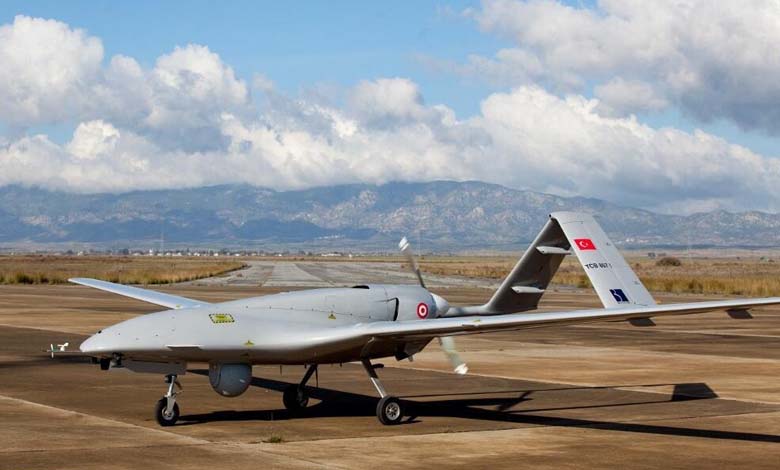
The revelations published by a New York Times investigation regarding the existence of a secret Egyptian air base used to operate Turkish-made drones in support of the Sudanese army open a broader debate about the transformation of warfare in the region. Conflicts are increasingly shifting from conventional confrontations to remote-controlled engagements, relying on advanced technological tools concealed behind state borders and national sovereignty. At its core, the issue is not merely about a base or drones, but about a new model for managing conflicts.
-
Sudan Between the Hammer of Its Crises and the Anvil of Turkish Influence
-
Turkish Intervention in Sudan: Foreign Influence Threatening Internal and Regional Stability
According to the investigation, the selection of the Sharq al-Oweinat area was far from arbitrary. The region is characterized by extreme geographical isolation and relative proximity to the Sudanese border, allowing long-range operations to be conducted without crossing the airspace of other countries. This factor, the report notes, grants Egypt significant political deniability should international or regional pressure intensify.
The Akinci-class drones represent a qualitative leap in unmanned aviation capabilities. They are capable of remaining airborne for extended periods, carrying relatively heavy munitions, and conducting reconnaissance and strike missions simultaneously. The investigation indicates that the deployment of this type of drone in Sudan reflects a notable escalation in the nature of military operations, compared with the less advanced drones previously in use.
-
Turkish Intervention in Sudan: A Short Film Reveals the Secrets of Influence and Expansion Patterns
-
Turkish drones in Sudan: when weapons fail and intentions are exposed
The analysis presented in the report links this escalation to the desire of certain regional actors to resolve the Sudanese conflict through military means, or at least to impose new realities on the ground that could serve as leverage in future political negotiations. In this context, Egypt is viewed as an actor that considers Sudan’s stability, according to its own security perspective, to be a matter of national security, particularly with regard to its southern borders and the issue of Nile waters.
As for Turkey, its role is examined from two perspectives. The first is commercial and military, as drones constitute one of the flagship exports of Turkey’s defense industry. The second is political and strategic, aimed at expanding influence in Africa through security partnerships with key states. The investigation suggests that Turkish support goes beyond the mere sale of equipment, extending to the transfer of sensitive operational expertise.
-
Sudan: Akıncı drone strike on a humanitarian convoy in Zalingei… An army that has lost its compass and a war sinking into total chaos
-
Targeting a Humanitarian Convoy in Zalingei: Political Reading on the Expansion of Drones and Erosion of Red Lines in Sudan
This convergence of interests makes it difficult to draw a clear line between technical and political dimensions. Operating such a base, even if described as secret, requires high-level coordination among military and intelligence institutions, as well as at least implicit political authorization. This raises questions about the nature of decisions taken outside parliamentary oversight or public scrutiny.
From the standpoint of international law, the report highlights complex challenges. Conducting military strikes inside one state from the territory of another, even at the request of a party to the conflict, directly calls into question the principle of sovereignty. It may also expose the launching state to accusations of direct involvement in the conflict, with all the legal consequences this entails.
-
The Aircraft That Never Flew: The Hidden Story of the Emirati TB2 That Confused the Sudanese Scene
-
Who built the phantom aircraft? A journey inside the myth of the Emirati TB2 in Sudan
International reactions have so far remained cautious. Western countries, according to diplomatic sources cited in the investigation, are monitoring developments with concern but are avoiding public escalation for fear of further complicating the situation. However, the continuation of this operational pattern could lead to increased political pressure or broader international investigations.
Ultimately, this case reflects the transformation of conflicts in the Middle East and Africa into arenas of “shadow warfare,” managed through technology and networks of undeclared alliances. The findings revealed by the investigation, whether fully confirmed or partially disputed, underscore the fragility of the boundary between indirect support and full-scale military intervention.
-
Refuting Turkish allegations about UAE support for Sudan’s Foundation Forces
-
Egyptian Intervention in Sudan: An Analytical Review of the Nature of Military Supplies and Their Impact on the Course of the Conflict
-
Investigation into the Alleged Egyptian Role and Its Impact on the Sudanese War and Civilians