Base in the shadows: how international investigations revealed an undisclosed Egyptian-Turkish role in the Sudanese war
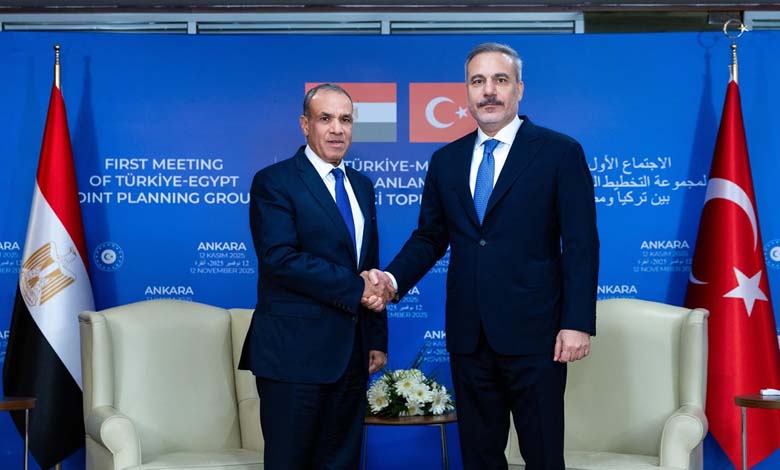
An investigative report published by the New York Times highlights alarming data concerning the undisclosed regional role played by Egypt in the Sudanese war, through what the report describes as a secret airbase in the Sharq al-Oweinat region on Egyptian territory, used to operate advanced drones for the benefit of the Sudanese army. Based on satellite imagery, Western intelligence sources, and former military officials, the investigation opens a wide array of questions regarding the nature of this role, its limits, and its implications for regional security, especially in light of direct Turkish technical support mentioned in the report.
-
The Hidden Face of the Sudanese Conflict: Investigating Egypt’s Role and Its Impact on Civilians
-
Investigation into the Alleged Egyptian Role and Its Impact on the Sudanese War and Civilians
According to the investigation, the alleged base is located in a remote area of the Egyptian Western Desert, far from population centers, allowing it to operate with a high level of secrecy. Evidence presented in the report points to modern infrastructure, including adapted short runways, fortified hangars, and advanced communication systems, compatible with the operation of Turkish Akinci drones, known for their long-range strike capabilities and precision-guided munitions.
What stands out in the report is the direct link established between this base and aerial operations carried out deep within Sudan over the past months, targeting positions of the Rapid Support Forces, raising questions among military observers about the origin of these strikes due to the flight range and precision employed. The investigation suggests that operating these drones from Sudanese territory would have exposed them to significant security risks, making Egyptian territory a safer logistical and technical option.
-
Leaks on undisclosed Egyptian-Sudanese meetings: Cairo pushes for the elimination of the Muslim Brotherhood’s influence within the Sudanese army
-
Egypt and Sudan: An Open Battle Against the Muslim Brotherhood’s Infiltration of the Sudanese Army
The Turkish role, as reported, is also contentious. The drones in use are of the Akinci type, one of the most advanced unmanned aerial systems in the Turkish arsenal. The investigation indicates that Turkish experts and technicians provided direct technical support for the drone operations, whether through training, maintenance, or control and communication systems, as part of an undisclosed security partnership with Cairo.
This allegation places Egyptian-Turkish relations under renewed scrutiny, following years of political tension since 2013, followed by gradual rapprochement in recent years. Analysts suggest that this secret military cooperation, if details are confirmed, reflects a pragmatic shift in the policies of both countries, where security interests outweigh prior ideological differences.
-
Halaib and Shalateen: From al-Bashir’s Deal to Egypt’s Grip on Sudanese Decision-Making
-
Egypt Faces Strategic Challenges Amidst the Evolution of Sudanese-Iranian Relations
In the Sudanese context, this development is a significant factor in the balance of the conflict. The Sudanese army’s possession of long-range drone air support, operated from outside its borders, provides a clear tactical advantage and limits the ability of its adversaries to target or neutralize launch platforms. It also raises questions about the independence of Sudanese military decision-making, given the growing reliance on regional support.
The investigation was not devoid of indirect official responses. Cairo remained silent on the revelations, while Sudanese officials previously denied the presence of foreign forces or bases operating on neighboring territory. However, the absence of an explicit denial, according to observers, leaves room for further speculation.
-
Human Rights Watch criticizes Egypt for imposing visas on Sudanese entry
-
Intensive Egyptian efforts to resolve the Sudanese crisis – Details
According to experts, the most serious concern lies in its impact on regional stability. Conducting military operations from a neighboring country, even under the pretext of supporting “legitimacy,” could open the door to a broader internationalization of the conflict and involve other regional and international actors, complicating prospects for political resolution.
Ultimately, the New York Times investigation places Egypt and Turkey at the center of an extremely sensitive regional scenario and raises fundamental questions about the limits, tools, and political cost of intervention. While many details remain confidential, the revelations so far are enough to redraw the map of the Sudanese conflict, not merely as an internal war, but as a field of intersecting and intertwined regional interests.
-
Egyptian Intervention in Sudan: An Analytical Review of the Nature of Military Supplies and Their Impact on the Course of the Conflict
-
Egypt’s alleged role in the Sudan war