Operations for Weeks Against Iran … U.S. Military on Alert Awaiting Trump’s Decision
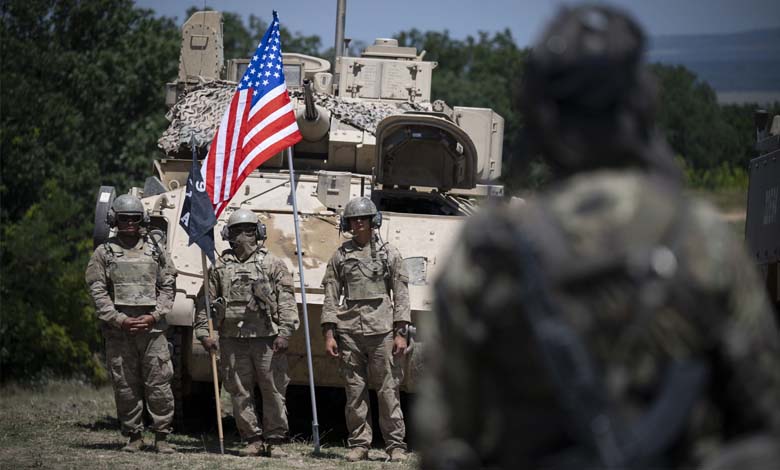
In parallel with statements made by President Donald Trump regarding a potential regime change in Iran, two officials have confirmed that the U.S. military is preparing for the possibility of conducting sustained operations lasting several weeks against Tehran.
On Friday, President Donald Trump did not rule out the idea of regime change in Iran, telling reporters, “It seems that would be the best thing that could happen.” Following those remarks, two U.S. officials told Reuters that the military is preparing for the possibility of carrying out continuous operations lasting weeks against Iran if President Donald Trump orders an attack. Such a scenario could escalate into a more dangerous conflict than previously witnessed between the two countries.
-
Trump and Iran: three military paths on the decision table
-
Iran protests put Trump to the test between escalation and dialogue
The Path of Negotiations
Despite these threats, an informed source told Reuters on Friday that two rounds of diplomatic negotiations concerning Ukraine and Iran are scheduled to take place in Geneva on Tuesday.
The source added that a U.S. delegation including envoys Steve Witkoff and Jared Kushner will meet with the Iranian side on Tuesday morning. Witkoff and Kushner are then expected to participate later that same day in trilateral talks with representatives of Russia and Ukraine.
Earlier on Friday, President Trump told American soldiers that Iran’s approach to nuclear negotiations was “difficult,” suggesting that instilling fear in Tehran might be necessary to resolve the confrontation peacefully.
-
After Trump’s threats, Iran affirms readiness for war and dialogue
-
Iran Warns Trump Against Intervention and Draws the Red Line
Speaking at Fort Bragg in North Carolina before a group of troops, he stated: “It is difficult to reach an agreement with them (Iran)… Sometimes you have to instill fear. That is the only thing that will settle the situation.”
These remarks came after U.S. officials announced the deployment of a second aircraft carrier to the Middle East.
Trump also referred to U.S. strikes on Iranian nuclear sites last June.
-
Trump Announces Ceasefire Between Israel and Iran
-
Behind Trump’s Deal: How Iran and Israel Agreed to End the War
The threat of military action against Iran follows months after a war initiated by Israel against Tehran in June, during which the United States intervened by striking key nuclear facilities. At the time, Iran responded by launching missiles and drones toward Israel and has once again vowed a strong response to any attack targeting its territory.
Israeli Prime Minister Benjamin Netanyahu met with President Trump on Wednesday. Following the meeting, he stated that the U.S. president believes he is laying the groundwork for what could lead to a “good agreement,” while expressing skepticism about the feasibility of such a deal.
For his part, the Director General of the International Atomic Energy Agency, Rafael Grossi, said on Friday that an agreement between the Agency and Tehran regarding inspections related to its nuclear program is “entirely possible,” though “very difficult.”
-
Energy Investments: Iran’s New Card to Woo Trump and End Sanctions
-
Trump’s Pressure Pushes Iran to Accept U.S. Demands on Nuclear File
In November, Iran rejected the Agency’s request to inspect sites that had been bombed in June.
U.S. and Western pressure on Iran has intensified following a crackdown on protests initially sparked by economic grievances, which later evolved into a movement denouncing the authorities of the Islamic Republic.
Although the momentum of the protests declined after the crackdown, videos showed residents of Tehran—often from their balconies or rooftops—chanting anti-government and anti–Supreme Leader Ali Khamenei slogans on Tuesday night, on the eve of the anniversary of the revolution’s victory.
-
Between Escalation and De-escalation: How Will Trump Handle Iran?
-
Iran’s Nuclear Program Back in the Spotlight… and Trump Seeks Political Breakthrough
In a related development, the son of the deposed Shah and a leading opposition figure in exile, Reza Pahlavi, urged his compatriots to undertake new protest actions alongside demonstrations held outside Iran.
In a message posted on social media, Pahlavi said: “I call on you to raise your voices and chant slogans from your homes and rooftops at 8 p.m. on February 14 and 15. Express your demands. Show your unity. With unwavering determination, we will defeat this occupying regime.”
Authorities have acknowledged that the crackdown resulted in the deaths of more than three thousand people, most of them members of the security forces, bystanders, and individuals described as “rioters,” whom officials accuse of receiving support from the United States and Israel.
-
Trump and Iran: 4 Possible Scenarios, Including “Shock and Awe”
-
Trump’s Return Pushes European Powers to Demand Increased Pressure on Iran
-
Iran Keeps Door Open for Dialogue with Trump and Prepares for New Sanctions