Turkey Strengthens Its Presence in Libya Through the Energy Gateway
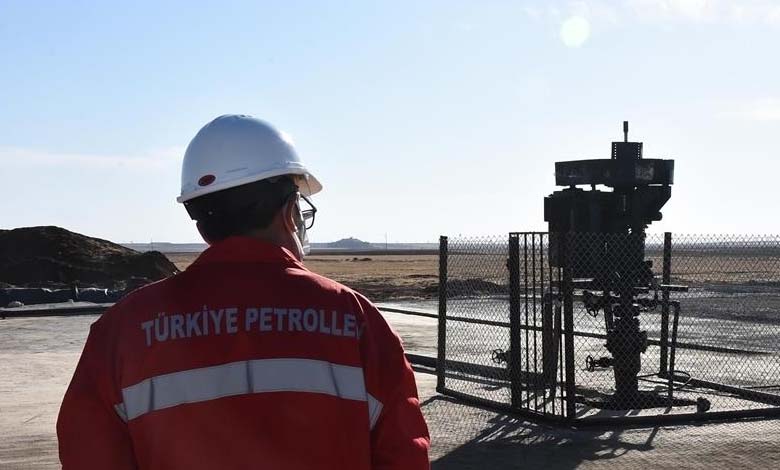
Turkey’s national oil company has secured two licenses, one offshore near Benghazi and another in an onshore area northeast of the Sirte Basin.
The acquisition by Turkey’s national oil company, TPAO, of new exploration licenses in Libya marks a strategic turning point in the economic and geopolitical relations between Ankara and Tripoli. This expansion goes beyond a mere commercial transaction; it represents the consolidation of long-term influence in the Eastern Mediterranean basin and across Africa.
-
Turkey replicates the Libyan scenario by taking control of Somalia’s resources
-
Haftar pursues calculated plans to impose himself as a key player in Libya
The company is preparing to participate in exploration activities within an offshore block located in a strategic area off the coast of Benghazi, covering approximately 10,300 square kilometers, as part of a consortium that includes Spain’s Repsol and Hungary’s MOL Group. The concession lies in waters exceeding 1,500 meters in depth, placing it among deepwater exploration projects.
Onshore, the Turkish company will operate in partnership with Repsol in a block spanning about 8,200 square kilometers northeast of the Sirte Basin, one of Libya’s most productive oil basins.
-
Protesters Block Oil Exports from Ports in Eastern Libya
-
Militia Power: The Kidnapping of an Intelligence Officer Denies Europe Access to Libyan Gas
Turkey’s ambitions in Libyan oil and gas are not isolated; they form part of a broader military and political doctrine aimed at expanding Turkey’s continental shelf. The 2019 agreement with Tripoli was not solely intended to protect Libya, but also to counter the EastMed pipeline project linking Greece, Cyprus, and Israel, thereby making any gas exports in the region effectively subject to Turkish approval.
Turkey presents itself as the sole ally capable of guaranteeing stability for governments in western Libya in exchange for long-term economic concessions. Ankara possesses a fleet of deepwater drilling vessels, such as the Abdulhamid Han, and is preparing to deploy them to Libyan waters, granting it full independence from Western technologies.
-
On the eve of the Muscat talks, five milestones paved the way for Iran and Washington’s return to negotiations
-
Following his resignation, who is the Senegalese Abdoulaye Bathily, the former UN envoy in Libya?
Recent Turkish moves, including exploration off Benghazi, signal Ankara’s desire to normalize relations with eastern Libya as well, transforming its role from a “party to the conflict” into an “indispensable partner” for all Libyans, driven by the objective of securing its economic interests.
Turkey’s Minister of Energy and Natural Resources, Alparslan Bayraktar, previously announced that the national oil company aims to acquire a 40 percent stake in both projects. In addition, TPAO plans to conduct geological and geophysical studies across four offshore blocks in Libya and carry out two-dimensional seismic surveys covering 10,000 kilometers under a memorandum of understanding signed with Libya’s National Oil Corporation in June 2025.
-
The World Gateway: How Did the Russo-Ukrainian Crisis Impact Navigational Passages in the Black Sea?
-
Eastern Libyan government rejects Washington’s support for Dbeibeh in the oil file
Libya, exempt from the production-cut agreement adopted by the Organization of the Petroleum Exporting Countries (OPEC), seeks to raise its output to between 2 and 3 million barrels per day in the coming years, leveraging its substantial untapped oil and gas reserves.
The One-Million-Barrel Strategy
Turkey aims to enhance its energy security and increase domestic production. TPAO currently produces approximately 300,000 barrels of oil per day, with an interim target of 500,000 barrels by 2028 and a long-term goal of reaching one million barrels per day.
-
Nuclear world’s guard: Has the Atomic Energy Agency lost its role?
-
Removing mercenaries is a step towards resolving the crisis in Libya… Will Tripoli witness steps towards stability
As part of its international expansion, the company has strengthened cooperation with major global energy firms and is preparing to begin drilling operations in Somalia following the completion of geophysical surveys, alongside anticipated activities in Pakistan.
Historical Ties
Oğuzhan Akyener, head of the Turkish Energy Policies and Strategies Research Center (TESPAM), stated that energy cooperation between Ankara and Tripoli is rooted in historical relations.
-
Libyan food aid to Tunisia fuels political records
-
Libya: The delay in the elections will ignite a new civil war
He noted that Turkish companies were active in Libya before the outbreak of internal conflict, with activities halted due to deteriorating security conditions. The improvement of the political climate has enabled the resumption of energy-sector partnerships. According to him, TPAO’s acquisition of the two licenses reflects confidence in its technical capabilities, particularly its advanced seismic survey and drilling vessels.
He added that expanding Turkey’s presence in Libya should not be limited to the public sector but also requires greater private-sector engagement, emphasizing the importance of revitalizing investments in countries such as Libya, Syria, Iraq, and Azerbaijan.
-
Dbeibah woos Washington with broad partnership in hopes of securing support to remain in power
-
Washington Maintains Oil Partnership with Erbil Despite Disputes with Baghdad
Akyener concluded that this new step represents another milestone in strengthening the energy partnership between Ankara and Tripoli, within a broader Turkish strategy aimed at positioning itself as a key player in regional and international oil and gas markets.
On February 17, 2011, a popular uprising erupted in Libya, toppling the regime of the late Muammar Gaddafi. Since then, nine governments have succeeded one another in the country, which is currently experiencing a crisis marked by rivalry between two administrations: one internationally recognized, the Government of National Unity led by Abdelhamid Dbeibah and based in Tripoli, administering the western part of the country; and another appointed by the House of Representatives in early 2022, currently headed by Osama Hammad and based in Benghazi, controlling the eastern region and most southern cities.
For several years, the United Nations has been working to resolve disputes between Libyan institutions that have prevented the holding of parliamentary and presidential elections, which Libyans hope will lead to the reunification of the institutions of this oil-rich country.
-
Violent clashes in Libya’s Zawiya: militia rivalries reignite in the west
-
Libya in 2025: Limited Political Progress and Persistent Deadlock Hindering the Electoral Process