Five Defensive Layers: How Iran Is Preparing for a Potential War
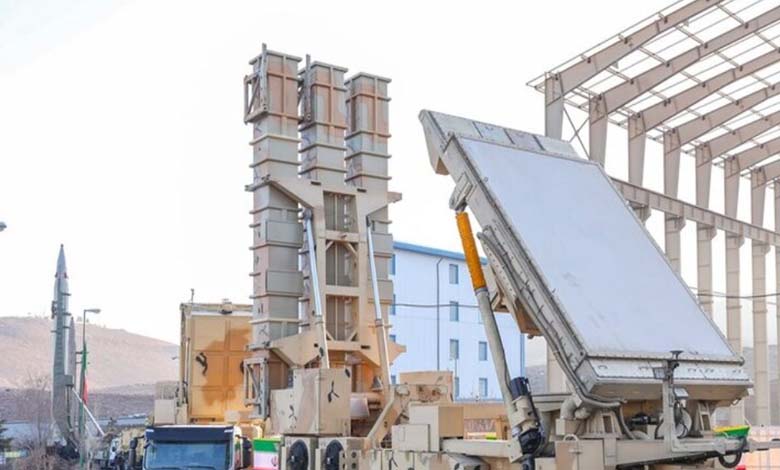
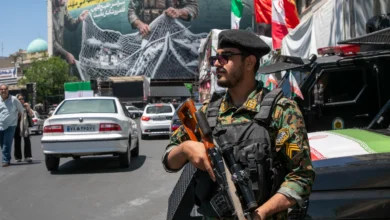
The United States continues to strengthen its military presence in the Middle East, while Iran has taken a series of measures to demonstrate its readiness for a potential conflict.
Iranian and American negotiators held indirect talks in Geneva for three and a half hours on Tuesday, but the meeting concluded without a clear breakthrough. Iranian Foreign Minister Abbas Araghchi stated that both sides had agreed on a set of “guiding principles.” However, U.S. Vice President J. D. Vance said that the Iranians had not acknowledged the “red lines” set by President Donald Trump.
Despite ongoing discussions, the White House was reportedly informed that the U.S. military could be ready to launch an attack by the end of the week, following the recent buildup of air and naval forces in the region, according to CNN.
Amid mounting war threats, Iran has spent recent months repairing key missile facilities and heavily damaged air bases, while continuing efforts to conceal aspects of its nuclear program.
Tehran has appointed veterans to senior national security positions, conducted naval drills, and intensified its crackdown on domestic opposition.
In June last year, Israel launched a surprise attack on Iran, destroying parts of its nuclear program, severely damaging missile production sites, and killing senior military commanders. During the twelve-day conflict, Iran responded by launching hundreds of missiles and drones at Israeli cities, while the United States struck three Iranian nuclear sites that President Donald Trump claimed were “completely destroyed.”
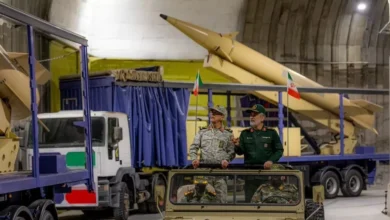
Western countries have repeatedly failed to persuade Iran to curb its missile program, which Tehran considers a central pillar of its military strength and a legitimate component of its right to self-defense.
Reconstruction Efforts
Despite suffering significant losses in the war with Israel, satellite imagery analysis indicates that Iran has rebuilt several damaged missile facilities.
Images of the Imam Ali missile base in Khorramabad, taken on January 5, show that of the twelve facilities destroyed by Israel, three have been rebuilt, one restored, and three remain under construction. Critical ballistic missile launch platforms have been reconstructed, accompanied by extensive excavation and construction work.
Two additional military bases have undergone substantial repairs. At Tabriz Air Base in northwestern Iran, associated with medium-range ballistic missiles, runways and taxiways have been restored. At another missile base north of the city, entrances sealed by bomb strikes have been reopened, support areas rebuilt, and some tunnels reactivated, according to analysis cited by CNN and conducted by Sam Lair of the James Martin Center for Nonproliferation Studies.
At Hamadan Air Base in western Iran, bomb craters on the runway have been filled and aircraft shelters repaired.
Iran has also rapidly rebuilt its largest and most modern solid-fuel missile production facility in Shahroud, a technology that enables the rapid deployment of long-range missiles. According to Sam Lair, damage there was repaired swiftly, and a new production line that was under construction during the war and remained intact is likely now operational, potentially increasing production capacity beyond pre-war levels at that site.
Fortifying Nuclear Facilities
Although Iran has signaled flexibility regarding limits to its nuclear program, it is simultaneously accelerating the fortification of several nuclear sites. Recent satellite imagery and analyses by the Institute for Science and International Security indicate the use of concrete and large quantities of earth to bury key facilities.
High-resolution images dated February 10 show ongoing reinforcement of tunnel entrances at the underground complex carved into Mount Kolang Gaz La near Natanz, with fresh concrete poured at western and eastern entrances to enhance protection against potential airstrikes.
At a nuclear facility known as “Taleghan 2” within the Parchin military complex southeast of Tehran, Iran has reportedly completed the construction of a concrete enclosure around the site and covered it with earth, rendering it virtually indistinguishable.
Destroyed facilities at the 7 Tir industrial complex near Isfahan, linked to centrifuge component production, have also been rebuilt. The site had been subject to UN sanctions in October 2025.
Reshaping the Governance Structure
Following last year’s Israeli campaign, reports suggested that Supreme Leader Ali Khamenei was at times difficult to reach during periods of bombardment, leading to a temporary delegation of decision-making authority to provincial governors.
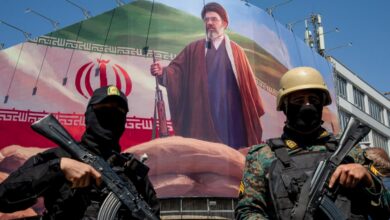
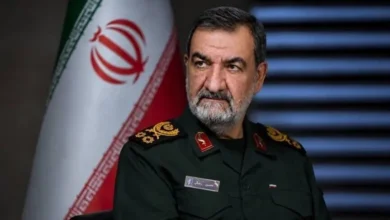
Since then, Tehran has strengthened the powers of the Supreme National Security Council and established a new Defense Council to manage state affairs during wartime. This month, Ali Shamkhani, who reportedly survived a previous Israeli assassination attempt, was appointed secretary of the Defense Council to reinforce defensive preparedness and develop mechanisms to counter potential threats.
Analysts believe this appointment may signal preparation for a possible U.S. strike targeting senior leadership figures, potentially including the Supreme Leader.
Targeting the Opposition
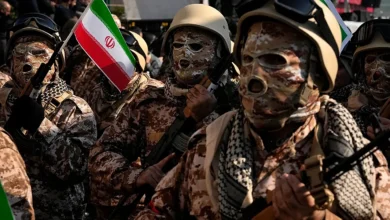
The Israeli strikes in June were reportedly preceded by a sophisticated infiltration attributed to the Mossad, heightening concerns among Iranian authorities. In response, Iran has intensified its campaign against domestic opposition amid fears that war could lead to regime change.
Media reports last month indicated that security forces violently suppressed nationwide protests, resulting in thousands of deaths and an even greater number of arrests. Authorities accused protesters of being “Israeli spies.”
Demonstrative Military Exercises
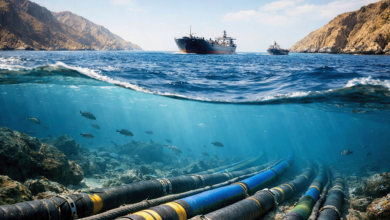
Alongside the Geneva negotiations, Iran launched naval exercises in the Gulf. For the first time, the Islamic Revolutionary Guard Corps temporarily closed parts of the Strait of Hormuz for drills, despite its critical importance as a transit route for roughly one-fifth of global oil production.
Iran also conducted joint naval drills with Russia in the Gulf of Oman and the northern Indian Ocean, including exercises simulating the recovery of a hijacked vessel.
Meanwhile, the United States deployed two aircraft carriers to the region, and one reportedly shot down an Iranian drone that approached in what was deemed a threatening manner. Two IRGC patrol boats also reportedly approached a U.S.-flagged tanker in the Strait of Hormuz, threatening to seize it.
Experts suggest that Iran is attempting to send a clear message to Washington: any war would be extremely costly. Vali Nasr, a professor at Johns Hopkins University, argues that Iran’s tactics aim to convince the United States that conflict would entail significant costs that must be carefully calculated before launching any actual attack.