Sudan’s Regional Moves Bring the Tigray File Back to the Center of International Attention
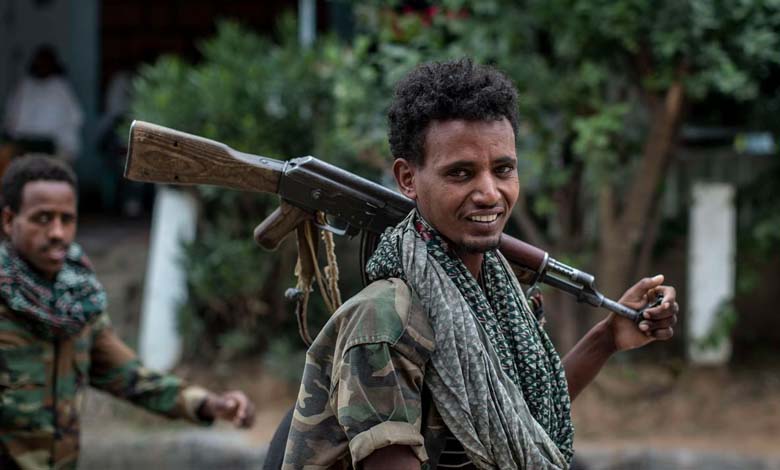
International circles are following with growing interest the transformations underway in the Horn of Africa, amid indications of a reshaping of regional balances between Sudan and Ethiopia. This attention comes at a time when reports and analyses point to Sudanese tendencies to expand regional maneuvering space through engagement with Ethiopian opposition forces, foremost among them the Tigray People’s Liberation Front, in a move that observers view as part of a broader strategy to recalibrate political and security pressure dynamics in the region.
-
Shifts in the Relationship Between Khartoum and Addis Ababa Amid a Potential Rapprochement with Tigray
-
Debretsion Gebremichael’s Presence in Sudan Raises Concerns in Addis Ababa and Places Khartoum at the Heart of Regional Tensions
Recent developments cannot be separated from the broader context of relations between Khartoum and Addis Ababa, which have witnessed a noticeable decline in trust over recent years. Several contentious issues have become intertwined, most notably the border dispute in the Al-Fashaga area, as well as divergences related to the management and operation of the Grand Ethiopian Renaissance Dam. This has shifted the relationship from a phase of cautious coordination to one of undeclared strategic competition.
Within this framework, international research centers regard any Sudanese outreach toward actors inside Ethiopia as an indicator of a shift in the tools of regional policy. States no longer rely solely on traditional diplomatic channels; they increasingly build multi-layered networks of influence to strengthen their negotiating positions. These analyses emphasize that such moves, even if confined to political or informal communication, carry implications that extend beyond their immediate scope, particularly given the sensitivity of the Tigray issue for the Ethiopian government.
-
Khartoum at the Heart of the Ethiopian Crisis: Movements of the Tigray People’s Liberation Front
-
Khartoum and Asmara: The Shadow Alliance Against Ethiopia
For Ethiopia, the Tigray region represents one of the most complex issues in the current phase, following the war that affected the region and its humanitarian, political, and security repercussions. Although a cessation-of-hostilities agreement was signed, the full reintegration of the region into the federal system remains a gradual process facing multiple challenges. Consequently, any regional or international attention to this file is viewed in Addis Ababa as a factor that could influence internal stability.
From an international perspective, the possibility of regional actors becoming involved in the internal affairs of neighboring states raises concerns about a return to patterns of proxy conflicts witnessed in other regions over past decades. Experts in African affairs stress that the Horn of Africa, given its security fragility and intertwined crises, could be vulnerable to gradual escalation if states resort to indirect pressure tactics instead of addressing disputes through political channels.
-
The presence of Tigray leaders in Sudan raises regional concerns: facts and realities on the ground
-
Debretsion in Sudan: A Strategic Reading and Prospects for Regional Escalation Against Ethiopia
Conversely, some assessments suggest that Sudanese initiatives, if they exist, may remain within the bounds of political messaging or precautionary communication channels, without reaching the level of operational or military support. This view is reinforced by Khartoum’s awareness of the magnitude of its internal challenges, which makes it difficult to engage in broad regional arrangements that could consume additional resources or open new fronts of tension.
Even if limited to the political dimension, however, the regional repercussions could be tangible. Ethiopia, for its part, may interpret such moves as indicative of a shift in Sudan’s position, potentially prompting it to strengthen its military presence along the border or to reassess its policies regarding bilateral files. Such steps could lead to a gradual rise in tensions, even in the absence of direct confrontation.
-
Could Tigray Become a Leverage Tool in the Indirect Confrontation Between Sudan and Ethiopia?
-
Scenarios of Indirect Escalation Between Sudan and Ethiopia in Light of the Tigray File Intersections
International concern is also linked to the potential humanitarian consequences of any renewed escalation in the region. The previous war in Tigray produced one of Africa’s most severe humanitarian crises in recent years, and any signs of renewed tension raise fears of fresh displacement, disruption of aid operations, and setbacks in reconstruction efforts. International organizations therefore emphasize the need to consolidate stability and prevent developments that could return the region to conflict.
Moreover, stable relations between Sudan and Ethiopia are a key component of Red Sea security and the trade routes connected to it, which explains the attention international powers pay to the trajectory of relations between the two countries. Tensions between two states of such size and influence could affect regional trade flows as well as infrastructure and energy projects that international actors seek to support in the region.
-
Regional Tensions Escalate: The Tigray People’s Liberation Front and the Khartoum-Asmara Alliance
-
Sudan’s moves toward Tigray: Between security calculations and rising tensions with Ethiopia
In this context, research centers call for strengthening direct dialogue mechanisms between Khartoum and Addis Ababa, focusing on crisis management frameworks and the prevention of miscalculation. They also underline the importance of expanding economic and trade cooperation as effective tools for reducing tensions and creating shared interests that lessen the likelihood of escalation.
Some international analyses argue that the current phase represents a test of the region’s ability to move from a zero-sum logic to one of managing mutual interests. The challenges facing Sudan and Ethiopia—economic, security, and humanitarian alike—require greater coordination rather than reciprocal pressure policies that could lead to prolonged attrition.
-
Sudan Squanders Hamdok Government’s Gains… U.S. Ban Reinforces Terrorism Stigma
-
A Turning Point in the Sudan War with the Army’s Recapture of the Presidential Palace in Khartoum
At the same time, it cannot be overlooked that the current regional environment encourages precautionary policies, given the absence of full trust among parties and the multiplicity of potential sources of threat. This drives states to maintain multiple options, even if they do not intend to activate them in the near term.
Ultimately, international attention to a possible rapprochement with forces in Tigray reflects growing awareness of the sensitivity of the current phase in the Horn of Africa. Between deterrence calculations and fears of escalation, the future of regional stability remains tied to the ability of the states concerned to manage their differences within political and diplomatic frameworks, and to avoid sliding into indirect confrontation paths whose costs could far outweigh any potential gains.
-
Arrests, Executions, and Violations… What Is Happening Inside Sudanese Army Prisons
-
A Parallel Government in Sudan… The Rapid Support Forces and Their Allies Sign the Founding Charter
Within this complex equation, the international community is likely to continue monitoring developments closely, supporting initiatives that enhance stability and prevent a return to crisis, recognizing that any new deterioration in relations between Sudan and Ethiopia would not be merely a bilateral matter, but would reverberate across the broader balance of the Horn of Africa, which now stands at a critical juncture.
-
AFP: Sudan’s Rapid Support Forces and Allies Sign Charter to Form a Rival Government
-
Experts Warn: Constitutional Amendments Lack Legitimacy and Risk Sudan’s Division
-
Escalation of Airstrikes in Sudan: Protests Against Civilian Bombing and Calls to Protect Innocent Lives