Shifts in the Relationship Between Khartoum and Addis Ababa Amid a Potential Rapprochement with Tigray
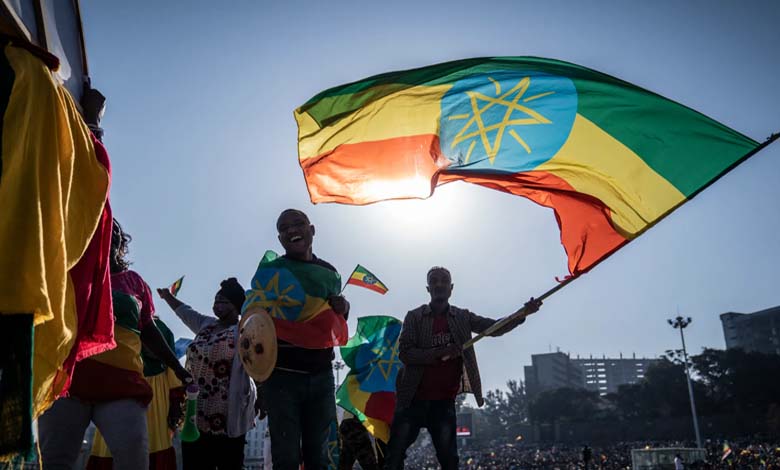
The Horn of Africa is undergoing a delicate phase of regional realignment, marked by escalating internal crises and increasingly intertwined security interests among states. In this context, growing analysis points to a possible effort by the Sudanese army to broaden its channels of communication with Ethiopian opposition actors, foremost among them the Tigray People’s Liberation Front. Some observers view this step as part of a broader strategy aimed at reshaping the deterrence equation in response to mounting tensions with the Ethiopian government.
-
Khartoum at the Heart of the Ethiopian Crisis: Movements of the Tigray People’s Liberation Front
-
The Grand Ethiopian Renaissance Dam and Gaza at the core of Egyptian-American talks
Tensions between Khartoum and Addis Ababa are longstanding, rooted in complex historical disputes, most notably the conflict over the border region of al-Fashaga, which has witnessed intermittent clashes between the forces of both countries in recent years. Disagreements over the management and operation of the Grand Ethiopian Renaissance Dam have further deepened the trust deficit, particularly in light of Sudanese concerns regarding water security and the dam’s technical safety. With negotiation tracks facing repeated setbacks, the security dimension has become increasingly central to the calculations of both sides.
Within this framework, analysts argue that any Sudanese outreach to Ethiopian opposition forces would carry both political and security implications, signaling that Khartoum retains multiple options should pressures or tensions persist. Although the Tigray People’s Liberation Front has seen its influence decline following the cessation of hostilities agreement with the federal government, it continues to possess organizational and military structures, as well as field experience, that render it a consequential actor in Ethiopia’s internal balance of power.
-
Inauguration of the Grand Ethiopian Renaissance Dam Heightens Tensions with Sudan and Egypt
-
Power Outage in Ethiopia: A Crisis Exposing Infrastructure Challenges and Links to the Grand Ethiopian Renaissance Dam
From a strategic perspective, the use of indirect leverage is a common practice in tense regional environments, as states seek to avoid direct confrontation while preserving instruments of influence that can be activated when necessary. This approach reflects Sudan’s awareness that an open conflict with Ethiopia would be costly on both military and economic fronts, especially given the country’s ongoing internal challenges.
Conversely, Ethiopia approaches any external engagement related to the Tigray issue with considerable sensitivity, given the region’s political and security significance within the federal state. The war that erupted there constituted one of the most serious crises Addis Ababa has faced in recent decades, threatening national stability. Consequently, any form of external support, even if limited to political or media backing, could be interpreted as interference in internal affairs and an attempt to rekindle sources of tension.
-
Sudanese army denies reports on the capture of Ethiopian soldiers
-
Ethiopian expert in Qatar meets with Fahd Yassin to provoke situation in Somalia
The current equation is highly complex, as indirect escalation could prompt reciprocal responses. Ethiopia, for its part, possesses tools that could be employed within the Sudanese arena, whether through political means or by strengthening its influence in border areas. Such a scenario could pave the way for a low-intensity conflict characterized by mutual pressure without direct confrontation, yet one that prolongs instability.
These developments cannot be separated from the broader regional context, where the Horn of Africa is experiencing heightened security fluidity due to multiple internal conflicts and competition among regional and international powers for influence. In such an environment, states tend to build flexible and at times undeclared alliances, enabling them to adjust swiftly to shifting power dynamics. Through this approach, Sudan appears to be seeking to bolster its negotiating position across several contentious issues with Ethiopia.
-
Balancing Power in the Horn of Africa: A Strategic Reading of Tigray’s Presence in Sudan
-
Khartoum and Asmara: The Shadow Alliance Against Ethiopia
However, this course of action is not without significant challenges. Sudan itself faces international pressure related to the humanitarian situation and domestic stability. Engagement in regional arrangements that might be perceived as support for internal conflicts in a neighboring state could expose it to further diplomatic strain. Moreover, reliance on indirect instruments always carries the risk of losing control over the trajectory of events, particularly if developments on the ground unfold unexpectedly.
At the same time, some experts contend that speculation regarding direct military support may be premature and that current interactions fall within the realm of political communication or information exchange—common practices among actors seeking to better understand one another’s moves in a complex regional setting. From this perspective, the Sudanese army’s primary focus remains on managing internal challenges, making broad external engagement unlikely at this stage.
-
The presence of Tigray leaders in Sudan raises regional concerns: facts and realities on the ground
-
Debretsion in Sudan: A Strategic Reading and Prospects for Regional Escalation Against Ethiopia
Nonetheless, the mere existence of potential communication channels reflects a shift in the nature of regional relations, as the boundary between domestic and external affairs becomes increasingly blurred. Local conflicts now carry regional dimensions, and any development in one state can have direct repercussions for its neighbors. In this regard, the Tigray file remains a significant factor in the regional security equation, even after the cessation of large-scale military operations.
Future scenarios remain open to multiple possibilities. Continued tension could reinforce policies of indirect deterrence and entrench a climate of mutual suspicion between Sudan and Ethiopia. Alternatively, economic pressures and internal constraints might encourage both sides to revive dialogue and cooperation, particularly in areas such as border management, trade, and energy—fields that could serve as common ground for de-escalation.
-
Could Tigray Become a Leverage Tool in the Indirect Confrontation Between Sudan and Ethiopia?
-
Scenarios of Indirect Escalation Between Sudan and Ethiopia in Light of the Tigray File Intersections
Regional experiences indicate that indirect conflicts often prove protracted and costly, even when they remain below the threshold of open confrontation. Their repercussions extend beyond the immediate parties, affecting neighboring states through displacement flows, disruptions to trade routes, and the cross-border movement of armed groups. Accordingly, any move in this direction should be carefully assessed within a long-term strategic framework.
Ultimately, discussions of a potential Sudanese rapprochement with the Tigray People’s Liberation Front reflect the transitional nature of the current regional phase, as states seek to reposition themselves within an unstable environment. Between deterrence calculations and potential risks, the principal challenge for Khartoum and Addis Ababa lies in managing their differences without sliding into escalation dynamics that may later prove difficult to contain, in a region that requires greater coordination and cooperation to address shared challenges rather than the addition of new crises to an already burdened landscape.
-
Sudan’s Regional Moves Bring the Tigray File Back to the Center of International Attention
-
Debretsion Gebremichael’s Visit to Sudan: A Potential Gateway to Escalation Against Ethiopia
-
Regional Tensions Escalate: The Tigray People’s Liberation Front and the Khartoum-Asmara Alliance