Trump threatens to strike Iran forcefully over the next two to three weeks
The U.S. president proposes that countries dependent on the Strait of Hormuz either buy oil from the United States or secure the passage themselves.
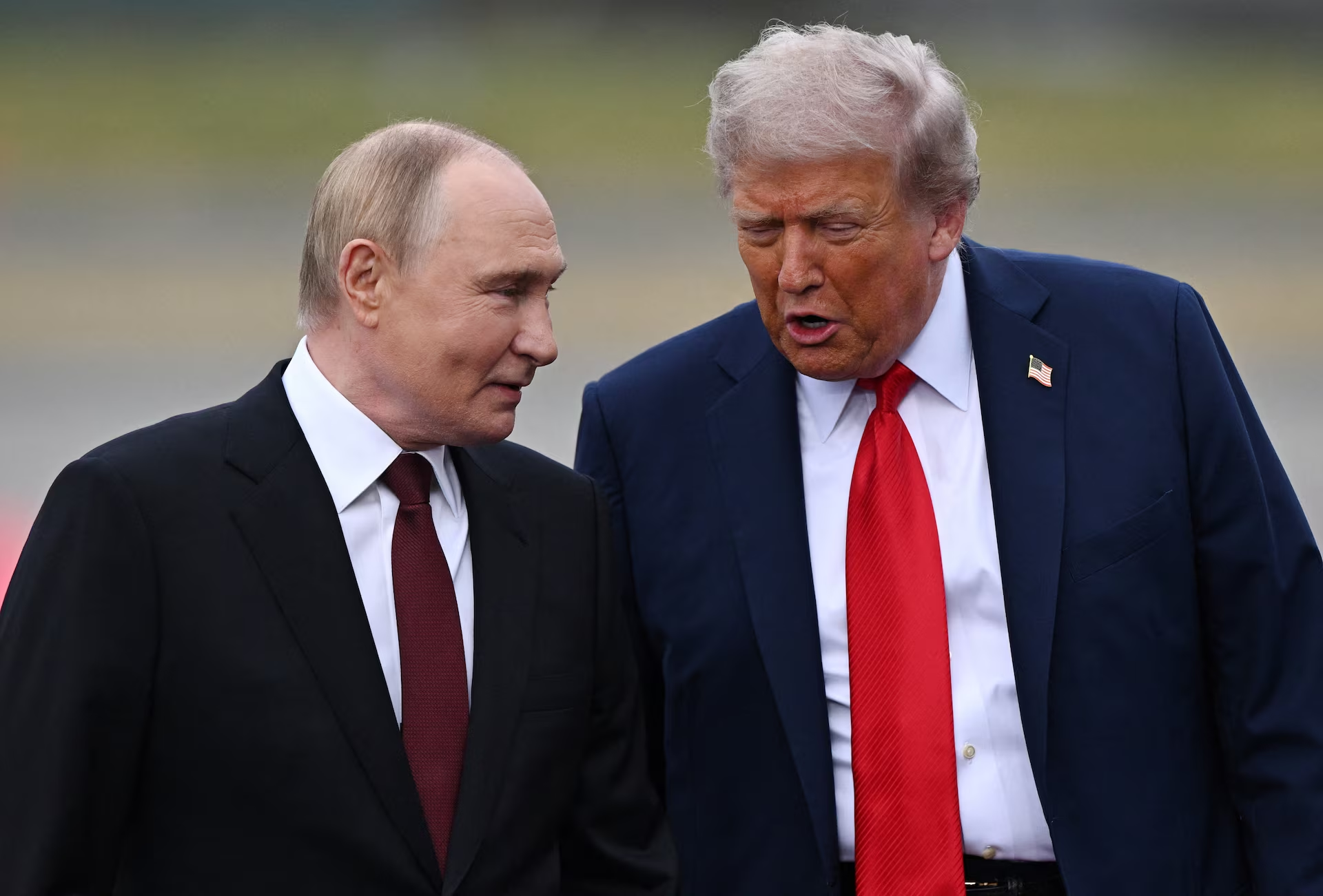
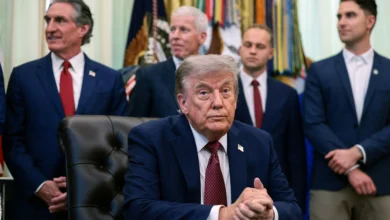
U.S. President Donald Trump threatened at dawn on Thursday to continue striking Iran forcefully “over the next two to three weeks,” asserting that the core strategic objectives of the war against Iran—particularly ending its missile program—“are close to being achieved.” Tehran responded by launching missiles toward the port of Haifa and targeting sites in the Gulf region.
-
Trump and Iran: three military paths on the decision table
-
War Objectives in Iran Portend Rift Between Trump and Netanyahu
In a televised address, Trump confirmed that the operation “Epic Wrath” would continue until all military objectives are achieved, stating that the U.S. military would keep striking Iran forcefully during the coming two to three weeks, adding, “We will send them back to the Stone Age where they belong.”
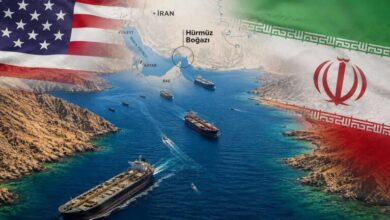
Regarding the Strait of Hormuz, the U.S. president stated that the United States does not depend on it for its oil imports, calling on the countries that benefit from it to assume responsibility for its protection. He suggested that they either purchase oil from Washington or “secure the strait themselves.”
-
Trump and Iran: 4 Possible Scenarios, Including “Shock and Awe”
-
Trump mobilizes for a Hormuz alliance and broader international involvement in the war against Iran
He continued: “For the countries that cannot obtain fuel, and some of which refuse to participate in bringing Iran to its knees, we were compelled to do it ourselves.”
He added: “I have some proposals: these countries can buy oil from the United States, or they can gather their belated courage and go to the strait, take it, protect it, and use it for themselves.”
On March 2, Iran announced restrictions on navigation through the Strait of Hormuz, threatening to attack any vessel attempting to pass without coordination.
-
Iran protests put Trump to the test between escalation and dialogue
-
Trump, CNN and the speech of Iran’s new Supreme Leader: four minutes that reignite the war
The closure of the strait, through which about 20 million barrels of oil pass daily, has led to higher shipping and insurance costs and rising oil prices, raising global economic concerns.
On diplomatic efforts, Trump noted that negotiations are ongoing, warning that if they fail, “we will strike all their power plants.”
Addressing the war’s impact on Washington, Trump acknowledged the deaths of 13 American fighters during the conflict with Iran.
-
Trump studies Iran’s future after the war and keeps an eye on Khamenei’s successor
-
After Trump’s threats, Iran affirms readiness for war and dialogue
He also noted rising fuel prices within the United States, blaming Iran due to what he described as “insane attacks on oil tankers,” reassuring citizens that the increase “is temporary.”
In Iran’s first response to Trump’s statements about eliminating its missile program, state television announced the launch of several ballistic missiles toward the port of Haifa and strikes against sites in the Gulf region, particularly in the United Arab Emirates.
State media reported on Thursday statements by Amir Hatami, Commander-in-Chief of the Iranian Armed Forces, saying that “the Iranian operational headquarters must monitor enemy movements with the highest degree of caution and precision” and be prepared to confront any form of attack, adding, “No enemy forces will survive if they attempt a ground operation.”
-
Iran Warns Trump Against Intervention and Draws the Red Line
-
Trump Announces Ceasefire Between Israel and Iran
Media outlets broadcast silent footage showing the Iranian army commander in a room with three other military commanders and on a video call with about a dozen others.
The semi-official Tasnim News Agency also quoted Ibrahim Zolfaghari, spokesperson for the unified command of the Iranian Armed Forces known as “Khatam al-Anbiya,” as saying on Thursday that Tehran would continue the war in the Middle East until the United States and Israel experience “permanent regret and surrender.”
Zolfaghari added that the U.S. and Israeli assessment of Iran’s military capabilities “is incomplete,” stating that Iran would escalate its military operations with “more crushing, broader, and more destructive” attacks against its enemies.
-
Behind Trump’s Deal: How Iran and Israel Agreed to End the War
-
Energy Investments: Iran’s New Card to Woo Trump and End Sanctions
Despite talk of escalation, the U.S. news site Axios reported on Wednesday that discussions were taking place between the United States and Iran to reach a ceasefire in exchange for reopening the Strait of Hormuz.
The site cited three U.S. officials who said consultations were underway between Washington and Tehran aimed at achieving a ceasefire.
The officials stressed that both sides were holding talks to establish a ceasefire in exchange for reopening the strait, without specifying whether these discussions were direct or conducted through intermediaries, noting that reaching an agreement through these talks remains “uncertain.”
-
Iran’s Nuclear Program Back in the Spotlight… and Trump Seeks Political Breakthrough
-
Between Escalation and De-escalation: How Will Trump Handle Iran?
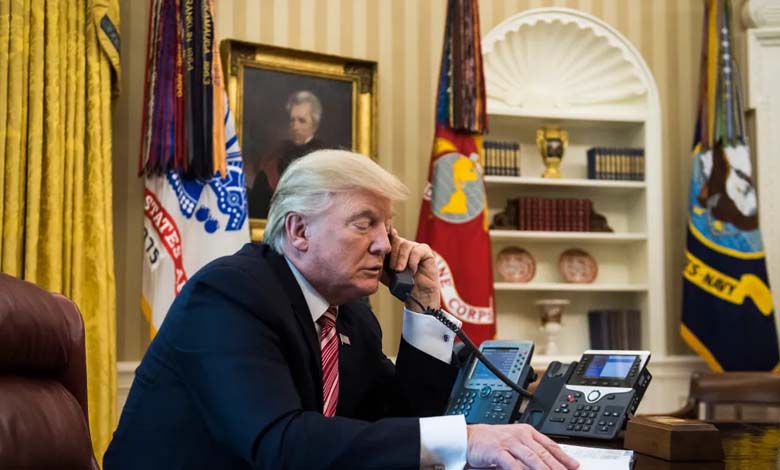
Two “informed” sources also told Axios that Trump had a phone call yesterday with Saudi Crown Prince Mohammed bin Salman, during which he raised the possibility of a ceasefire, and that he also spoke with United Arab Emirates President Sheikh Mohamed bin Zayed Al Nahyan.
Since February 28, Israel and the United States have been waging a war against Iran that has resulted in thousands of deaths and injuries, while Tehran has responded by launching missiles and drones toward Israel.
Iran has also targeted what it says are American sites and interests in Arab countries. However, some attacks have caused casualties and damage to civilian infrastructure, which the affected countries have condemned.
-
Trump’s Return Pushes European Powers to Demand Increased Pressure on Iran
-
Iran Keeps Door Open for Dialogue with Trump and Prepares for New Sanctions