General strike in the West Bank in rejection of the law approving the execution of prisoners
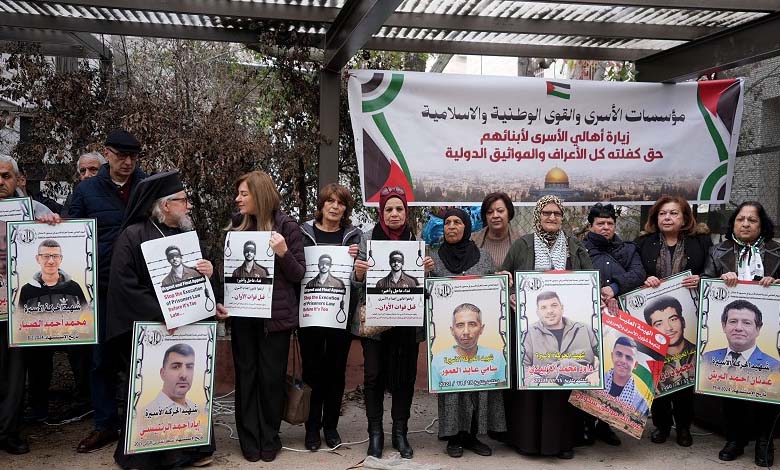
All shops, public and private institutions, banks, universities, and schools closed their doors, while hospitals and bakeries were exempted from the strike.
Various aspects of life across the West Bank experienced near-total paralysis on Wednesday following a general strike protesting the approval by the Knesset (Israeli parliament) of a law providing for the execution of Palestinian prisoners, a step expected to have many repercussions.
-
A difficult challenge: execution of Palestinian prisoners tested before the Israeli Supreme Court
-
Faces and memories behind the numbers: Palestinian prisoners in Israeli jails
Correspondents reported that all shops, public and private institutions, banks, universities, and schools closed their doors, while hospitals and bakeries were exempted from the strike.
The streets of Ramallah, in the central West Bank, where the headquarters of the Palestinian presidency and government are located, appeared completely devoid of movement, and shops were entirely closed. Trade unions, institutions, companies, and stores had announced their commitment to observing the general strike called by the Fatah movement.
On Tuesday, the Fatah movement announced a comprehensive strike in the occupied West Bank for Wednesday in rejection of the law providing for the execution of Palestinian prisoners held in Israeli prisons.
-
Palestinian prisoners and Gaza hostages: preparations for the final exchange
-
Rare Acknowledgment: Israeli Court Orders Government to Stop Starving Palestinian Prisoners
In a statement, the movement said the strike falls within efforts aimed at overturning the law, considering that it “targets the entire Palestinian people, constitutes a dangerous escalation and a blatant violation,” and called for broad popular mobilization and the strengthening of Arab and international efforts to exert pressure to repeal the law.
The ratification on Monday by the Knesset of a controversial bill stipulating the imposition of the death penalty on Palestinian prisoners sparked widespread discontent and a wave of anger worldwide. Many human rights organizations condemned it.
The bill allows a death sentence to be issued without the need for a request from the public prosecution and does not require unanimity in the decision, as it can be taken by a simple majority. This also includes military courts that examine cases involving Palestinians in the occupied West Bank, while granting the Minister of Defense the right to present his opinion before the judicial panel.
-
“Humiliation and mistreatment” of Palestinian prisoners: a “routine exercise” in Israeli prisons
-
Palestinian Prisoners in Israeli Jails… Gaza Raises the Number and Intensifies the Suffering
The law applies to those accused of killing Israelis “intentionally,” whose number stands at 117 in Israeli prisons, according to the official Palestinian Commission for Prisoners’ Affairs and Former Detainees.
The law has also faced internal criticism, as around 1,200 Israeli figures, including Nobel Prize laureates, former military officials, and former Supreme Court judges, expressed strong opposition to it last February, describing it as a “moral stain.”
More than 9,500 Palestinians are held in Israeli prisons, including 350 children and 73 women, and, according to Palestinian and Israeli human rights organizations, they are subjected to torture, starvation, and medical neglect, which has led to the death of dozens of them.
Since October 2023, Israel has intensified its measures against Palestinian prisoners, in parallel with the war in the Gaza Strip, which has resulted in more than 72,000 deaths and 172,000 injuries, the majority of whom are children and women.
-
A draft law proposing the execution of Palestinian prisoners ignites controversy in the Knesset… What is the connection to those detained by Hamas?
-
Who is Marwan Barghouti, a symbol of Palestinian resistance and prisoners’ icon?
-
Palestinian released prisoners: This is what happened to detainees in Israeli prisons after October 7th
-
When are we going back?: a Palestinian cry from the West Bank camps