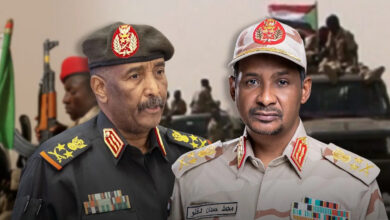
Al-Burhan and the dissolution of the Al-Baraa ibn Malik Brigade: Reengineering the balance of power within the Sudanese scene
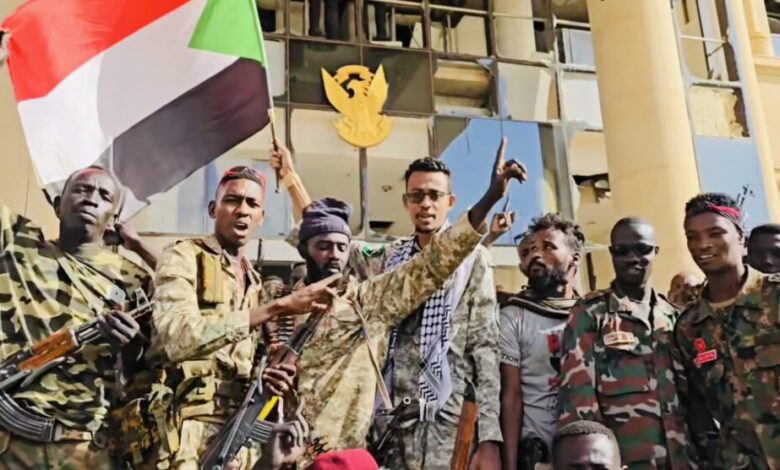
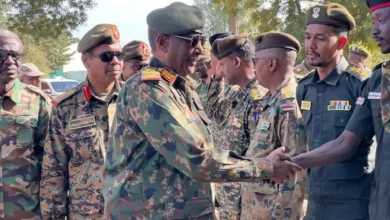
The decision by the commander of the Sudanese army, Abdel Fattah al-Burhan, to dissolve the “Al-Baraa ibn Malik” Brigade comes at an extremely sensitive moment in Sudan’s history, where military challenges intersect with political transformations and where internal calculations intertwine with external pressures. This decision cannot be read as a mere technical military measure, but rather as a step carrying deep strategic dimensions, reflecting an attempt to readjust the balance of power within the military institution and the political landscape as a whole.
-
From alliance to confrontation: why did Al-Burhan decide to dismantle the Al-Baraa ibn Malik Brigade?
-
Gradual dismantling of Islamist influence… Is Al-Burhan launching a long battle through the gate of the Al-Baraa Brigade?
The “Al-Baraa ibn Malik” Brigade was not simply an ordinary military formation; during the war, it became an influential actor on the battlefield, accumulating operational and popular influence, particularly amid the state of collapse that affected large parts of the Sudanese state. This rapid expansion raised concerns within the military leadership about the possibility of it turning into a parallel force that would be difficult to control, especially given its clear ties to the Islamist current.
Al-Burhan, who leads the army during one of its most complex periods, appears to have realized early on that the continued presence of formations with ideological loyalties within the military structure posed a direct threat to the unity of military decision-making. Sudanese history, as is well known, has repeatedly witnessed entanglements between the army and political currents, which weakened the state and plunged it into cycles of coups and conflicts.
-
The Muslim Brotherhood and the Al-Baraa ibn Malik Brigade: A New Strategy of Influence in Sudan
-
The Field Mobilization of the Muslim Brotherhood in Sudan: The Al-Baraa Ibn Malik Brigade and the Challenge of Influence
From this perspective, the decision to dissolve the brigade can be understood as part of an effort to restore the centrality of decision-making within the army and to prevent any force from imposing an operational or political reality outside the framework of official command. However, this step is not without risks, as dismantling a force with an effective operational presence may create a vacuum on certain fronts or push its members to operate outside official structures.
Politically, the decision sends a clear message to the Islamist current that the coming phase will not allow a return of its former influence within state institutions. This orientation reflects a shift in Al-Burhan’s strategy, as he appears to be seeking to reposition himself both domestically and internationally by presenting himself as an acceptable partner in any future political process.
-
Al-Baraa Ibn Malik Brigade: A Tool Used by the Muslim Brotherhood to Strengthen Military and Political Influence in Sudan
-
Sudan… Washington sanctions Jibril Ibrahim and the “Al-Baraa ibn Malik” brigade
International pressures, particularly from the United States, play a role that cannot be overlooked in this context. The international community considers the removal of Islamists from power as a key condition for supporting any political transition in Sudan. In this sense, dissolving the brigade can also be read as a positive signal directed outward, confirming the military leadership’s willingness to comply with these conditions.
At the same time, this step is likely to heighten tensions between Al-Burhan and the Islamist current, which may view the decision as a direct attempt to exclude it from the scene. Such tensions could manifest in political, or even security, confrontations if the current chooses to respond through more forceful means.
-
Al-Khuwai Massacre: Investigation Uncovers Horrific Ethnic Cleansing Crimes in Kordofan by Islamic Movement Militias and Al-Baraa Ibn Malik Group
-
Crime Without Punishment: Investigation into the Massacres by Islamic Movement Militias and Al-Baraa Ibn Malik Forces in Al-Khuwai and Al-Hammadi
Ultimately, it appears that Al-Burhan has entered a new phase in managing the conflict, based on reducing the influence of former allies and reshaping the landscape in line with the requirements of the coming stage. The success of this strategy, however, will depend on his ability to balance internal and external pressures without causing fragmentation within the front he leads.
-
Al-Burhan versus the Islamists: a first step toward reshaping Sudan’s political landscape
-
Sudan… Is the dissolution of the Al-Bara ibn Malik Brigade a response to Washington?
-
Al-Burhan’s decision to dissolve the Al-Bara ibn Malik Brigade… redrawing the balance of power within the military institution
-
Targeting the Al-Bara ibn Malik Brigade… a step in the battle to dismantle the influence of the Islamist current in Sudan