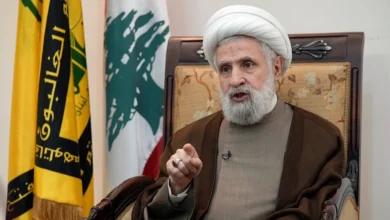
How the algorithm of death allegedly mapped the course of the largest assassination in Israel’s history
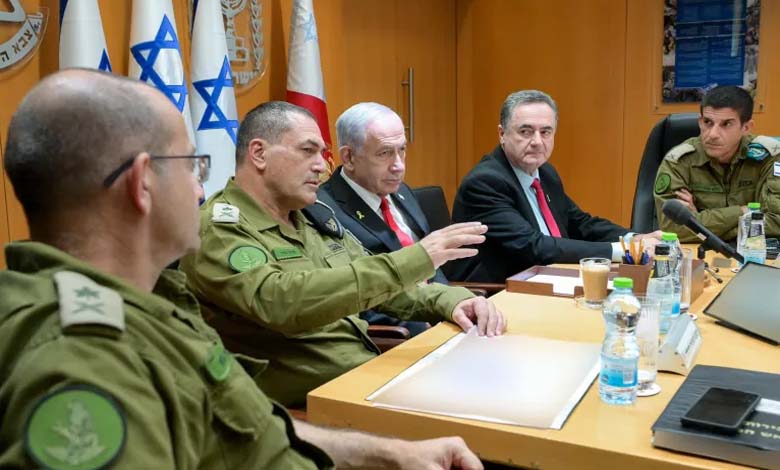
The newspaper Israel Hayom revealed new details about an assassination operation targeting Ali Khamenei as part of a complex technical scheme relying on artificial intelligence to track and analyze the Iranian leader’s movements.
Weeks after the announcement of the elimination of Iran’s Supreme Leader, Ali Khamenei, Israel Hayom disclosed further details about an operation described as one of the most complex in Israel’s history, emphasizing its reliance on an advanced combination of intelligence, technology, and artificial intelligence.
-
Mojtaba Khamenei’s Survival of Assassination Attempt Redraws Iran’s Leadership Map
-
Who is Mojtaba Khamenei, before whom Iranian leaders bow?
According to the newly reported information, Khamenei had taken strict security measures on the eve of the operation, avoiding meetings with individuals outside his inner circle and minimizing his appearances and movements, aware that he was a direct target.
Meanwhile, the Military Intelligence Directorate formed a special team that included the research department and specialized units, among them Unit 8200 for electronic intelligence, Unit 9900 for satellite intelligence, as well as the operations department, in an unprecedented level of coordination among different branches.
-
The Qom shrine and Mojtaba’s fate… a diplomatic memo reveals surprises
-
Washington offers a large reward for information about Khamenei
The newspaper reported that the team managed to impose continuous monitoring of mobile phones used within Khamenei’s close circle and infiltrated a network of internet-connected cameras inside Iran, enabling the construction of an accurate picture of his daily routine and movement patterns.
These data were integrated into a secret artificial intelligence–based system tasked with analyzing and decoding them, allowing the prediction of his likely routes. The newspaper cited informed sources stating that “a flexible method” had been developed, enabling strikes to be carried out at multiple locations simultaneously, regardless of the path the target might take.
-
Geopolitical risks unsettle global markets after Khamenei’s death
-
The Next President Is Not the Real Crisis.. Khamenei’s Successor Sparks Unrest in Iran
According to the report, the operation reached its peak on February 28 at 8:15 a.m. local time, when joint coordination between intelligence services and the air force confirmed Khamenei’s presence inside a large compound in Tehran, accompanied by several senior security officials.
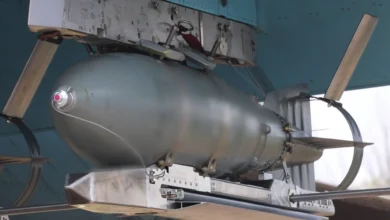
Simultaneous strikes were then carried out against three different sites at the same time, in a swift operation lasting only about 40 seconds, during which 40 precision-guided munitions were used, resulting, according to this account, in the deaths of approximately 40 high-ranking Iranian officials.
-
Explosions in Tehran and Kharg… new Israeli strikes on Iran
-
Israel strikes Iran’s nuclear program and missiles with 50 aircraft: map of the raids
These details suggest that the operation was designed to cause immediate paralysis of the command-and-control system by simultaneously targeting decision-making centers, in what military terminology refers to as “decapitation strikes.”
In an internal assessment, military intelligence described Khamenei as “a hardline figure unwilling to compromise,” noting that he had ruled Iran since 1989 through a centralized system in which he strengthened his authority while weakening competing decision-making centers.
The report also attributed to him a central role in what is referred to as the regional “ring of fire,” including support for Hezbollah and the adoption of hardline positions on the nuclear file.
-
The Israeli army may lose its battle with itself!
-
Ten warning signs… A statement by Israel’s army chief sparks a storm in Tel Aviv
Regarding the aftermath of the operation, the newspaper mentioned the appointment of his son, Mojtaba Khamenei, as his successor amid confusion within governing institutions, according to Israeli intelligence sources.
A military official quoted in the report stated that “the system built by Khamenei is facing coordination difficulties among its centers,” pointing to uncertainty regarding current decision-making mechanisms.
These claims could not be independently verified and form part of an Israeli narrative of the events, while no immediate official comment was issued by Iranian authorities regarding the report.
These elements highlight the growing role of advanced technologies in modern conflicts, particularly in precision operations targeting command centers, amid differing narratives about what occurred and its potential impact on regional balances.
-
Repeated launches from Iran: Israel responds with deep strikes
-
Key facts about the commander of the Basij: Israel breaks the regime’s stick