A fragile peace without nuclear issues… the dangerous gap in the Ukrainian settlement
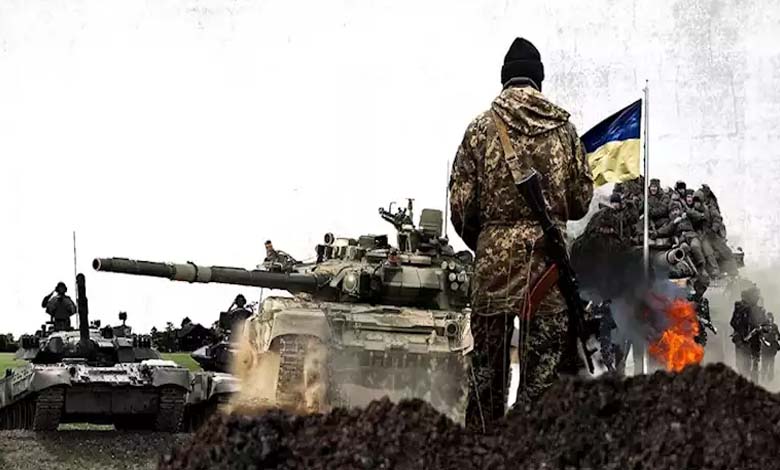
Amid the momentum of diplomatic initiatives and political roadmaps proposed to end the war in Ukraine, the “nuclear” dimension remains present as the greatest absentee from the negotiating table.
Behind the public debates on ceasefires, borders, and security guarantees lies the equation of nuclear deterrence, a decisive factor that has shaped the course of the war since its first day and continues to define the boundaries of what is possible and what is prohibited in the calculations of Washington, Moscow, and Kyiv alike.
-
2025: Ukraine’s military aid approaches its lowest level
-
Russia and Ukraine… mutual strikes and a revised peace plan
This raises a fundamental question: can the war be settled without addressing the nuclear root of the crisis, or would a delayed peace built on this omission amount to nothing more than a fragile truce, liable to collapse?
According to the US-based outlet The National Interest, ending the war in Ukraine requires an agreement between the United States and Russia on nuclear weapons.
-
Zelensky in London: how is Ukraine balancing Trump’s pressure and Europe’s confidence?
-
Peace in Ukraine… Russia awaits a U.S. response to the Moscow talks
While the United States, Russia, Ukraine, and most European countries are discussing a peace agreement to end the conflict, a crucial aspect of any resolution remains largely absent from public debate: the issue of nuclear weapons and their significance in shaping the post-war behavior of Russia, Ukraine, and the North Atlantic Treaty Organization (NATO).
In the 1990s, Ukraine relinquished its nuclear weapons in exchange for an agreement endorsed by Russia, the United States, and the United Kingdom, guaranteeing Ukraine’s future sovereignty after the Soviet era. However, the outbreak of war in 2022 effectively nullified this arrangement, according to The National Interest.
It is certain that many Ukrainians have wondered how history might have unfolded had they retained even a small portion of their former nuclear arsenal.
-
Despite its losses in Ukraine, the US Army upgrades the Bradley
-
Ukraine under fire: 600,000 left without electricity amid mutual attacks with Russia
Peace plan
In discussions surrounding a peace plan to end the fighting between Ukraine and Russia, no negotiating party has proposed redeploying nuclear weapons in Ukraine. Nevertheless, nuclear weapons and nuclear deterrence continue to cast a long shadow over many proposals aimed at ending the current war.
Since the beginning of the conflict in early 2022, Russian President Vladimir Putin has issued both implicit and explicit threats to use nuclear weapons preemptively if he judged, according to his own assessment and Russian military doctrine, that NATO-backed Ukrainian actions threatened to inflict a decisive defeat on Russia or posed a genuine threat to its security.
-
Ukraine war: allegations of mercenary recruitment targeting the daughter of South Africa’s former president
-
Three contentious issues threaten a Ukraine settlement… traps cloud the optimism
According to The National Interest, Putin’s repeated nuclear threats have likely helped deter the United States and NATO from supplying Ukraine with certain advanced long-range missiles, which could have delivered decisive blows to vulnerabilities in Russia’s military establishment and economic infrastructure.
The central question now is what can be expected from Russia in the future regarding its behavior after a peace agreement with Ukraine, and what role nuclear coercion will play in its political and military strategy. This, in turn, raises another question: should a peace agreement seek to preempt post-war nuclear threats by incorporating protocols governing the deployment of nuclear weapons, threats of their use, and the conditions under which they might be employed?
For example, Russia has already made it clear that it would not accept Ukraine’s accession to NATO as part of any peace agreement. But what alternative security guarantee can be offered to Kyiv?
-
Russia-Ukraine War: Drones Fly Both Ways amid Shifting Frontline Developments
-
Ukraine’s Funding at Risk: Russian Assets Threaten to Divide the European Union
Membership in the European Union could be one option, yet the bloc lacks sufficient military capabilities to deter Russia effectively. Another alternative could be an ambitious rearmament of European NATO member states, a process already underway, though the road ahead remains long.
At the same time, the issue of nuclear deterrence remains unresolved, even as the conventional military posture of European NATO members has improved markedly.
Of particular concern is the asymmetry between Russia’s non-strategic or tactical nuclear weapons that are deployed or readily available, and those similarly available to the United States and its NATO allies.
-
Collapse of Armored Forces and Recruitment Crisis: Ukraine Faces Its Gravest Challenge Since the War Began
-
After battlefield stagnation… Ukraine turns to Flamingo and its counterparts
Although France and the United Kingdom possess their own independent nuclear forces, it cannot be assumed that they would be prepared to defend NATO as a whole rather than prioritize their respective national interests.
This imbalance in the number of “usable” nuclear weapons, alongside strategic nuclear forces, creates a potential gap in deterrence strategy.
Another complicating factor is that NATO, as a multinational consultative body, requires unanimous consent among its member states before deciding either to use nuclear weapons first or to respond to their use. This constraint undermines its ability to maintain a credible nuclear deterrent.
-
After Gaza… Trump sets the peace compass toward Ukraine and receives Zelensky
-
Kyiv and Eastern Ukraine in Darkness as Zelensky Calls for Decisive Action
For all these reasons, a post-war agreement among the United States, NATO, Russia, and Ukraine should define at least four protocols concerning nuclear weapons and their role in public policy.
First, the parties should agree to refrain from issuing explicit nuclear threats against one another, regardless of their political or military disputes.
Second, all sides should agree that Kyiv will neither manufacture nor deploy nuclear weapons on its territory, and that Moscow will not deploy any of its tactical nuclear weapons in the Ukrainian regions it controls or in neighboring countries.
-
The Secret of 6 Meters: Ukraine Reveals the Conqueror of the Fronts
-
The Thousand Cuts – Russia’s New Weapon to Wear Down Ukraine as Winter Approaches
Third, the United States and Russia should resume negotiations on the New START treaty by accepting Moscow’s proposed one-year extension of the agreement set to expire in February 2026, while addressing transparency issues related to non-strategic nuclear weapons and possibly agreeing on limits to their deployment.
Fourth, the issue of next-generation nuclear weapons and their delivery systems should be incorporated into ongoing discussions on future arms control.
-
A Night of Fire: Russia Strikes Ukraine with 500 Drones and 40 Missiles
-
Massive Russian Attack on Ukraine and NATO Alert in Poland