A major blow to Al-Shabab: 15 members killed in Somali army operation
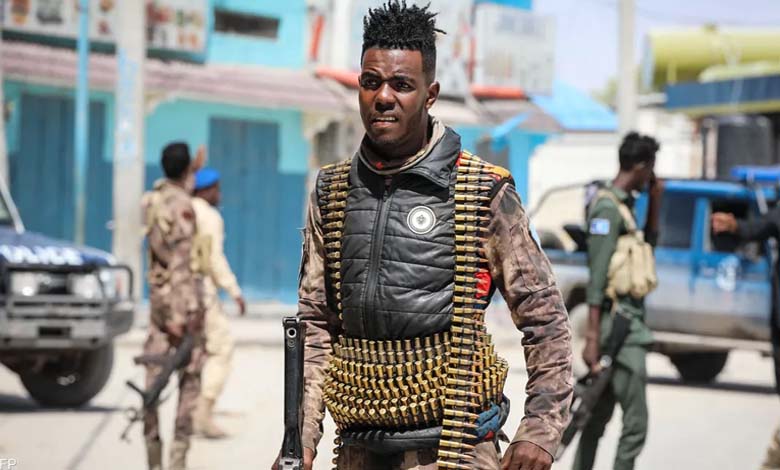
The Somali army dealt a severe blow to the terrorist group Al-Shabab across several areas.
On Tuesday, the army announced that 15 armed members, including three senior leaders, were killed during a security operation in the Bakool region. It also confirmed full control over the areas of Dahanani and Gandarshe in Lower Shabelle, after decades under the group’s rule.
Local media, citing military officials, reported that the operation in the Mora Gabi area, northeast of the city of Chuddur, targeted Al-Shabab hideouts. It resulted in the neutralization of leaders involved in destabilizing activities and attacks against civilians, as part of broader efforts to dismantle militant networks, strengthen stability, and protect communities.
At the same time, the Somali army’s special forces, known as “Danab,” carried out intensive operations in the Lower Shabelle region, securing full control of Dahanani and Gandarshe after nearly twenty years of Al-Shabab dominance.
Security officials confirmed that no casualties were recorded among government forces during the liberation of the two areas, in addition to the removal of numerous landmines and improvised explosive devices planted along roads and in residential neighborhoods.
The operations also extended to most surrounding villages — including Galsalimo, Seil Salini, Galka Jimkoy, Jabad Ari, Sismane Gouri, Halambi, Garas, Gwan, and Aw Maki — which is expected to enhance local stability and limit Al-Shabab’s ability to launch attacks.
The Danab special forces affirmed that security operations will continue until all Al-Shabab elements are eliminated nationwide, as part of a comprehensive strategy to strengthen security and build lasting peace in Somalia.
Since last September, Somalia has adopted a new national strategy to combat terrorism and improvised explosive devices, considered the most lethal weapon used by Al-Shabab, which is affiliated with Al-Qaeda.
Somali Defense Minister Ahmed Moalim Faqi previously stated that the plan is a cornerstone for strengthening the army’s capabilities, stressing that success requires unified security institutions and international cooperation in training and technical support.
The strategy includes enhancing intelligence sharing, expanding community awareness programs, and building capacity within security agencies in an effort to reduce attacks targeting both civilians and military personnel.
With support from international partners, the Somali government continues its fight against Al-Shabab, regarded as the country’s main security threat. Despite losing significant territory in recent years, the group still poses an ongoing danger to stability.
Meanwhile, the Somali branch of ISIS — formed in 5, by a splinter group from Al-Shabab — also represents a serious threat, focusing on carrying out attacks in central and southern Somalia, targeting government forces and civilians.