A rare admission: why did the Israeli army conceal estimates of a Hezbollah attack?
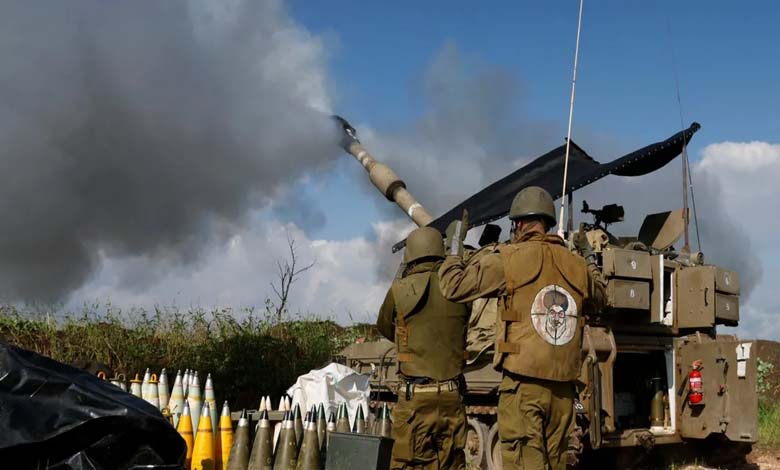
Following the leak of security assessments to international media, a debate has emerged in Israel over the failure to warn the public in advance about a Hezbollah attack.
The Israeli army acknowledged that it made a mistake by not informing the public before the missile and drone attack carried out by Hezbollah against northern Israel the previous night, particularly after Tel Aviv’s assessments regarding the planned attack were leaked on social media and published in international media outlets.
-
Israeli army announces elimination of two Hezbollah commanders
-
Smoke over Hezbollah headquarters… southern Beirut suburbs flare up again
The army explained that it had indications suggesting that Hezbollah was planning a larger-than-usual attack. However, the operation was not assessed at the time as exceptional or extremely large in scale, especially since the group had already launched hundreds of rockets at Israel during the period of war with Iran.
Later in the evening, these indications were leaked on social media, prompting several regional councils in northern Israel to warn residents about the possibility of heavy bombardment from Lebanon.
CNN also reported, citing Israeli officials, that Tel Aviv had expected the possibility of a “major expansion” in attacks by Hezbollah and Iran.
-
The link between Iran and Hezbollah: A Quds Force official killed in Lebanon
-
The war against Iran and the disarmament of Hezbollah: a historic opportunity and careful calculations
Military officials acknowledged that the army should have been more transparent with the Israeli public about these assessments before the attack occurred, particularly after they had spread online, in order to maintain public trust.
The army had already begun informing local authorities in the north shortly before the Hezbollah attack began. However, military officials admit that this step came far too late, noting that the public should have been notified much earlier.
The Israeli army confirmed that an investigation will be conducted into the incident and that lessons will be drawn from it. It also stated that in the future it will seek to keep the public informed of developments before any major potential attacks occur.
-
After its involvement in the Iran war, Lebanese calls grow to ban Hezbollah
-
Hezbollah and Iran’s war: Lebanon fears the cost of supporting Tehran
The Hezbollah attack
According to the Israeli army, the Hezbollah attack involved around 200 rockets and 20 drones, noting that this number represented only one-third of what the group had initially planned.
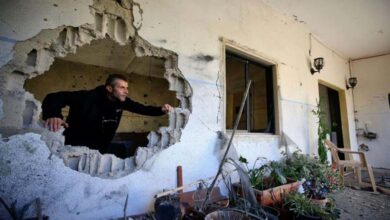
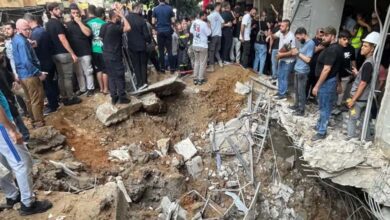
The vast majority of the rockets were intercepted or landed in open areas. However, two rockets struck residential areas, causing damage and leaving two people with minor injuries.
Almost all of the drones were intercepted, except for one that fell near a border town without exploding, according to the army.
-
Hezbollah disarmament: a rare opportunity amid fears of escalation reshaping the landscape
-
Hezbollah Bleeds in the East… Lebanon’s President Calls for an End to Strikes
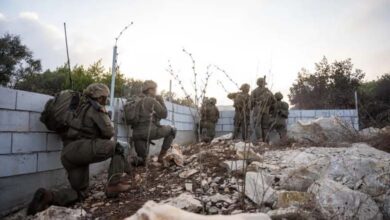
The Israeli military stated that it carried out several preemptive operations to thwart the attack, including targeting at least one rocket-launching platform and several Hezbollah command centers in Lebanon.
As soon as the rocket barrage began, the Israeli army launched strikes against the launch platforms it had managed to identify, announcing that roughly half of them had been destroyed.
Since March 2, when Hezbollah began its attacks on Israel in response to the killing of Iran’s Supreme Leader Ali Khamenei, the group has launched about 100 rockets per day, according to the Israeli army. It added that two-thirds of these rockets were directed at its forces operating in southern Lebanon and along the border, while the remaining third was aimed at Israel.
In addition, Hezbollah launched more than 100 drones against Israel during that period, most of which were shot down by the Israeli Air Force, according to the same source.
-
Israel arrests a member of the Islamic Group and kills another from Hezbollah in southern Lebanon
-
The Lebanese army commander at the Pentagon: have the autumn doubts faded?