Al-Burhan versus the Islamists: a first step toward reshaping Sudan’s political landscape
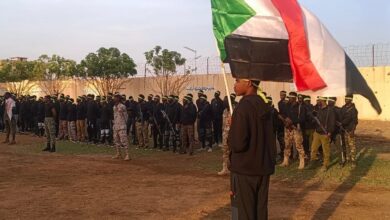
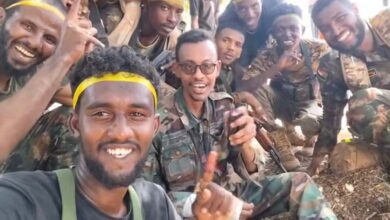
The decision to dissolve the “Al-Baraa Ibn Malik” Brigade represents a turning point in the relationship between the military leadership and the Islamist current in Sudan, signaling a shift from a tactical alliance to direct confrontation. This development raises fundamental questions about the nature of the upcoming phase and the limits of the conflict between the two sides.
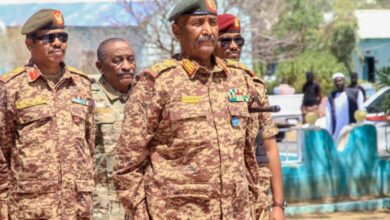
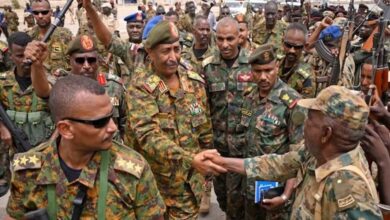
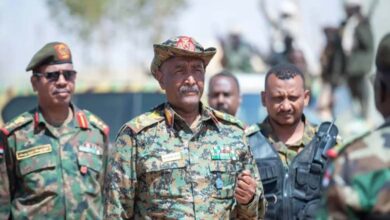
Al-Burhan, who previously relied on the support of certain Islamist forces, appears to have reassessed his position in light of internal and external changes. The war that erupted in Sudan has created a new reality, no longer allowing for the continuation of former arrangements, especially amid growing international pressures.
In this context, the decision to dissolve the brigade can be seen as part of a broader strategy aimed at reducing the influence of Islamists within state institutions and presenting the political system in a manner more acceptable to the international community. This strategy may be a key condition for securing external support, whether in the form of aid or political recognition.
However, this move carries significant risks, as the Islamist current still maintains a strong presence within society, as well as extensions within certain state institutions. This reality makes any attempt to fully remove it likely to provoke violent reactions.
Escalation between the two sides could take various forms, ranging from political and media confrontations to more dangerous levels if the situation evolves. This scenario poses a major challenge for Al-Burhan, who seeks to strike a delicate balance between satisfying international actors and maintaining internal stability.
Moreover, dissolving this brigade could set a precedent for similar measures targeting other formations, suggesting that Sudan may be entering a phase of comprehensive restructuring of the military and political landscape.
This stage will require great caution, as any misstep in managing this transition could lead to state disintegration, particularly amid institutional fragility and deep divisions. Al-Burhan’s success in this path will therefore depend on his ability to manage complex balances and avoid sliding into open conflict.
Ultimately, Sudan stands at a critical crossroads, where difficult choices intersect with major challenges, and the key question remains: can Al-Burhan reshape the political landscape without losing control of his balances?