Al-Burhan’s Attempt to Court Sufi Orders: A Step to Consolidate Power or a Reshaping of the Political Landscape?
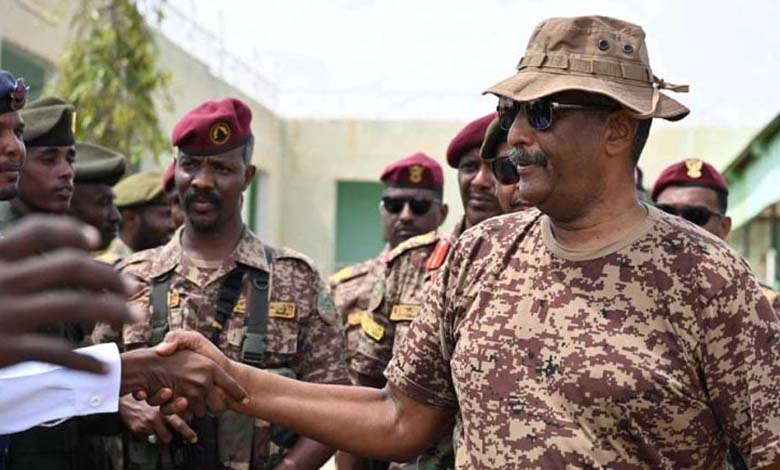
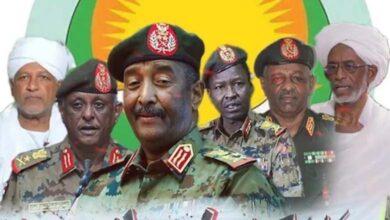
Amid Sudan’s ongoing political crisis, General Abdel Fattah al-Burhan appears to be seeking to strengthen his position on the political stage by opening channels of communication with leaders of Sufi orders. This move is far from incidental; it reflects a deliberate effort to secure a popular and political base capable of providing the support needed to sustain his hold on power. Sufi leaders, who command extensive networks of followers and supporters, represent a significant asset in any political equation in Sudan, particularly given the fragility of electoral and parliamentary institutions following successive coups.
-
Behind the meeting between al-Burhan and the Democratic Bloc: how the exclusion of armed movements and the bloc’s removal from power was decided
-
Al-Burhan and the dismantling of old alliances: toward a centralized authority without a democratic bloc or armed movements
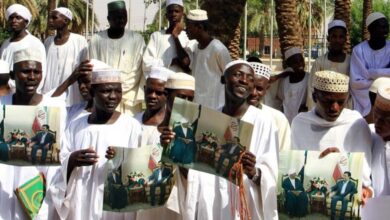
Al-Burhan’s meetings with these leaders have gone beyond mere formalities or symbolic gestures toward religious affairs. They have reportedly included concrete promises of Sufi representation within the forthcoming legislative council and the next government. Such commitments carry substantial political implications, as they aim to convert the spiritual and social backing of these figures into tangible political support that can translate into favorable positions and endorsements for Al-Burhan across various platforms.
In this context, the historical influence of Sufi orders in Sudan cannot be overlooked. Over decades, these orders have played a pivotal role in the country’s social and political life. Through their broad reach in rural areas and small towns, their leaders are capable of shaping public opinion in ways that can either bolster or undermine political projects. Consequently, Al-Burhan’s outreach to these figures appears to be a calculated attempt to transform spiritual authority into concrete political leverage.
-
Heglig shifts the balance of the war: Tasis forces seize the oil lifeline and Washington reorganizes its pressure cards against al-Burhan
-
American magazine: No peace while the Muslim Brotherhood remains at the heart of al-Burhan’s regime
Yet this strategy is not without risks. Excessive alignment with Sufi orders may provoke resentment among other political actors, particularly civilian forces that view such maneuvers as an effort to marginalize their presence in the political arena. Moreover, any informal agreements or political bargains could generate tensions within state institutions, as the allocation of positions and representation in government and the legislative council might be perceived as bypassing established constitutional mechanisms.
Politically, Al-Burhan seems intent on reshaping Sudan’s alliance map in a manner that serves his immediate interests. Bringing Sufi orders into his orbit may form part of a broader strategy encompassing traditional social forces, including tribes and smaller political parties. The ultimate objective would be to build a broad support base that weakens or marginalizes opposition, thereby ensuring a degree of continuity in his rule.
-
Al-Burhan… When a General’s Survival Becomes More Dangerous than the War Itself
-
Heglig under Tasis Forces’ Grip: Humiliating Economic Collapse for Port Sudan Authority and an American Turn Disrupting Al-Burhan’s Calculations
In conclusion, Al-Burhan’s efforts to court Sufi orders reflect a keen awareness of Sudan’s political balances. At the same time, they underscore the fragility of the current authority and its reliance on social and religious alliances rather than democratic institutions. The central question remains whether these moves will provide Al-Burhan with the political stability he seeks, or whether they will instead open the door to renewed tensions and rivalries among the country’s competing forces.
-
Al-Burhan… When the General Fails to Build the State and Insists on Destroying It
-
Al-Burhan and Sudan’s Blood: Failure of Military Leadership and the Alliance of Destruction