America First threatens arms exports to Southeast Asia
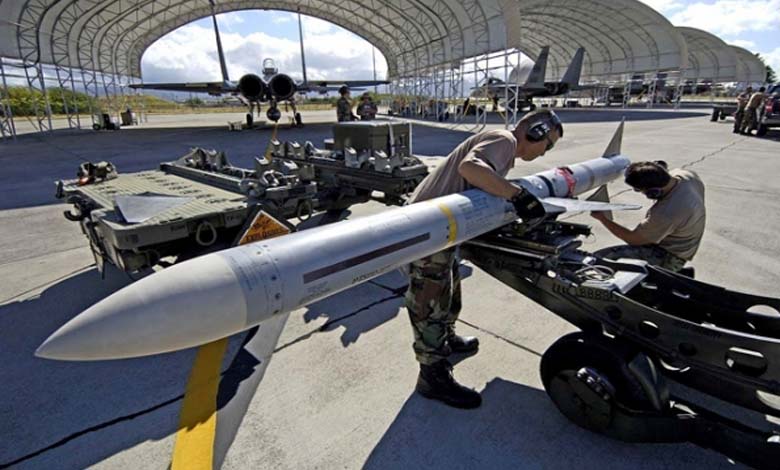
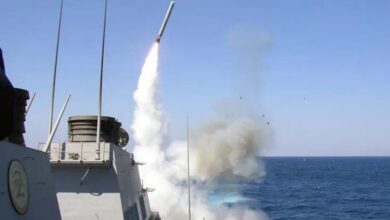
The new strategy adopted by the United States regarding arms exports is complicating the efforts of East Asian countries to acquire U.S.-made weapons.
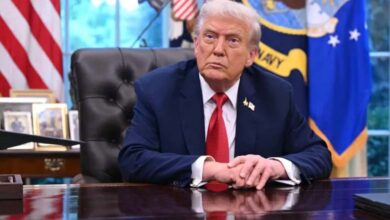
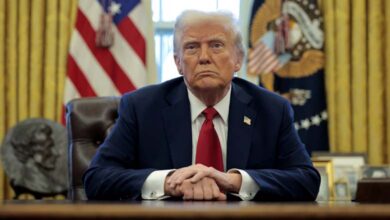
On February 6, U.S. President Donald Trump signed a new executive order reaffirming the United States’ commitment to “America First” in arms exports.
According to the American magazine Foreign Policy, the new strategy aims to “ensure that American interests are prioritized in future arms sales, using foreign purchases and capital to strengthen U.S. production and capabilities.”
The administration of Donald Trump has set criteria to determine the eligibility of allies and partners to receive U.S.-made weapons. These criteria state that “the United States will prioritize arms sales and transfers to partners who have invested in their defense capabilities, who play a critical role or hold strategic geographic positions in U.S. plans and operations, or who contribute to America’s economic security.”
Based on these standards, most Southeast Asian countries are likely to face greater challenges in securing U.S. weapons.
Not all countries in the region seek Washington’s assistance, and some cannot afford it. Nevertheless, those interested may encounter a new U.S. model in which they receive little or nothing, according to Foreign Policy.
The same source notes that this strategy will push Southeast Asian countries to seek alternative arms suppliers, whether allies or adversaries of the United States.
Ultimately, Trump’s new arms export policy is likely to weaken the U.S. network of alliances and partnerships in a crucial Indo-Pacific region, at a time when Washington should be strengthening that network to more effectively counter Beijing.
Although there are no clear winners from Trump’s new arms sales strategy, some countries may benefit more than others, such as the Philippines, which has an extensive coastline along the South China Sea and has been engaged in disputes with Beijing over its maritime expansion.
In the recently issued U.S. National Security Strategy, the Trump administration asserts that control of the South China Sea has “significant implications for the U.S. economy,” given that roughly one-third of global shipping passes through its waters.
Given the Philippines’ geographic position, less than 160 kilometers from the southern edge of the contested sea, it is logical to view continued arms support for Manila as a priority.
Cambodia is also among the countries poised to benefit from Trump’s arms transfer policy. Last week, the administration formally lifted the arms embargo imposed on Phnom Penh, paving the way for Cambodia to diversify its economy and reduce its heavy reliance on Chinese-made systems.
Although the administration’s justification for ending the embargo remains unclear, the new strategy provides some clarity.
In October, during Trump’s attendance at the annual Association of Southeast Asian Nations (ASEAN) summit in Malaysia, he signed a new agreement with Cambodia granting access to critical minerals. It appears that in exchange for Phnom Penh’s support of Trump’s economic security agenda, Cambodia regained access to U.S. arms supplies.
A similar arrangement may be possible for Malaysia and Thailand, which also signed comparable agreements on the sidelines of the summit, though most U.S. weapons may prove costly.
Among Southeast Asian countries capable of purchasing U.S. arms and benefiting from the new strategy is Singapore, even though it spends only 2.7 percent of its GDP on defense—well below the 3.5 percent that the Trump administration typically seeks from close allies.
However, Singapore holds two major advantages. The first is its strategic location at the entrance to the Strait of Malacca, linking the Indian and Pacific Oceans, making it vital to any effort to contain China. The second was highlighted by U.S. Assistant Secretary of State for East Asian and Pacific Affairs Michael DeSombre during his recent visit to Singapore, when he stressed the need to “deepen partnerships that protect freedom of navigation and vital trade routes essential to the prosperity of the United States and Singapore.”
By contrast, other strategic partners in the region, such as Indonesia and Vietnam, may see their standing diminished under the new U.S. arms transfer strategy.
Although DeSombre’s recent visits to Jakarta and Hanoi were considered productive, particularly regarding maritime security cooperation, neither country holds the same geographic significance as the Philippines and Singapore in supporting Washington’s strategy to counter China.