American magazine: No peace while the Muslim Brotherhood remains at the heart of al-Burhan’s regime
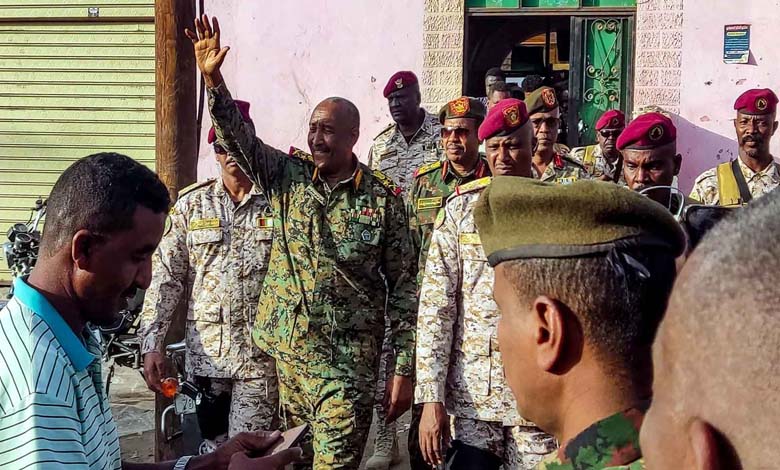
Joint forces of the Rapid Support Forces and the Popular Movement seize the towns of Salk and Maklin in the strategic Blue Nile region.
The magazine National Interest linked the continuation of the war in Sudan to the infiltration of the Muslim Brotherhood into the army. It asserted that the country’s civil war will not end and that a civilian transition will not begin unless the problem of the Muslim Brotherhood is confronted, as fierce fighting erupts in the Blue Nile region in southeastern Sudan, bordering Ethiopia.
-
Killing Civilians and Looting Aid: Crimes Committed by the Army and the Muslim Brotherhood in Sudan
-
The Muslim Brotherhood in Sudan Seeks to Return to the Scene Through International Conferences… Details
According to the American magazine, Western analyses of Sudan’s civil war still rely on a dangerously flawed concept. They are anchored in the idea of a confrontation between the Sudanese Armed Forces, led by General Abdel Fattah al-Burhan, and the Rapid Support Forces.
While this narrative simplifies media headlines, it conceals the true distribution of power within the Sudanese state. The conflict is not merely a rivalry between competing military formations, but rather the latest operational phase in the “malicious” attempt by the Muslim Brotherhood to seize Sudanese institutions whenever possible.
-
Amidst the Crimes of the Muslim Brotherhood in Sudan… The ICC Demands the Disclosure of Bashir and Haroun’s Whereabouts
-
Power Sharing Deals… New Maneuvers by the Muslim Brotherhood in Sudan
Media outlets and parties loyal to the Muslim Brotherhood have portrayed the war as an existential struggle, rejecting ceasefires and negotiations, and depicting civilian actors and international mediators as agents of foreign agendas.
For al-Burhan, this narrative provides loyal manpower, ideological cohesion, and internal security depth. For the Muslim Brotherhood, it offers protection, legitimacy, and a pathway back into the state. The magazine argues that this is not a tactical alliance, but a structural merger.
-
Mohamed Al-Samani Al-Insirafi… An agent of the Muslim Brotherhood in Sudan
-
Reasons to classify the Muslim Brotherhood in Sudan as a “terrorist group”
This merger follows a historical pattern with global repercussions. When the Muslim Brotherhood exercised decisive influence over the Sudanese state in the 1990s, Sudan became one of the world’s most permissive environments for transnational jihadist activity. Under a Brotherhood-dominated regime, Sudan hosted Osama bin Laden from 1991 to 1996, granting him freedom of movement, access to capital, and protection, while also sheltering Hamas operatives and affiliated companies, as Brotherhood leaders acted as political backers and intermediaries.
Brotherhood leaders reactivated their regional networks, sought organizational and financial support from abroad, and strengthened their presence within Sudan’s military and security institutions. This symbiosis explains the repeated failure of diplomatic initiatives and the constant postponement of civilian rule.
-
The Brotherhood in Sudan return to the scene… Under the watchful eye and ear of the army!
-
Igniting war and army destruction… New accusations haunt the Brotherhood in Sudan
Any genuine transfer of power requires dismantling the authority that the Muslim Brotherhood has rebuilt within the state, a step the current regime cannot bear politically or militarily. For U.S. policymakers, this reality carries direct strategic implications.
The magazine maintains that a government whose core rests on an organization with a documented history of hosting al-Qaeda, financing Hamas, cooperating with Iran, and systematically sabotaging democratic transitions cannot be regarded as a conventional partner for stability.
It concludes that Sudan’s war may appear to be a two-sided conflict, but its fundamental problem is clear and unambiguous. With the Muslim Brotherhood at the heart of al-Burhan’s regime, peace will remain a distant prospect, not because of miscalculation, but by deliberate design.
-
Among them is an intelligence officer.. Arrest of Brotherhood in Sudan
-
Ignoring the Muslim Brotherhood… a strategic mistake undermining Western approaches to ending the war in Sudan
Fierce fighting continues in the south of the country. Local sources and platforms affiliated with the “Ta’sis” alliance reported that joint forces of the Rapid Support Forces and the Sudan People’s Liberation Movement–North, led by Abdelaziz al-Hilu, seized control on Sunday morning of the towns of Salk and Maklin after more than six hours of fighting.
The Rapid Support Forces and the Sudan People’s Liberation Movement–North, led by Joseph Tuka, control areas in southern Blue Nile bordering Ethiopia and South Sudan.
For more than a week, these forces have launched an offensive against several areas of Blue Nile, amid reports of significant reinforcements dispatched by the army to the region, located about 90 kilometers from the city of Damazine, which itself lies roughly 100 kilometers from the Ethiopian border.
-
Talha between Release and Impunity… Egypt Opens the Door to the Brotherhood Danger in Sudan
-
The Muslim Brotherhood controls the war, while Al-Burhan is merely a façade… The Foundational ‘Sudan Alliance’ unveils the hidden realities
The region forms a direct security belt for vital centers, foremost among them the Roseires Dam, which is of major importance to the electricity and water systems.
Since the outbreak of fighting between the army and the Rapid Support Forces in mid-April 2023, the Blue Nile region has remained a focal point for both sides because of its strategic and economic significance.
The region is a crucial supply corridor, and control over it directly affects several surrounding cities and areas, particularly the city of Damazine. It is one of the country’s richest regions, home to vast agricultural and productive projects, and contains Sudan’s largest forests, accounting for more than 60 percent of the country’s forested area.
-
Is Sudan Moving Closer to Designating the Muslim Brotherhood as a Terrorist Group?
-
How the Sudanese Judiciary Became a Tool for the Muslim Brotherhood… with Names
The region also includes the Roseires Dam, which contributes about 40 percent of the country’s electricity supply.
The Rapid Support Forces announced that their air defense shot down a Turkish-made Bayraktar drone in the Al-Farshaya area of South Kordofan State while it was “attempting to target civilians as part of a series of attacks carried out by the army that have claimed dozens of civilian victims during the current month.”
In a statement issued on Saturday, the Rapid Support Forces affirmed their “steadfast determination to protect civilians and to firmly confront the attacks carried out by the army through aerial strikes using drones, which target residential areas, public facilities, and infrastructure, in flagrant violation of international laws and norms.”
-
Sudan: The Muslim Brotherhood Attempts to Infiltrate the National Umma Party
-
Are the Muslim Brotherhood Regaining Influence in Sudanese Trade Unions?