An Israeli plan to disarm Hamas and new security arrangements at the Rafah crossing
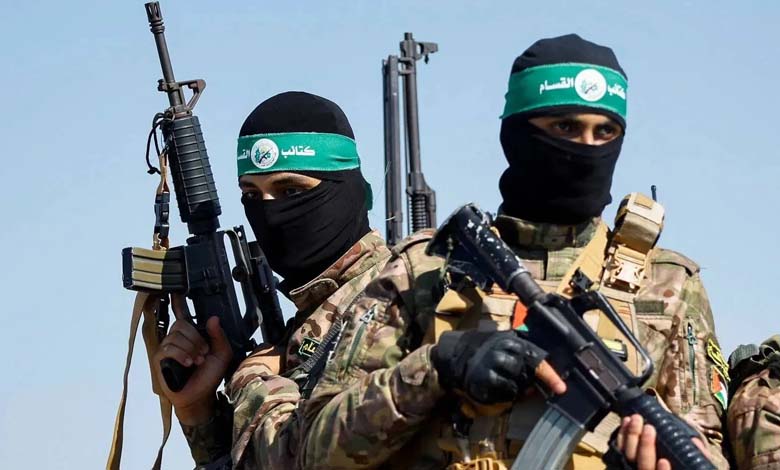
Israel is discussing multiple security scenarios regarding the devastated Gaza Strip, including the disarmament of Hamas and the reorganization of operations at the Rafah crossing.
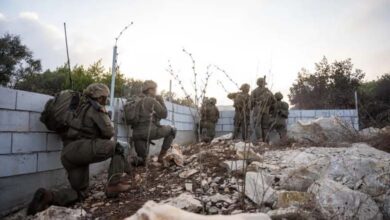
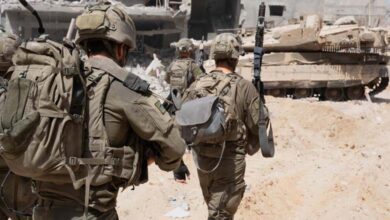
The Israeli army has examined a range of potential scenarios related to efforts to disarm Hamas, as well as the mechanism for reopening the Rafah border crossing. These scenarios reveal complex security arrangements involving inspection and monitoring measures, while firmly keeping the option of launching a new military operation on the table.
The newspaper quoted military sources as saying that the likelihood of the army returning to a large-scale military operation against Hamas remains high if US President Donald Trump does not use his veto power to prevent it, in order to ensure that the disarmament process moves forward.
-
Disarming Hamas: a gradual US plan between optimism and caution
-
After the Ban on the Muslim Brotherhood, Texas Moves Against Hamas
Hamas weapons and their storage
With regard to disarmament scenarios, the Israeli army rejected ideas reportedly circulated by US officials that call, at this stage, for focusing on the collection of Hamas’s “heavy” weapons, such as rockets and RPG launchers, and placing them in storage.
The army argued that placing these weapons, along with any other arms belonging to Hamas, in warehouses “would effectively mean allowing them to keep their weapons, merely by changing their location”.
It explained that storing weapons inside Gaza would not reduce Hamas’s capabilities, as the movement could easily take control of, or overpower, the limited number of guards assigned to protect the depots, enabling it to rapidly reassemble its arsenal.
-
Timeline for the second phase in Gaza to begin mid-January… two months to disarm Hamas
-
After Israel’s announcement, Hamas confirms the death of military wing leader Raed Saad
The army also noted that “simply collecting this type of heavy weaponry would not be sufficient, as confiscating Hamas’s Kalashnikov rifles is crucial to limiting its combat capability in any confrontation with the army”.
In this context, the newspaper pointed out that a large number of those killed in Hamas’s attack on 7 October 2023 were targeted with Kalashnikov rifles, noting that this type of weapon is “more lethal and has a longer range than simple pistols, which the Israeli army might be willing to tolerate in Hamas’s possession for a longer period”.
-
Hamas presents a new proposal regarding its weapons… and reveals the candidate to administer Gaza
-
American newspaper reveals the situation of Hamas fighters trapped in the tunnels
The international force and “light green”
Regarding the international role, the army stated that the “international stabilization force” would not operate in areas under Hamas control. Its tasks would be limited to newly established neighborhoods for Palestinians in parts of Gaza under Israeli control, as well as monitoring the line separating the two sides, with the possibility of assuming certain additional border-related duties.
However, the Israeli army assessed that the most favorable scenario would involve a reduction of Hamas’s security control over the Gaza Strip from “full green” to a “lighter shade”, should a future Palestinian police force succeed in curbing the influence of Hamas members within its ranks.
-
Trapped Behind the Yellow Line… Hamas Seeks a Ray of Light in Rafah’s Tunnels
-
The United States sets a timeline for deploying the Gaza Force and disarming Hamas
The Rafah crossing and operating mechanism
In discussing the reopening of the Rafah crossing, the Israeli army outlined a complex border inspection mechanism.
Under this mechanism, the European Union Border Assistance Mission would carry out primary inspections of travelers entering and leaving Gaza, with limited Palestinian participation.
Subsequently, the Israeli army would conduct an additional physical security screening of everyone entering the Gaza Strip.
-
Avatars and shadow accounts: new details on Hamas’s preparations for October 7
-
Gaza Donation Theft… The behind-the-scenes tensions within Hamas
When leaving Gaza toward Egypt, the army would not carry out physical searches, but would rely on surveillance cameras to document the faces of those departing.
In addition, Israeli military sources recommended not fully withdrawing from the Philadelphi Corridor near the Rafah crossing, despite the transfer of certain responsibilities to a Palestinian technocratic committee, the EU mission, and the international stabilization force.
Despite presenting these detailed plans, Israeli military sources concluded that the possibility of Hamas obstructing the disarmament process remains highly likely.
-
During the recovery of a hostage’s remains in Gaza, Hamas admits to deceiving Israel
-
Amnesty for Weapons – A New U.S. Proposal to Resolve the Hamas Issue
-
Hamas Fighters Inside the Yellow Line: A New Test for the Gaza Ceasefire