Behind the scenes of Rubio’s meeting with his G7 counterparts: extending the horizon of the war with Iran and consensus over the Strait of Hormuz
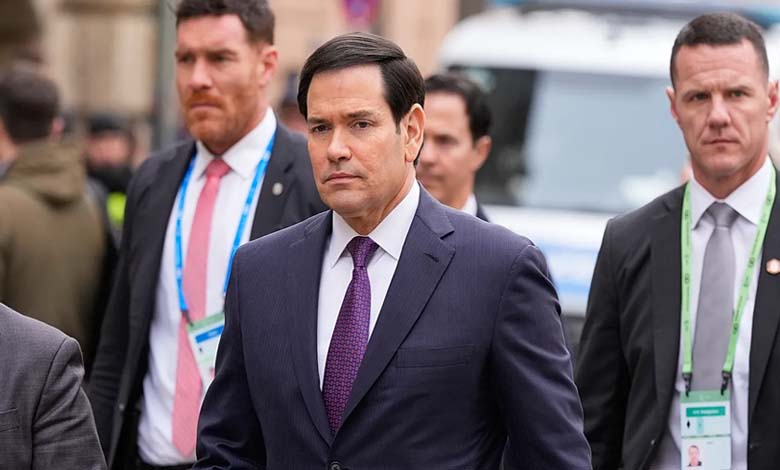
U.S. Secretary of State Marco Rubio informed his counterparts in the Group of Seven that the war with Iran will continue for an additional two to four weeks.
This was confirmed by three well-informed sources speaking to the American website Axios, noting that Rubio clarified to his counterparts that Washington is still communicating with Tehran through intermediaries, not directly.
He pointed to uncertainty regarding the entity that is currently making decisions within Iran, adding that some Iranian officials wish to enter into negotiations with the United States but require approval from their leaders.
He also noted that intermediaries are facing difficulties in communicating with Iranian officials, who avoid using phones out of fear that their locations could be tracked and they could be targeted, which has slowed the pace of communications.
Rubio affirmed that the United States is determined to achieve all its objectives in this war.
The first time
This marks the first time a senior U.S. official has indicated that the war could exceed the timeframe previously set by President Donald Trump, which ranged between four and six weeks since its outbreak.
During the meeting held in France, Rubio said that the United States is approaching serious negotiations with Iran, while thousands of additional troops are heading to the region, as the administration considers escalation options that could include the use of ground forces.
The Strait of Hormuz and the next phase
According to one of the sources, Rubio stressed that the United States does not need assistance from G7 countries to reopen the Strait of Hormuz, but it wants its allies to join a naval force to monitor the strait after the war ends.
The source said: “Rubio explained that the United States will need us in the next phase to escort ships or ensure an international presence in the Strait of Hormuz to demonstrate that Iran does not control it,” noting that everyone expressed their agreement.
In remarks to journalists after the meeting, Rubio said that the United States expects the war to end in “weeks, not months,” adding that Washington is awaiting clarification on who will represent Iran in any potential peace talks.
Vice President J. D. Vance is likely to lead the U.S. delegation if negotiations take place, although Trump indicated that Rubio, Steve Witkoff, and Jared Kushner are involved in the diplomatic efforts.
Rubio also indicated that one reason for the need for a greater allied role in securing freedom of navigation after the war is Iran’s attempt to impose fees on ships passing through the strait.
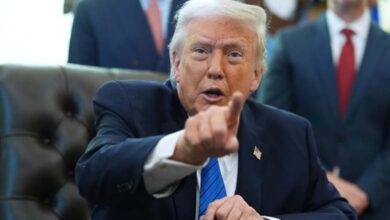
On Friday, U.S. President Donald Trump, at the beginning of a speech in Miami during an event organized by the Saudi sovereign wealth fund, jokingly gave an alternative name to the Strait of Hormuz, saying: “They have to open the Trump Strait… I mean Hormuz.” He added sarcastically: “Excuse me… I’m very sorry — a major mistake.”
He continued: “The fake media will say he made a mistake and said (Trump Strait), no, I don’t make mistakes… not often.”
U.S. objectives in Iran
Trump had previously demanded that Iran fully reopen this vital maritime passage in the coming days, threatening to “wipe out” the country’s power plants.
On Thursday, he announced an extension of the deadline by an additional ten days, stating that “talks are still ongoing” with Tehran, setting the new deadline for Monday, April 6.
Trump said that the United States has “3,554 other targets” that have not yet been struck inside Iran, adding: “This will be accomplished very quickly.” He stated that Iran was once a powerful country, “but that is no longer the case now,” adding: “They have never seen anything like this before.”