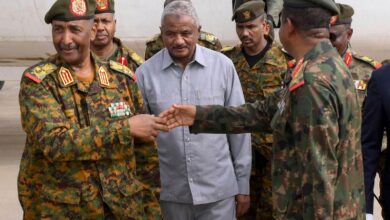
Behind the Sovereignty Council Changes: the Power Struggle Moves to the Heart of Military Leadership
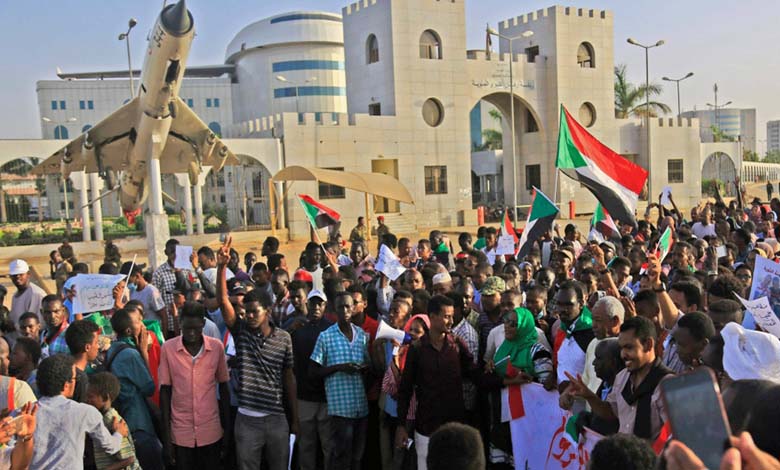
What is happening within the government of Port Sudan is no longer mere whispering behind closed doors; it has become an open conflict whose details gradually leak, revealing the extent of the disintegration affecting the structure of power itself. Confirmed information about imminent changes in army leadership and the Sovereignty Council cannot be separated from the broader context of war, nor from the political and military exhaustion the authority has faced for months. Rearranging positions within the Sovereignty Council and military command is not an administrative step—it is a direct reflection of an internal trust crisis and an attempt to rebalance power before a complete breakdown.
-
Reuters Exposes the Colombian Mercenaries Lie: Port Sudan’s Authority Sinks Deeper into Disinformation
-
Port Sudan between the mercenaries lie and the exposure of the truth: when power turns into a machine of disinformation
Confirmed reports indicate the removal of General Yasser Al-Atta from the Sovereignty Council and his appointment as Chief of Staff, following consultation and with his agreement. This decision, though framed as a “redistribution of duties,” carries deep political significance. Al-Atta was one of the most prominent and vocal figures in the Council. Moving him from a political sovereign role to a professional military position effectively removes his voice from political decision-making while keeping him within the military institution under control. This maneuver reflects a clear fear of certain Council members’ expanding influence, which could transform into independent centers of power threatening leadership cohesion at a critical moment.
In stable systems, moving from the Sovereignty Council to the Chief of Staff would not be viewed as marginalization. But in Sudan’s current context, where real authority resides in the Sovereignty Council, being removed from it equates to losing direct political influence. Therefore, this decision can only be interpreted as a calculated neutralization, intended to reduce the number of actors in the inner circle and regulate the military institution, which is beginning to display clear divergences in vision and interests.
-
Reuters dismantles the Colombian mercenaries claims: Port Sudan faces a credibility crisis
-
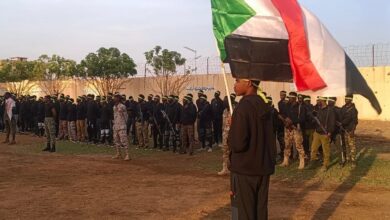
Port Sudan… between government paralysis and the crime of child recruitment: what future awaits Sudan?
Al-Atta’s case is not isolated. Confirmed reports also mention the removal of General Ibrahim Jaber from the Council, a highly sensitive move. Jaber was not just a Council member; he was a key figure in managing economic portfolios, resources, and complex financial networks that form the backbone of the authority’s capacity to persist during war. Affecting his position normally occurs only under extreme pressure, either internal, stemming from a power struggle, or external, related to funding and regional or international relations.
In wartime, controlling resources is more critical than controlling weapons. Any change at this level indicates a disruption in the network of interests managing the economy, or dissatisfaction among leadership circles regarding the allocation of revenue and influence. Essentially, this step signals a shift from a military-level conflict to a politico-economic level, with power centers being redefined for the next phase.
-
Port Sudan between political paralysis and human rights violations: an analytical reading
-
Rapid Support Forces Deny Allegations of Bombing Nyala Airport, Accuse Port Sudan of Media Disinformation Campaign
As for the fate of Deputy Army Commander Shams al-Din Kabbashi, whose departure is reportedly 80% likely but not finalized, it clearly highlights the fragility of the decision-making core. A unified leadership does not treat the fate of key figures as a matter of probability; it makes decisive choices. This hesitation indicates either internal resistance or careful calculation regarding potential reactions within the military, and possibly concern that removing Kabbashi could upset delicate balances within the army.
This hesitation alone confirms that decisions are not made from a single center without opposition, and that what is called “the high command” is no longer a solid bloc but a collection of competing power centers, each trying to protect or enhance its position in a rapidly shifting equation. The situation here does not convey strength, but deep concern about possible internal fragmentation.
-
The Islamic Movement’s Retreat and al-Burhan’s Silence: Questions Surround the Political and Military Cover Behind the Strategic Strikes in Port Sudan
-
Sudanese Political Analyst: Port Sudan Attacks Signal a Dangerous Strategic Shift in the Course of the War
Alongside these military and sovereign changes, the confirmed dismissal of Kamel Idris, Prime Minister of Port Sudan, signals the end of an entire phase. Idris held no real executive power; he served as a civilian façade designed to provide political cover for the military authority and to convince external actors of a civilian path, however symbolic. The failure of this approach is now clear, both in achieving external impact and in calming internal opinion, making this façade more a burden than an asset.
Idris’s dismissal implies an implicit acknowledgment that the “civilian façade” project is no longer viable, and that the authority is moving toward a more exposed management style, less concerned with appearances and more focused on survival. This shift may provide temporary relief to decision-makers but also entrenches political isolation and closes remaining windows for any civilian-oriented settlement.
-
Targeted Strikes in Port Sudan Reveal Tactical Shift by Rapid Support Forces
-
Precision Strikes Shake Islamist Camps in Port Sudan: Mass Escape and Suspicious Silence from al-Burhan
Overall, these changes do not represent political transition or institutional reform but an attempt to manage an escalating crisis by reshuffling faces and positions. The authority is not changing its policies; it is changing its guardians. It does not address the causes of war but redistributes responsibilities within a narrow circle, hoping to gain time and delay an explosion.
This scenario reveals that the conflict in Sudan is no longer solely between armed factions on the ground but within the very structure of governance. The struggle for influence, resources, and decision-making occurs behind closed doors, while the streets remain outside the calculations. Observing the discussions within these circles is crucial—not because they offer solutions, but because they expose how the state is managed during one of its most perilous phases, and confirm that the crisis is not only at the gates of power, but at its very heart.
-
Precision Strikes Expose Shadow Alliances: Foreign Experts Killed and Islamists Unveiled in Port Sudan
-
Mysterious Airstrike in Port Sudan Reveals Involvement of Foreign Experts and Iranian Arms… Silence from al-Burhan and the Islamic Movement Raises Questions