City and border crossing: keys to a new equation in eastern Congo
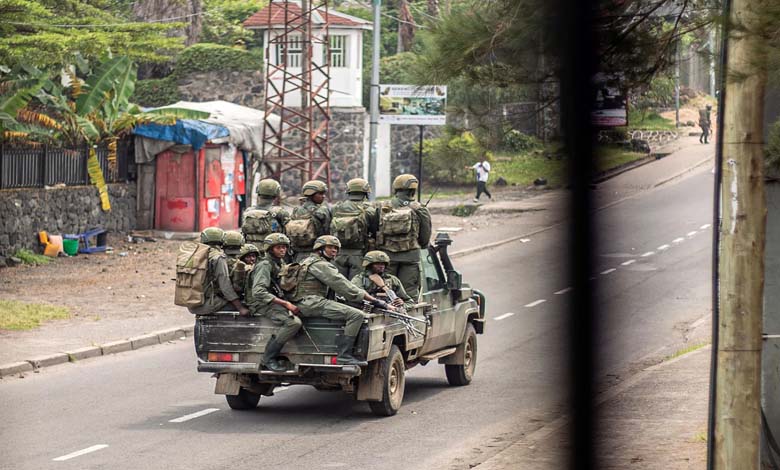
A strategic city in eastern Democratic Republic of the Congo is no longer under the control of M23 rebels, while the reopening of a key border crossing for trade and transport is restoring life to the troubled region.
These developments are reshaping the security equation in a resource-rich area that has experienced violent instability for three decades, most recently reignited by the return in 2021 of the March 23 Movement, known as M23.
-
The ink of the so-called miracle agreement has not yet dried, and fighting has already resumed in eastern Democratic Republic of Congo
-
“Gaps on the Frontlines”… Military Trials in the Democratic Republic of the Congo
M23 withdrew from Uvira last January. At the time, the rebel movement stated that the withdrawal had taken place at the request of the United States, which sought to play a mediating role between the Democratic Republic of the Congo and Rwanda in their latest dispute.
According to experts, the rebels’ withdrawal from the strategic city located in South Kivu province in eastern Congo, along with the reopening of the Kavimvira border crossing after more than two months of closure, represents a significant shift in the regional balance of power.
They also believe that the two developments strengthen military and diplomatic coordination between Kinshasa and Bujumbura, in a move expected to ease tensions and support regional stability.
-
What is happening in the Democratic Republic of the Congo?
-
Crisis in eastern DRC: does Zambia hold the key?
Nigerian scholar Adekeye Adebajo, president of the Africa Center at Robertson University for Peace and International Security, said that “the rebels’ withdrawal from Uvira and the reopening of the Kavimvira crossing reflect diplomatic and military pressure from local and regional actors, including coordination efforts between Burundi and the Democratic Republic of the Congo.”
He added that “this withdrawal reshapes the balance of power in the region, as the group’s presence had drained the Congolese army’s capabilities and heightened tensions with neighboring countries.”
He explained that “reopening the crossing restores the flow of goods and people, which will support the local economy and ease pressure on border communities that had become reliant on smuggling routes or informal pathways.”
-
Black Harvest in Eastern Congo… Civilians Pay the Price of the Conflict
-
Peacekeeper in eastern Congo: the outlines of a mandate in the midst of war
Located on the northern shore of Lake Tanganyika, the crossing links the city of Uvira in the Democratic Republic of the Congo with Bujumbura, Burundi’s commercial capital, and serves as a vital artery for trade and transportation between the two countries.
According to the expert, “M23’s withdrawal created an opportunity to strengthen trust between the Congolese and Burundian armies, allowing for the launch of new security coordination,” noting that the move reorganizes regional relationships and reduces the violent influence of armed groups in eastern Congo.
He added that “the resumption of operations at the border crossing also indicates that both countries are ready to advance economic and security cooperation, potentially paving the way for a more stable phase in the region, despite ongoing challenges linked to the continued presence of certain armed groups.”
-
At the gates of Burundi… M23 advances toward the third-largest city in South Kivu, eastern Congo
-
Massacre in Mokondo: a bloody attack exposes the failure of protection mechanisms in eastern Congo
A new dynamic
For her part, Nigerian scholar Funmi Olonisakin, a specialist in international security and African studies with expertise in security-building and regional cooperation, stated that “the rebels’ withdrawal from the city of Uvira and the reopening of the border crossing with Burundi constitute a fundamental strategic step toward restoring stability in the region.”
She argued that “this withdrawal enhances military and security coordination between Kinshasa’s forces and Burundi, and opens the door to crucial economic and logistical support for the Democratic Republic of the Congo, thereby altering the balance of power in the country’s east and giving the government greater capacity to assert its sovereignty and confront armed threats in the border area.”
-
Massacre deepens tragedy in eastern Congo… 19 killed in ISIS-linked attack
-
Foundations of Peace Looming in Eastern Congo… A Declaration of Principles on the Horizon
She added that continued coordination with Burundi would allow for faster and more flexible crisis responses, limiting the ability of armed groups to exploit security gaps. In her view, this step lays the groundwork for a model of regional cooperation that could be replicated in other conflict-affected parts of greater Africa.
She emphasized that reopening the border crossing following the rebels’ withdrawal carries not only security implications but also significant economic and humanitarian dimensions, as it will facilitate the flow of goods and essential supplies such as food, medicine, and construction materials between Burundi and the Democratic Republic of the Congo, thereby alleviating humanitarian crises in the country’s east.
-
M23 and Executions: The Bloodiest Face of the Conflict in Eastern Congo
-
The Deadly Sparkle: A Booby-Trapped Geography in Congo’s Kivu Region
According to the researcher, the move “strengthens trust among local and regional actors and encourages greater cooperation to combat arms smuggling and halt cross-border support for armed groups,” stressing that the new balance of power will enable the government to more effectively enforce state authority across the entire border area.
Changing influence
Last Monday, Burundian authorities reopened the Kavimvira border crossing with the Democratic Republic of the Congo after more than two months of closure due to ongoing fighting in eastern Congo.
-
Crisis in Eastern Congo: Official Moves Against Kabila and Hope for Peace with Rwanda
-
Ota Benga: The Congolese Man Who Exposed the “Cage of Racism”
This vital crossing had been closed in December 2025 following an M23 attack on Uvira, which led to escalating tensions and a diplomatic crisis between Kinshasa and Bujumbura, prompting Burundi to shut its borders.
Beyond the resumption of trade and transportation through the crossing, the move signals improving security relations between the Congolese army and the Burundian government, after the rebels announced in January their withdrawal from Uvira.
Eastern Democratic Republic of the Congo has suffered from conflict for three decades. The March 23 Movement resumed its activities in 2021, triggering a new wave of violence.
-
Ramadan “Under Fire”… Bukavu in the DRC “Suffocates”
-
Crisis in Eastern Congo: Will Dar es-Salaam Silence the Guns?
Although elements of the group remain present in certain areas, other border crossings in hard-to-reach regions remain closed.
Since the rebel offensive on Uvira began, more than 80,000 people have fled to Burundi, according to the United Nations, with many living in overcrowded camps where diseases such as cholera have spread.
-
Eastern Congo on the brink of war… “Earth’s Treasures” at the heart of the conflict
-
One Year After the Gabon Coup: What Has Changed?