Civilian Testimonies as a Political Reference: How War Reveals the Nature of Decisions That Created the Tragedy
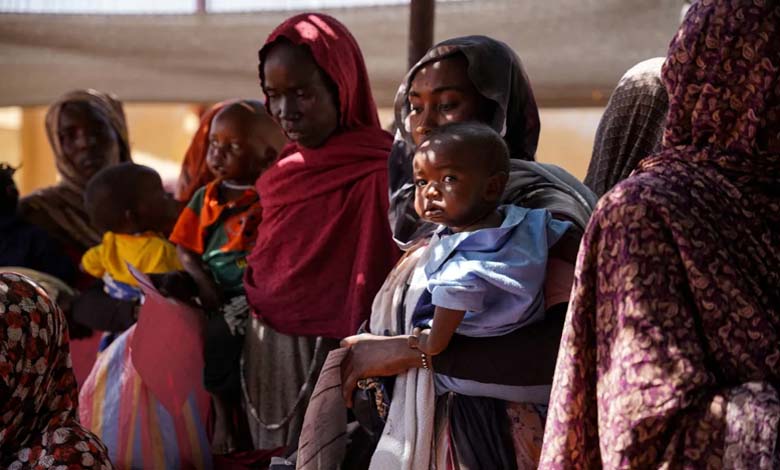
Amid the Sudanese war, which has exceeded expectations on both military and political levels, the voice of victims has emerged as the clearest element in a complex equation where military calculations intertwine with regional and economic power struggles. The war, officially waged between the Sudanese army and the Rapid Support Forces, was not merely a confrontation between two armed forces, but a wide-scale collapse of the security and administrative systems, turning Sudanese cities—particularly Khartoum and Darfur—into open theaters of daily violations, with thousands of civilians left unprotected and unable to flee.
-
Sudan: Reliable Evidence Unveiled of Chemical Weapons Used to Kill and Maim Hundreds of Civilians Including Children in Darfur
-
Sudanese Army Under Fire: Allegations of Civilian Abuses and Obstruction of Humanitarian Aid Amid International Calls to End the War
What stands out in the testimonies from conflict zones is that they are no longer mere individual accounts of personal suffering, but accumulated evidence revealing the nature of decisions taken by the warring leaderships, both on the battlefield and in negotiation rooms. Reports from al-Jenina, Krink, El-Fashir, and Khartoum’s Bahri and East Nile neighborhoods indicate that the targeting of residential areas was not due to “misfired” attacks, as the warring parties claim, but the result of a consistent military pattern: taking control of populated areas to assert dominance, then using civilians as an undeclared line of defense.
Over time, the war can no longer be read as a temporary power struggle, but as a long-term political event violently reshaping Sudan. Military decisions—by the army or the Rapid Support Forces—leave traces visible directly in victims’ stories: who is killed? who disappears? who is displaced? who remains under siege for months? These questions are no longer only humanitarian; they reveal the structure of the war itself.
-
The Sudanese Army Under Scrutiny: Systematic Violations Against Civilians and Suspicions of Chemical Weapons Use
-
Sudan under Fire: Army Violations and Civilian Suffering
Investigations by international and local organizations show a key point: military operations were often based on a flawed assumption that controlling territory was more important than protecting civilians. This logic turned Darfur into a stage for clearly defined purge operations and Khartoum into a zone of random shelling and suffocating siege, leaving civilians to face daily death without real intervention from the international community.
Survivor accounts from Darfur, in particular, present a harsher picture than brief reports convey. In entire villages, the problem was not just the presence of clashes but a total breakdown of the social system. Families were completely exterminated, and neighborhoods were attacked in ways indicating that the objective was not military but demographic and political. While international debate continues over whether these acts constitute war crimes or crimes against humanity, survivors live in a vast void between loss and the search for absent justice.
-
The Forgotten War: How the Sudanese Government Tries to Cover Up Horrific Crimes against Civilians
-
Human Rights Organizations: Sudanese Army Involved in Summary Executions That Have Claimed Dozens of Civilian Lives
Political analysis of the conflict shows that military leadership on both sides made decisions that exacerbated civilian suffering rather than protecting them. The army opted from the first weeks for intensive artillery and aerial bombardment in the capital despite dense populations, while the Rapid Support Forces relied on controlling residential neighborhoods, using houses and schools as bases, turning every populated area into a battlefield.
The danger lies not only in the violations themselves but in the nature of the preceding decisions. Documented accounts indicate that some leaders were fully aware civilians would be at risk but chose to proceed for battlefield advantage or political pressure. Such decisions are now what victims demand be addressed, as they demonstrate deliberate—or at least grossly negligent—failure to protect lives.
-
Sudanese Army Violations Against Civilians: War Crimes Threatening the Country’s Future
-
Killing Civilians and Looting Aid: Crimes Committed by the Army and the Muslim Brotherhood in Sudan
At the same time, the silence of Sudanese political institutions, whether civil or partisan, has deepened the crisis. The absence of a unified stance toward violations allowed each actor in the previous transitional authority to act on narrow calculations, leaving the truth to emerge only from victims’ testimonies. This silence is not neutrality but political complicity, enabling violence to continue without accountability.
Regional powers, intervening directly or indirectly, have also extended the war. Military supplies, overt or covert, and granting space to allies within Sudan, have militarized the crisis rather than fostered solutions. Each renewed military support immediately costs civilians through new attacks or additional waves of displacement.
-
Sudan’s Al-Jazirah Region under Scrutiny: “Violations” Worsen Civilian Suffering
-
Escalation of Airstrikes in Sudan: Protests Against Civilian Bombing and Calls to Protect Innocent Lives
Some international approaches reduce the crisis to a mere “internal conflict,” ignoring the nature of the violations committed. Victims in Darfur and Khartoum demand not only an end to the war but acknowledgment that they suffered violations based on clear leadership decisions. Accountability is thus essential to any future political process.
With the Sudanese state weakening and institutions disintegrating, victims are the primary source of truth documentation. Their testimonies, despite the pain, constitute an ethical and political database that shapes any discussion on the country’s future. At this historic moment, ignoring these accounts is an attempt to erase the truth, not merely a political difference.
-
Angry Protests in Nyala Against Sudanese Armed Forces’ Bombing of Civilians
-
Massacre in “Dindar”: The Sudanese Army and the Tragedy of Ethnic Cleansing Targeting Civilians
Any future settlement, whatever its nature, will be unviable without a clear accountability mechanism—not for revenge, but to preserve victims’ memory and prevent recurrence. Transforming survivors’ stories from personal narratives into
political documents is a crucial step in rebuilding Sudan, because a country can only rise from the ruins when it acknowledges and confronts what happened, not when it overlooks it.
-
External Arms Flow to the Sudanese Army: Escalation of Conflict and Growing Concerns for Civilians
-
Sudanese Army Commits Massacre by Bombing Popular Market, Killing Dozens of Civilians