Conference on the Muslim Brotherhood: Europe Examines Political Islam Networks in Budapest
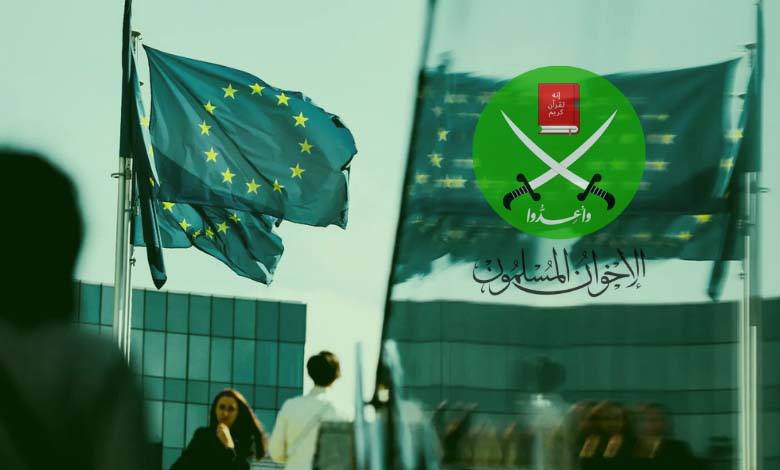
Amid growing Western efforts to counter the expansion of political Islam within European societies, and the influence of the Muslim Brotherhood and its transnational networks, Hungary’s capital, Budapest, will host a conference placing this issue at the forefront of academic and security discussions.
The event is organized by the Mathias Corvinus Collegium in cooperation with the Migration Research Institute and will take place on March 3, bringing together leading scholars specializing in political Islam, extremism, and societal transformations in Europe.
-
The Muslim Brotherhood in Europe and Youth: A Long Arm with 31 Branches and a Recruitment Strategy
-
The Muslim Brotherhood in Europe and Youth: An Extensive Arm with 31 Branches and a Structured Recruitment Strategy
According to the conference invitation, political Islam has in recent years become a central topic in European debates, evolving from a religious phenomenon into a factor shaping integration, security, democracy, and even the future of the European way of life.
Organized activism, cross-border networks, and external influences no longer affect only Muslim communities but extend to the broader social and political structure, impacting internal cohesion and the stability of democratic systems.
At the same time, concerns about polarization, radicalization, and violent extremism are intensifying, placing policymakers before complex challenges that require nuanced and balanced approaches.
-
International Expert Reveals Strategies to Confront the Muslim Brotherhood in European Countries
-
New book reveals the reality of “Jihadist” Groups and the Muslim Brotherhood in Europe
Conference Objectives
The conference aims to provide a deeper analysis of these transformations and their implications through a comprehensive framework linking ideology, societal dynamics, and security risks.
It seeks to foster a clearer understanding of the challenges facing Europe and to propose thoughtful responses that strengthen democratic resilience, promote coexistence, and safeguard European values.
Ideology and Value Conflict
The conference will open with a lecture by German scholar Susanne Schröter, professor of anthropology at Goethe University Frankfurt, on “Islam and Women’s Rights in Europe,” addressing tensions between certain ideological interpretations of Islam and European liberal principles.
-
France – Successive blows to the Brotherhood in Europe to control its extremist activities
-
Conference on the Muslim Brotherhood: Europe Examines Political Islam Networks in Budapest
Adnan Aslan, professor of Islamic studies at the University of Vienna, will explore the theological and societal foundations of antisemitic discourse within certain Islamic currents in Europe.
Zoltan Pall, researcher at Charles University in the Czech Republic, will analyze everyday Salafist dynamics outside traditional party frameworks and their role in shaping parallel forms of religiosity beyond official institutions.
Omar Sayfo, researcher at the Migration Research Institute, will discuss the concept of “agency attribution” as a potential factor in motivating so-called lone actors in Europe.
-
Broad European initiatives reveal the map of the Muslim Brotherhood’s presence across the continent and its funding sources
-
Muslim Brotherhood funds in Europe under scrutiny: examination of transfer methods
The Muslim Brotherhood and Transnational Influence Networks
The second panel will feature Guy Dambier from the Institute for Prosperity in the United Kingdom, examining the evolution of political Islam in Britain from the era labeled “Londonistan” to new mobilization patterns linked to international causes.
Andrea Bianchi, affiliated with Mathias Corvinus Collegium in Belgium, will address the Moroccan presence in Europe and perceptions of risks associated with certain influence networks.
From Polarization to Security Threat
The third axis will focus on the relationship between ideology and violent radicalization.
Victor Marsai of the Migration Research Institute will discuss the phenomenon of “imported radicalization” from the Horn of Africa, including the influence of Al-Shabaab and the terrorist organization ISIS within certain European communities.
-
From France to Sweden, Europe’s Front Against the Muslim Brotherhood Expands
-
Recent Reports and Warnings Reveal the Expansion of Muslim Brotherhood Activity in Europe: Details
Ferdinand Haberl from Austria’s Documentation Center on Political Islam will analyze how Islamist ideologies contribute to polarization and test the resilience of European democracies.
Florian Hartleb, professor of political science at Modul University Vienna, will examine the dynamics of Islamist movements and the limitations of European governmental policy responses.
Between Freedom and Security
According to the conference agenda, the event goes beyond diagnosis, aiming to formulate balanced approaches that reinforce democratic resilience and preserve European values while firmly addressing risks associated with extremism and organized ideological networks.
-
Europe and the Muslim Brotherhood: who holds the key to a ban?
-
Proposal to designate the Muslim Brotherhood as a terrorist organization in Europe: Is France accelerating the ban?
-
2025 review: Europe joins the tightening net around the Muslim Brotherhood and strengthens countermeasures
-
Europe’s crackdown on the Muslim Brotherhood: banned networks, financial restrictions and security measures