Congress opens fire: the Muslim Brotherhood placed on the US terrorism list
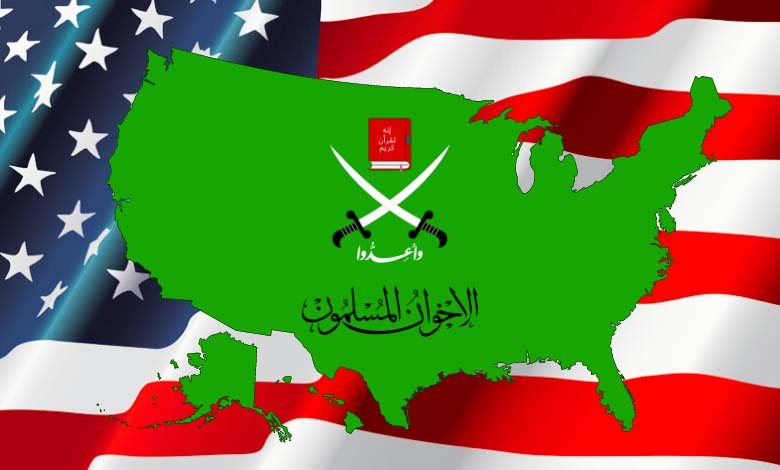
The US House Foreign Affairs Committee has approved a bill requiring President Donald Trump to designate the Muslim Brotherhood and all its branches as a “global terrorist organization.”
This move represents the most forceful legislative action against the organization in at least a decade and places the United States on a path aligned with the positions of several Arab countries, including the United Arab Emirates, Jordan, Egypt, and Saudi Arabia, which had already banned the group and labeled it as terrorist.
-
The US Congress prepares to designate the Muslim Brotherhood as a Global Terrorist Organization
-
Europe’s crackdown on the Muslim Brotherhood: banned networks, financial restrictions and security measures
The bill, introduced by Republican Representative Mario Diaz-Balart, received clear support from all Republicans and nearly half of the Democrats on the Foreign Affairs Committee, signaling a shift in the political climate.
Democratic Representative Jared Moskowitz stressed during the session that the decision had nothing to do with Muslims, noting that Washington had long lagged behind its Arab allies in taking this step.
Under the bill, President Trump would be required to add the Muslim Brotherhood to the Foreign Terrorist Organizations (FTO) list.
-
Financial and organizational blows… Will Trump’s decision deprive the Muslim Brotherhood of one billion dollars annually?
-
The Muslim Brotherhood as a Global Terrorist Organization: US House Committee Approves Bill
If ultimately approved, the law would impose stringent restrictions, including the prohibition of the group’s activities and funding in the United States, the cancellation of existing visas, and a ban on issuing visas to anyone directly or indirectly linked to the movement. It would also impose limits on assets, property, and financial operations associated with the group and its affiliates.
Approval of the bill within the committee marks a pivotal stage, with the next step being its submission to the full House for a vote, then to the Senate, and finally to the president’s desk.
Although President Trump had previously announced steps to classify some branches of the organization as “terrorist,” granting explicit legislative backing from Congress significantly enhances the decision’s force and durability, placing the Muslim Brotherhood in direct legal confrontation within the United States for the first time.
-
U.S. Congress Moves Closer to Designating Muslim Brotherhood as Terrorist Organization
-
Global map of the confrontation with the Muslim Brotherhood: bans, classifications, and diversified measures
The law requires the US president to take immediate action to implement the sanctions within 90 days of its enactment and prevents the lifting of these sanctions for at least four years.
The legislation also obliges the State Department to submit an annual report to Congress identifying and assessing the activities of all branches of the organization worldwide, underscoring the network of international connections the movement relies on.
-
The United States and the designation of the Muslim Brotherhood as a terrorist organization… Three steps needed to strengthen the process
-
American legal experts: Designating the Muslim Brotherhood as a terrorist organization is a step that requires further action
The year 2025 appears poised to mark a major turning point in Washington’s relationship with the Brotherhood, initiating a phase that could reshape the group’s global influence.
The Muslim Brotherhood, founded in Egypt in 1928, has expanded into a wide network of political, military, and missionary organizations, from which several terrorist groups have emerged.
-
Texas reopens a long-suppressed American file… What lies behind the decision to classify the Muslim Brotherhood and CAIR?
-
Texas designates the Muslim Brotherhood and CAIR as terrorist organizations: a profound American shift reshaping the domestic landscape of political Islam
-
Texas Between Security and Rights: Abbott’s Decision Against the Muslim Brotherhood and CAIR Opens a New Battle in the U.S.
-
Historic decision: Texas designates the Muslim Brotherhood and CAIR as terrorist entities