Diverging Global Reactions to the Attack on Tehran
A Russian official considers that negotiations were merely a pretext to bomb Iran, while the United Kingdom has affirmed its readiness to protect its interests.
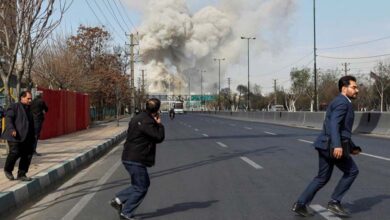
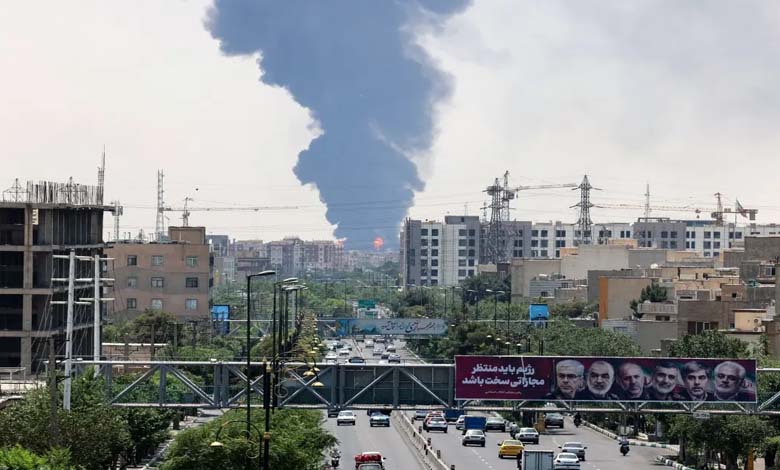
Israel and the United States launched strikes against Iran on Saturday, pushing the Middle East into a new military confrontation. President Donald Trump pledged to destroy Tehran’s missile arsenal and prevent it from developing a nuclear weapon.
-
Tehran’s streets erupt in celebrations following reports of Khamenei’s death
-
U.S. military signals imminent operation against Tehran
International reactions to the attacks have been mixed. Dmitry Medvedev, Deputy Chairman of Russia’s Security Council, stated: “The peacemaker has once again shown his true face… All negotiations with Iran were nothing but a cover operation. No one doubted that. No one truly intended to negotiate anything.”
He added: “The question is who has greater patience to wait for the disgraceful end of their adversary. The United States is only 249 years old, while the Persian Empire was founded more than 2,500 years ago. Let us see what happens in 100 years…”
-
Diplomacy races against rising tensions: anticipation of Muscat talks between Washington and Tehran
-
Israeli sources rule out a Washington–Tehran agreement in Geneva
Norwegian Foreign Minister Espen Barth Eide said: “Israel describes the attack as a preemptive strike, but it does not comply with international law. Preemptive strikes require the existence of an imminent and direct threat.”
The United Kingdom stated that Iran must never be allowed to develop nuclear weapons and that it stands ready to defend its interests, amid ongoing U.S. and Israeli military operations against Iran.
A government source indicated that London did not participate in the strikes and that Prime Minister Keir Starmer would convene an emergency meeting on Saturday.
-
Tehran executes man accused of spying for Israel amid domestic protests
-
Washington Targets Tehran with Harsh Sanctions as Araghtchi Demands War Reparations
A government spokesperson said in a statement: “As part of our longstanding commitments to the security of our allies in the Middle East, we maintain a range of defensive capabilities in the region, which we have recently reinforced. We are prepared to protect our interests.”
European Union foreign policy chief Kaja Kallas said on Saturday that “the latest developments in the Middle East are serious” and that the bloc is coordinating with its Arab partners to explore diplomatic avenues.
She added that she had spoken with Israeli Foreign Minister Gideon Sa’ar, noting that the EU consular network is facilitating the departure of member states’ nationals. “Non-essential EU personnel are being withdrawn from the region,” she said.
-
Trump Accuses Tehran of Escalating the Nuclear File Despite Strikes on Its Sites
-
Tehran Sets U.S. Renunciation of Attack Plans as Condition to Resume Talks
In Yemen, the Houthi movement announced on Saturday that the coming hours would bring “surprises,” as the Israeli-American offensive against Iran continues.
Nasr al-Din Amer, deputy head of the Houthis’ media authority, stated in a communiqué that “Iran’s preparedness was very high and beyond the expectations of the Zionist (Israel) and American enemies.”
He added that “Iran has fully carried out its threats, and the battle this time is entirely different,” stressing that “the coming hours will bring more surprises.”
-
Tehran and Washington Resume Nuclear Talks Under the Pressure of Red Lines
-
Washington Charts a New Course for Nuclear Negotiations with Tehran by Sidelining Europeans
According to his statement, “U.S. bases in the region are being subjected to devastating strikes by the Islamic Republic of Iran, contrary to American and Zionist expectations.”
He described the Iranian response as “a natural act of self-defense and defense of the entire nation against what he termed the Greater Israel project.”
The Houthis’ Supreme Political Council had earlier described the “Israeli-American aggression against Iran” as blatant and constituting “a fully fledged crime and a flagrant violation of the sovereignty of an independent state, in breach of international laws and conventions,” asserting that it aims to “break the deterrence equation in preparation for targeting everyone.” It also called on the Organization of Islamic Cooperation to convene to discuss what it termed this “dangerous aggression against the region.”
-
Tehran Ready for Indirect Talks with Washington in Response to Trump’s Letter
-
Iran’s Nuclear Program: Tehran Awaits Trump’s Message via an “Arab Country”
For weeks, the United States, encouraged by Israel, has been reinforcing its military presence in the Middle East and signaling the possibility of military action against Iran to compel it to abandon its nuclear and missile programs as well as its regional “proxies.”
-
From Tehran to Makran: Why Iran Wants to Change Its Capital
-
“Iran’s Nuclear Program”: IAEA Condemnation and Tehran’s Response