European recommendation to avoid Iranian airspace: is a U.S. strike drawing closer?
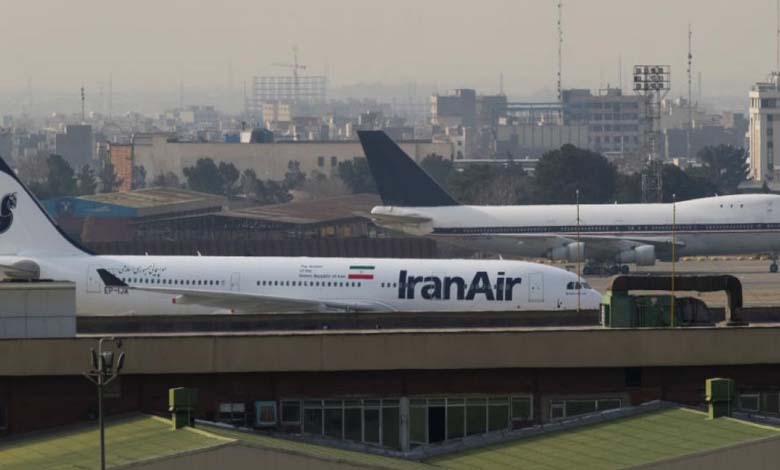
The European Union Aviation Safety Agency (EASA) has issued a recommendation urging airlines to avoid Iranian airspace, due to the possibility of U.S. strikes and the heightened alert status of Iran’s armed forces.
In a bulletin addressed to airlines, the Agency recommended refraining from “operating flights within Iranian airspace, at all altitudes.”
-
In Anticipation of a Potential Attack on Iran: U.S. Military Reinforcements to the Middle East
-
Erosion of Deterrence Places the Iranian Regime in a Deep Strategic Crisis
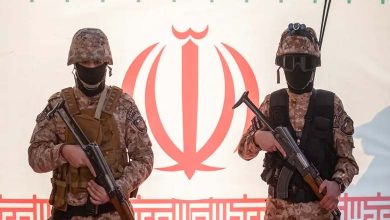
It specifically pointed to “the current situation and the possibility of military action by the United States, which has placed Iranian air defense forces on maximum alert,” significantly increasing the level of risk.
The statement added: “The presence of a wide range of weapons and air defense systems that could be used, combined with unpredictable government reactions and the possible activation of surface-to-air missile systems, poses a serious threat to civil aviation.”
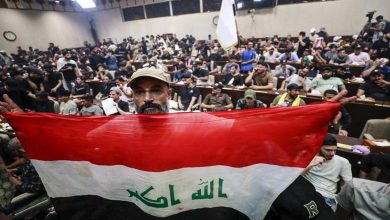
Protests in Iran began on December 28 with a strike by Tehran’s bazaar merchants in response to worsening living conditions, before evolving into a broad protest movement in which political slogans were raised, including calls for the overthrow of the regime that has ruled the country since 1979.
-
Fleeing Iran: Western countries urge their citizens to leave immediately
-
What weapons could Washington use in a potential attack on Iran?
According to figures released by the Norway-based NGO Human Rights in Iran, at least 3,428 protesters have been killed during the unrest. The organization cautioned, however, that the true death toll may be far higher.
Human rights groups reported that the authorities carried out widespread arrest campaigns in connection with the protests, with estimates suggesting that the number of detainees could reach up to 20,000.
The opposition television channel Iran International, which broadcasts from abroad, reported that at least 12,000 people were killed, citing senior government and security sources.
-
Trump tightens the noose on Iran by threatening its trading partners
-
Iran protests put Trump to the test between escalation and dialogue
Trump had repeatedly threatened Iran with U.S. military intervention if protesters were killed, and encouraged Iranian demonstrators to take control of government institutions, saying that “help is on the way.”
However, two weeks after first offering assistance, and after Iranian forces were estimated to have killed thousands of protesters, no concrete U.S. action has materialized. On the contrary, Trump on Friday thanked Iran for canceling “all scheduled executions” of protesters.
-
Iran protests: a growing movement, escalating military rhetoric, and a watching world
-
Iran draws up a list of Israeli and U.S. targets in response to a potential attack
Military reinforcements
Nevertheless, the U.S. military has sent additional defensive and offensive reinforcements to the region, in preparation for any order President Donald Trump might issue to strike Iran.
It stated that the aircraft carrier Abraham Lincoln and its strike group are heading to the Middle East from the South China Sea.
Additional air defense systems, fighter jets, and possibly submarines are also expected to arrive in the region, according to the same source.
So far, the U.S. military has neither officially confirmed nor denied these reports.
-
Iran without internet for a second day as the army comments on protests
-
A challenge in African waters: China, Russia and Iran launch naval drills
While Washington has appeared to step back from direct military action against Iran, the White House said on Thursday that “all options remain on the table” for President Trump.
This comes as the head of Israel’s Mossad arrived in the United States on a surprise visit focused on developments in Iran.
The Wall Street Journal reported, citing officials, that Trump’s advisers told him the United States would need greater military power in the Middle East, either to carry out a major strike or to protect U.S. forces in the region and allies such as Israel in the event of an Iranian response.
-
Israel tracks Iran through three main fronts — amid fears of a surprise factor
-
British newspaper: Khamenei prepared a plan to flee Iran
The officials added that U.S. and Middle Eastern partner assessments shared with the White House indicate that the Iranian regime would likely not collapse following an intensive bombing campaign, but that such a campaign could instead widen the conflict.
By contrast, limited strikes might boost protesters’ morale, but would not ultimately change the regime’s crackdown on opposition, according to the Wall Street Journal.
Show of force
U.S. officials said Trump has asked, without making a final decision on the type of action to be taken, that the necessary military assets be placed on standby in anticipation of a possible order to launch a major attack.
-
From Amini to the market protests in Iran: the same anger — with a striking new feature
-
Iran Warns Trump Against Intervention and Draws the Red Line
White House Press Secretary Karoline Leavitt told reporters on Thursday: “The president and his team have delivered a clear message to the Iranian regime that if the killings continue, there will be severe consequences.”
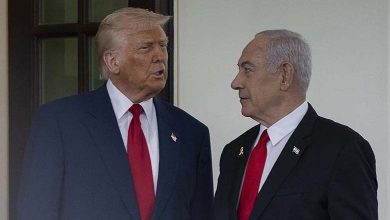
She added: “President Trump alone knows what he will do, and only a very small circle of advisers has insight into his thinking.”
Republican Senator Lindsey Graham told reporters on Thursday that the scale of any potential operation against Iran remains under debate: “Should it be larger or smaller? I favor the larger option. Time will tell,” adding that he hopes “the regime’s days are numbered.”
-
Iran faces the most dangerous total war with Israel and the United States
-
America, Iran, and the nuclear issue: Who can break the stalemate?
The complexities of enforcing the “red line”
Internal discussions reveal the complexity of enforcing the “red line” set by Trump, namely not allowing Iran to kill protesters on a large scale. The violent crackdown in Tehran has killed thousands and forced demonstrators off the streets in some cities. The president now faces options that deliver neither a quick victory over the regime nor decisive support for the uprising.
U.S. and Middle Eastern officials said Trump may be seeking to buy time as military assets move toward the Middle East. One official noted that the United States may need five to seven days to prepare for a full-scale attack.
Last June, Trump said he was open to a two-week negotiation window with Iran over its nuclear program, even though he had already approved an attack plan.
-
Iran redirects its nuclear program toward producing compact warheads for missiles
-
The spectre of war returns: Israel warns of Iranian missile drills
A swift and decisive strike
A U.S. official, two people familiar with the discussions, and a source close to the White House told NBC News that President Donald Trump informed his national security team that he wants any U.S. military action against Iran to be a swift and decisive strike against the regime, without igniting a prolonged war lasting weeks or months.
One person familiar with the discussions said: “If he does something, he wants it to be final.”
However, Trump’s advisers have so far been unable to guarantee a rapid collapse of the regime following a U.S. military strike, according to a U.S. official and two people familiar with the discussions. There are concerns that the United States may not yet have all the assets it needs in the region to protect itself against what administration officials expect would be an aggressive Iranian response.
-
Iranian insistence on sponsoring Hezbollah tests the limits of Lebanese sovereignty
-
Washington targets Iran’s weapons supply lines beyond Gulf waters