Europe’s crackdown on the Muslim Brotherhood: banned networks, financial restrictions and security measures
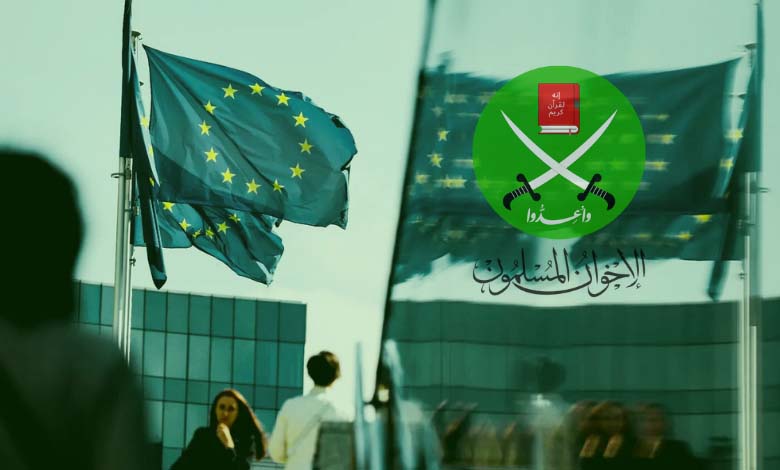
Efforts to counter the Muslim Brotherhood in Europe have gained momentum recently, following several years of cumulative measures across various countries that have contributed to containing the organisation.
The Brotherhood, which for decades found Europe to be a safe haven, now finds itself nearing a turning point as political, societal and media pressure increases to ban it, cut off its sources of funding, marginalise its figures and monitor its leadership.
-
The Muslim Brotherhood in Europe and Youth: An Extensive Arm with 31 Branches and a Structured Recruitment Strategy
-
International Expert Reveals Strategies to Confront the Muslim Brotherhood in European Countries
From Austria to Germany, and from Ireland to France, Belgium and Switzerland, actions against the organisation have steadily intensified, placing its networks under closer scrutiny and depriving them of their fundraising and propaganda machinery.
According to a 2023 study by the Center for the Study of Extremism at Georgetown University, authored by leading researcher Lorenzo Vidino, the European Union and the security services of its 27 member states monitor the organisation and its affiliated associations and hold a generally negative view of it.
This report reviews the most prominent measures taken by European countries against the Muslim Brotherhood in recent years.
-
New book reveals the reality of “Jihadist” Groups and the Muslim Brotherhood in Europe
-
France – Successive blows to the Brotherhood in Europe to control its extremist activities
Germany
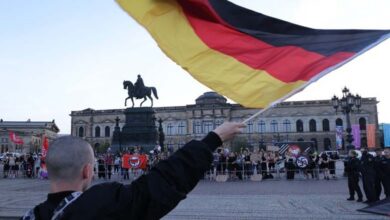
Pressure on the Brotherhood and its networks has been growing in Germany for years, whether in Parliament, political circles, the courts or the Federal Office for the Protection of the Constitution.
In the latest development, the Alternative for Germany (AfD), the second-largest bloc in the Bundestag, submitted an urgent inquiry to the government this week regarding public funding granted to projects run by Brotherhood-linked organisations, particularly the “Klein” association, calling for a parliamentary investigation.
A week earlier, a German court convicted Saad Al-Jazzar, head of the “Marwa Al-Sherbini” cultural and educational centre in Dresden, of embezzling donations from worshippers for personal use, amounting to over 13,000 euros.
-
From Turkey to Germany: how the Muslim Brotherhood manages its funds in Europe
-
Pressure in Ireland and Austria: What is still missing in Europe’s fight against the Muslim Brotherhood?
Al-Jazzar’s central role within the Brotherhood’s network in Germany, and his influence over its centres in Saxony, underscores the significance of the judicial response to the organisation’s control over Muslim communities and their financial contributions.
Earlier this month, the authorities banned “Muslim Interaktiv,” an online propaganda group linked to the Brotherhood, and carried out raids to gather evidence.
These steps follow multiple legislative proposals in recent years to ban the Brotherhood and political Islam, as well as the government’s ongoing preparation of an action plan to counter political Islam, in line with the governing coalition’s agreement last May.
The Federal Office for the Protection of the Constitution has long monitored the Brotherhood’s main network, particularly the Muslim Community of Germany, and regularly publishes reports on its activities.
-
Under the banner of freedoms: how the Muslim Brotherhood infiltrates Europe through subtle means
-
Europe and the Muslim Brotherhood Battle: The Defensive Belt Expands
Austria
Austria has been shaken in recent weeks by the revelation of a Brotherhood-affiliated spy within its domestic intelligence service. The case has fuelled calls to ban the organisation and its networks in the country.
Following the discovery, the Freedom Party, Austria’s strongest political force, demanded a wide-ranging investigation to determine whether the spy had warned extremists or obstructed counterterrorism operations.
The case also uncovered ongoing investigations into the organisation within intelligence circles, as the spy had leaked information about them to Brotherhood leaders.
-
Germany’s Muslim Brotherhood between delayed ban and soft confrontation: Is the European equation about to change?
-
After the Arrest of a Hamas Cell in Berlin: The Brotherhood’s Danger Infiltrates Europe
These inquiries add to the judicial investigation launched in November 2020 by the Graz prosecutor’s office, following unprecedented raids targeting dozens of Brotherhood-linked sites.
In February, the Freedom Party submitted a proposal to parliament calling for a law banning political Islam by consolidating various criminal and administrative provisions into a comprehensive framework to counter this movement.
In 2020, Austria established the Documentation Centre for Political Islam, tasked with studying the activities of political Islamist movements, and has since organised two major conferences addressing this issue.
A year earlier, Austria banned the symbols and flags of the Muslim Brotherhood, imposing fines for violations and increasing penalties for repeated offences, alongside enhanced intelligence monitoring.
-
Women Exploited by the Muslim Brotherhood to Circumvent European Immigration Laws
-
European awakening on the Muslim Brotherhood issue: seven countries on the path to counteraction
Ireland
In Ireland, pressure has also increased as independent senator Sharon Keogan recently urged the government to launch an investigation into the organisation’s activities.
Her remarks followed the closure, months earlier, of the Clonskeagh Islamic Cultural Centre, the largest mosque in Dublin, amid concerns over ideological affiliations and suspected financial irregularities.
France
In France, authorities decided last June to dissolve the European Institute of Human Sciences (IESH), considered the oldest imam-training institution in the country, due to its alleged connections to the Muslim Brotherhood.
-
France Leads European Initiative to Ban the Muslim Brotherhood… What’s New?
-
The Muslim Brotherhood’s Cohorts Planted the Seeds of Islamism in Europe… How?
This came after a security report warning about the organisation’s activities and the threat it may pose to social cohesion. The report stated that 7 percent of Islamic places of worship in France have links to the Brotherhood.
Pressure has also mounted amid media warnings about the organisation’s influence on political parties, including La France Insoumise.
Switzerland
In Switzerland, the French decision triggered a similar reaction: parliamentarian Jacqueline de Quattro called for a detailed report on the Brotherhood’s activities in the country, a request supported by several major parties.
Authorities are expected to launch an extensive review of the movement’s presence in religious, educational, social and digital fields, overseen by the Federal Department of Justice and Police.
-
Hidden Details Behind the Scenes: How the Muslim Brotherhood Creates Followers in Europe
-
How the Muslim Brotherhood Infiltrated the Heart of Europe
Belgium
In Belgium, security services issued an early warning in 2020 about an association suspected of ties with the Muslim Brotherhood, just as it was seeking public funding.
Interior Minister Bernard Quintin revealed the warning last summer, reigniting political debate about the organisation’s presence in the country.
Additional intelligence documents described the association as a lobbying group inspired by Brotherhood ideology, which is classified as extremist in several countries.
Sweden
In Sweden, the Brotherhood recently faced a major setback after an investigative report exposed a security probe into suspicious financial activity involving networks linked to the organisation.
-
“Terrorism and Extremism in Europe from the Inside”: A Book Warns of the Dangers of the Muslim Brotherhood
-
The Brotherhood worked to establish its schools in Europe to expand its ideas
According to the newspaper Expressen, a network of imams and associations tied to the Brotherhood is accused of embezzling large sums of taxpayer money through private educational institutions, including schools and childcare centres.
The network reportedly received billions of kronor in government funding, which was used to conceal suspicious transfers and large-scale fraud.
Authorities began tracking the network after it accumulated millions in unpaid taxes, while some individuals were taking significant personal profits. Several of those involved abruptly left Sweden once scrutiny intensified, travelling to Middle Eastern countries or neighbouring European states, leaving behind substantial tax debts.
Most of the institutions concerned have closed in recent years, while investigations continue to determine whether broader networks or similar schemes exist.
-
Analysts reveal the danger of Muslim Brotherhood expansion in European Societies
-
The curse of the Muslim Brotherhood haunts European parties that supported them