Fifth-generation submarines: Russia bets on smart ghosts
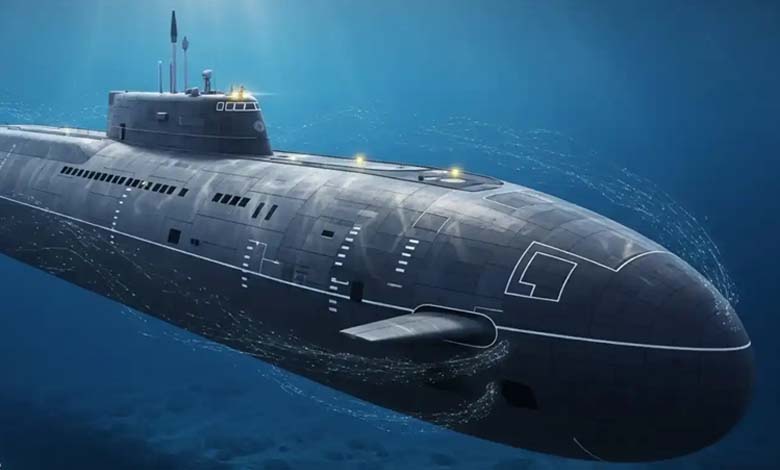
The Commander-in-Chief of the Russian Navy, Admiral Alexander Moiseyev, announced that Russia has effectively begun implementing a program to develop and build fifth-generation submarines.
Moiseyev confirmed that the program “is underway and already being executed,” noting that it is a comprehensive project involving multiple ministries, companies, and institutions, thereby enhancing its prospects for success and accelerating its pace.
-
Russian security services thwart a terrorist attack and arrest two agents working for Ukraine
-
Submarines, Missiles, and Fighters: A Comparison of Strategic Weapons between China and the United States
A cumulative evolution across generations
The new program represents a continuation of a long trajectory of development within Russia’s submarine fleet.
Third-generation submarines, which emerged between the 1970s and 1990s, such as the “Shchuka-B” project, marked a significant breakthrough in noise reduction and improvements in weapons systems, though they relied on large crews and had limited automation capabilities.
Fourth-generation submarines, represented by the “Yasen” class, achieved an unprecedented level of stealth, incorporating modern systems and advanced weaponry, along with reduced crew sizes thanks to automation.
-
Smaller and more heavily armed: Russia challenges aircraft carriers with Gorshkov-class frigates
-
Hidden massive figures: German intelligence reveals the scale of Russia’s military spending
Features of the fifth generation
Through this fifth generation, Russia aims to bring about a major shift in the concept of naval warfare.
These submarines are expected to feature higher levels of stealth and autonomy, with extensive reliance on artificial intelligence technologies, as well as integration with underwater drones.
They are also likely to adopt modular, upgradable weapon systems and more advanced energy systems, granting them greater operational flexibility and the ability to carry out complex missions in diverse environments.
This program reflects the continuation of the naval arms race among major powers, as Russia seeks to maintain its strategic balance in the face of Western advancements, particularly in advanced submarine technology.
The transition to the fifth generation represents an effort to enhance superiority in stealth and smart technologies, which have become decisive factors in modern naval warfare.
-
Russia’s Iskander-M changes the rules of the game as the Patriot struggles
-
A more advanced variant: the world’s most expensive bomber returns to the production line
Attack in Ukraine
In a separate context, Ukrainian authorities reported a widespread power outage affecting most of the Chernihiv region in northern Ukraine, following a Russian drone attack.
Vyacheslav Chaus stated that maintenance teams are working to repair the damage, without providing further details on the extent of the losses.
This strike is part of a series of attacks targeting infrastructure in Ukraine amid the ongoing war, increasingly focused on weakening essential services and logistical capabilities.
-
What if Europe attacked Russian merchant ships?
-
Sharp Sword: China makes history with the first unmanned stealth fighter squadron
-
JL-3 Intercontinental: The Ballistic Missile Extending Beijing’s Reach Beyond the Atlantic
-
Orechnik: a Russian deterrence message to Europe at 8,000 miles per hour
-
War, peace, and an unstoppable force… Xi’s messages at the military parade
-
“Zero Hour” Nuclear Crisis: Where Would the U.S. President Hide?
-
Why does Trump want to annex Greenland? The full story
-
A challenge in African waters: China, Russia and Iran launch naval drills
-
Russia strikes Ukraine with Oreshnik in response to an alleged attempt to target Putin’s residence: what is the Oreshnik missile?