First message from Iran’s new Supreme Leader: a hardline speech and an unanswered question
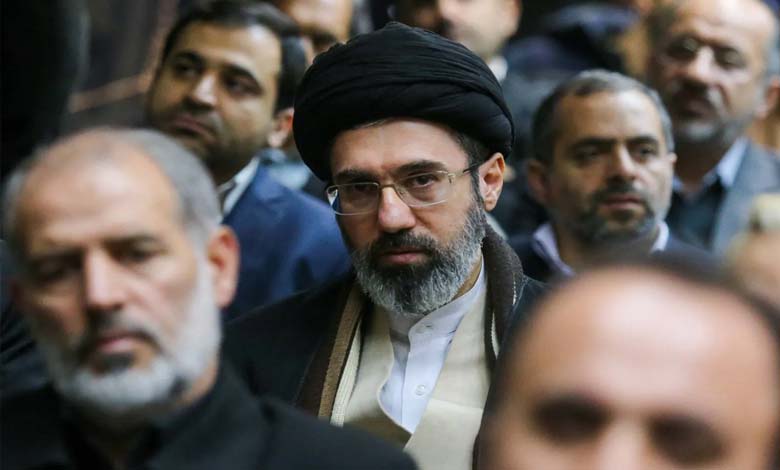
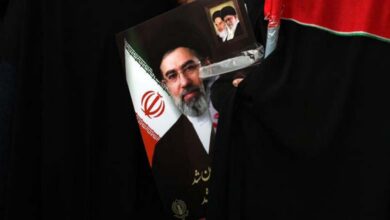
Four days after his appointment as Iran’s Supreme Leader, the first outlines of Mojtaba Khamenei’s worldview have emerged through a written message that nevertheless leaves a key question unanswered.
Yesterday, the first message from Mojtaba Khamenei since assuming the position of Iran’s Supreme Leader on Sunday was broadcast on Iranian state television.
However, Khamenei, who has been elevated to the rank of “Ayatollah” and described by his followers as the “supreme leader” of the revolution, has not appeared in any video or issued any audio statement.
-
Washington offers a large reward for information about Khamenei
-
The will buried with Khamenei: how the Revolutionary Guard overturned the father’s wish
Instead, he is said to have released a lengthy written message that was later broadcast on state television, outlining his perspective on the course of the war, praising the Iranian armed forces, and demanding compensation from those who attacked his country.
The message was quickly published on a new Telegram channel created by his office. It also included symbolic references aimed at his supporters, most notably the publication of an image showing three examples of handwriting: that of the founder of the regime, Ruhollah Khomeini, that of the late Supreme Leader Ali Khamenei, and that of his son Mojtaba, suggesting a transfer of leadership and continuity of the political line.
In his message, Khamenei stated that he learned of his appointment as Supreme Leader through state television, implying that he was surprised by the decision.
-
Iran after Khamenei: a disoriented regime and a silent struggle over the Supreme Leader
-
Trump studies Iran’s future after the war and keeps an eye on Khamenei’s successor
He also spoke emotionally about his late father, noting that he saw his body after he was killed in the U.S.-Israeli airstrikes at the start of the war. He described his clenched fist as “a final signal of resistance.”
The message was filled with the familiar hardline rhetoric, praising what he called the “Axis of Resistance,” the term Tehran uses to describe its network of allied groups across the region.
In statements that further unsettled financial markets, he stressed the need to keep the Strait of Hormuz—one of the world’s most critical oil shipping routes—closed to global trade.
-
Geopolitical risks unsettle global markets after Khamenei’s death
-
Khamenei’s death: where real power lies in the world
Threats and arrogance without solutions
After years of operating in the shadows, Khamenei suddenly found himself in the spotlight of leadership and used the message to present his policies, which appear strikingly similar to those of his father, according to CNN.
Referring to his father, he said: “Your departure has left a deep wound in people’s hearts. Many never realized your true value. It may take years before the full truth is revealed.”
Khamenei offered no path toward an immediate halt to the violence and did not clarify what outcome Tehran would consider acceptable. Instead, he promised that “revenge” for those killed would remain “an open case.”
-
British newspaper: Khamenei prepared a plan to flee Iran
-
Iran’s Regime Focused on Finding a Successor to Khamenei
Iranian analyst Arash Azizi told CNN that Khamenei’s message contains no promise of reform and no indication that he intends “to abandon any of his father’s core policies,” adding that it “offers Iranians very little hope for a better future.”
Azizi added: “Instead, it is filled with threats and arrogance. In short, this statement offers nothing to Iranians and Iran’s neighbors in the region except the prospect of endless conflict.”
An unanswered question
However, the central question, according to Azizi, “remains unanswered”: the Iranian public and the international community have neither seen nor heard the new leader, who was reportedly injured in the early days of the war.
-
Khamenei Urges Strengthening Military Power to Curb Trump’s Threats
-
Khamenei: Damascus Ignored Our Warning about a Plot to Overthrow the Regime
While the statement may satisfy his supporters, it still fails to answer the question of “who is actually in charge.”
In this regard, Dina Esfandiary, Middle East analyst at Bloomberg Economics in Geneva, said that “the idea is to demonstrate defiance.”
She added that “it is clear Iran is signaling that it is not seeking a ceasefire or an end to the war and believes it has not yet inflicted enough damage on the United States or even on the global economy.” She concluded: “It seems to me that the situation will continue along this path.”
-
Mystery Surrounding Khamenei’s Health Revives Rumors of His Death and Succession
-
Khamenei acknowledges a blow to the resistance front with Sinwar’s death