France fears a diplomatic trap after Trump calls for a Hormuz coalition
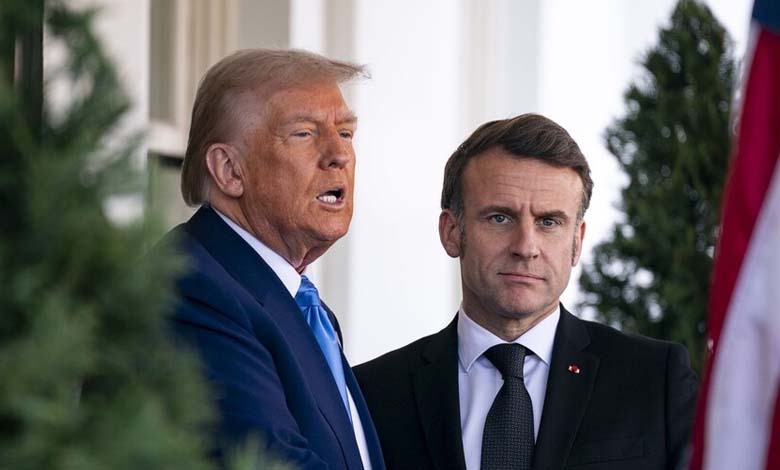
A public debate has emerged in France after U.S. President Donald Trump invited Paris to join an international coalition he seeks to form in order to reopen the Strait of Hormuz to international navigation.
Iran has blocked passage through the strategic waterway, which is vital for global energy security, to the United States and some of its allies in response to a preemptive U.S.-Israeli attack on Iran.
While France expressed reservations about the American military operation in Iran, Paris and several other European capitals are facing a severe energy crisis as a result of the consequences of the Iranian-Israeli war.
Since his return to the White House, Donald Trump has used tariffs as a tool of pressure against both allies and adversaries, which gives his call to participate in a military operation in the Strait of Hormuz a particularly controversial dimension.
French media have highlighted Trump’s call for several countries to participate in an international coalition aimed at securing navigation in the Strait of Hormuz. International reactions have appeared cautious, amid fears of being drawn into a direct military confrontation with Iran.
The French broadcaster TV5 Monde reported that navigation in the Strait of Hormuz has become extremely difficult after it was closed by Iranian authorities. The waterway is a vital corridor through which a large share of global energy supplies passes, particularly toward Asia. The closure has already led to a sharp increase in oil prices of around 42 percent.
In an attempt to contain the crisis, U.S. President Donald Trump called on several countries, including France, Japan, South Korea, the United Kingdom, and China, to send ships to help secure navigation in the strait.
On his social media platform Truth Social, Trump stated that countries dependent on oil from the region should participate in protecting the maritime corridor, stressing that the United States would provide significant support to coordinate the effort.
He added that securing the strait “should always have been a collective effort,” arguing that such cooperation could contribute to security and stability.
The French position
Despite being included among the invited countries, French Defense Minister Catherine Vautrin confirmed that Paris does not currently intend to send ships to the Strait of Hormuz.
She also emphasized that France’s position, as expressed by President Emmanuel Macron, is based on a purely defensive approach.
Macron had previously mentioned the possibility of organizing a maritime escort mission in cooperation with allies, but its implementation would not take place until after the most intense phase of the war has ended.
Meanwhile, the French newspaper Le Monde reported that the United Kingdom had decided to send the Royal Navy destroyer HMS Dragon to the region, reflecting London’s concern over the continued closure of the strait.
The threat of naval mines
The French magazine Courrier International pointed to the possibility that Iran may have planted naval mines in the strait to reinforce its control over the waterway.
According to the publication, the United Kingdom is considering the use of thousands of specialized drones designed to detect mines in order to secure maritime navigation. These drones operate by mimicking the acoustic or magnetic signature of ships, allowing naval mines to be safely detonated before real vessels arrive.
Experts believe that Iran may have already deployed a number of mines in the strait as part of a deterrence strategy aimed at preventing any external military intervention.
A “diplomatic trap”
The French radio station RTL described the American president’s invitation to countries such as France, China, and the United Kingdom to send ships to the strait as a potential diplomatic trap.
Although the invited countries are affected by the closure of the strait, they do not wish to join a war against Iran without a clear international legal framework.
China’s participation in a naval operation alongside the United States also appears highly unlikely, given its close relations with Tehran and its dependence on Iranian oil.
At the same time, France finds itself in a sensitive position. It has already deployed a significant portion of its naval forces in the eastern Mediterranean and the Indian Ocean, including the aircraft carrier Charles de Gaulle, yet it was not part of the American decision to launch the war against Iran.
The radio station suggested that Europe could make a major strategic mistake if it became involved in the conflict at this stage.
An extremely complex mission
The French television channel BFM also questioned whether escorting ships through the Strait of Hormuz would be feasible at all.
Around 20 percent of the world’s oil passes through the strait, and thousands of vessels are currently in the region, including roughly 200 ships waiting to transit.
Military experts note that securing navigation in the strait involves four major categories of threats: aerial threats such as drones and missiles, as well as surface threats from fast boats operated by Iran’s Revolutionary Guard.
There are also underwater threats from small submarines or maritime drones, in addition to naval mines, which represent the most dangerous potential scenario. Analysts believe that any security operation would require massive military resources and long-term international coordination.