From Amini to the market protests in Iran: the same anger — with a striking new feature
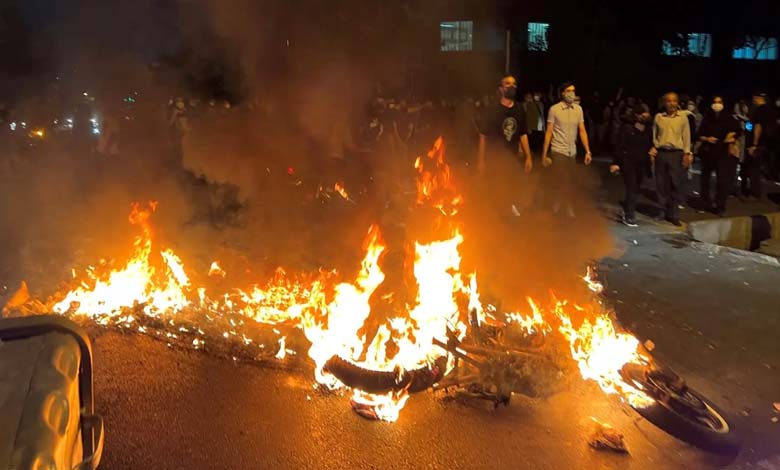
In recent days, Iran has witnessed widespread protests that began in Tehran’s bazaar and quickly spread to cities and universities, forming the largest unrest since 2022.
-
Nine waves in a quarter century: the history of protests in Iran
-
Basij member killed during protests in western Iran
According to the U.S. magazine Foreign Policy, the immediate trigger for these protests is economic hardship: the Iranian currency has fallen to nearly 1.4 million rials to the dollar, inflation has exceeded 52 percent, and the cost of basic goods has risen beyond what ordinary citizens can afford.
The magazine asks whether this wave of protests could, like the 2022 movement, evolve into a sustained challenge to Iran’s government.
A comparison of the two protest cycles reveals both continuity and change in Iran’s protest dynamics.
-
America, Iran, and the nuclear issue: Who can break the stalemate?
-
Australia examines the hypothesis of an Iranian link to the armed attack in Sydney
Economic shock
The 2025 protests began with an economic shock: the collapse of the rial, accelerating inflation, and widespread unemployment ignited anger among shopkeepers, traders, the urban middle class, and students.
In Tehran’s Grand Bazaar and in markets such as Lalehzar and Aladdin, merchants closed their shops and took to the streets with a clear message: economic collapse and political mismanagement are inseparable.
Despite their different origins, the 2022 and 2025 movements share key similarities. In both cases, protests spread rapidly through social media, allowing images to circulate across Iran and abroad.
-
Iranian insistence on sponsoring Hezbollah tests the limits of Lebanese sovereignty
-
Washington targets Iran’s weapons supply lines beyond Gulf waters
In 2022, the hashtag “Amini” — referring to Mahsa Amini, a young Iranian who died in custody after being detained for removing her headscarf — went global. This time, videos of bazaar strikes and student gatherings have once again drawn international attention.
In both waves, the state responded with force: more than 500 people were killed and thousands arrested in 2022, and reports already point to harsh crackdowns, mass arrests, and intimidation in the current protests, according to the magazine.
-
Russia’s slowdown makes China Iran’s most important supplier of weapons
-
Midnight Hammer: How the F-35 took part in striking Iran
Key differences
Still, the differences between the two movements are significant. The 2025–2026 protests are described as “broader and deeper in their early phase.” They spread across a wider geography, covering major cities such as Tehran, Isfahan, Mashhad, and Hamadan, while also reaching smaller towns and economically marginalized areas. By contrast, the early stages of 2022 protests were concentrated mainly in big cities.
The 2025–2026 protests also mobilized students, workers, women, and ethnic minorities from the outset, suggesting the possibility of wider mobilization under economic strain.
-
In Search of Answers: Draft Resolution at the IAEA Board of Governors to Increase Pressure on Iran
-
Strategic Warning: A Muslim Brotherhood–Houthi network backed by Iran threatens Red Sea security
Another major difference lies in the international context. In 2022, global attention focused on human-rights abuses, and Western governments imposed limited sanctions.
By contrast, today’s protests unfold in a drastically different geopolitical environment. Donald Trump’s return to the White House and the revival of the “maximum pressure” strategy have deepened Iran’s economic isolation. His willingness to use military force against Iran — alongside explicit support for possible strikes beyond its nuclear program — has intensified the crisis and unsettled political elites.
-
Satellite images reveal underground expansion at Iranian nuclear facilities
-
The Escalation of Confrontation: The Drone Crisis Exposes the Fragility of Iranian Diplomacy in Europe
A notable shift
Perhaps the most notable development in late 2025 has been the ideological shift in protest slogans. While “Woman, Life, Freedom” remains symbolically powerful, new chants increasingly reflect monarchist sentiment.
Slogans such as “Javid Shah” (long live the king) and “This is the final battle / Pahlavi will return” have echoed in protest hubs.
According to Foreign Policy, these slogans signal renewed interest in the Pahlavi legacy and explicit calls for the return of Crown Prince Reza Pahlavi, marking a significant departure from the republican framework that shaped the 2022 movement.
-
Iran comments on Trump’s plan: We support any initiative to stop the fighting in Gaza
-
Dawn Executions in Iran: Six Alleged Israeli Agents Put to Death
History suggests that economic protests alone rarely succeed unless they evolve into broader political movements. Iran’s own history supports this pattern: bazaar merchants played decisive roles in the 1979 revolution and earlier, during the 1906 Constitutional Revolution.
If today’s economic protests expand further to include workers and rural communities, they could become a more enduring challenge. The regime seems aware of this risk: promises of dialogue and the resignation of the central bank governor appear to be attempts to contain unrest before it spreads further, the magazine notes.
-
Sanctions on Iran Threaten the Regime as Public Anger Grows
-
Hours before sanctions… Iran protests against Europe’s snapback mechanism and recalls its ambassadors