From France to Sweden, Europe’s Front Against the Muslim Brotherhood Expands
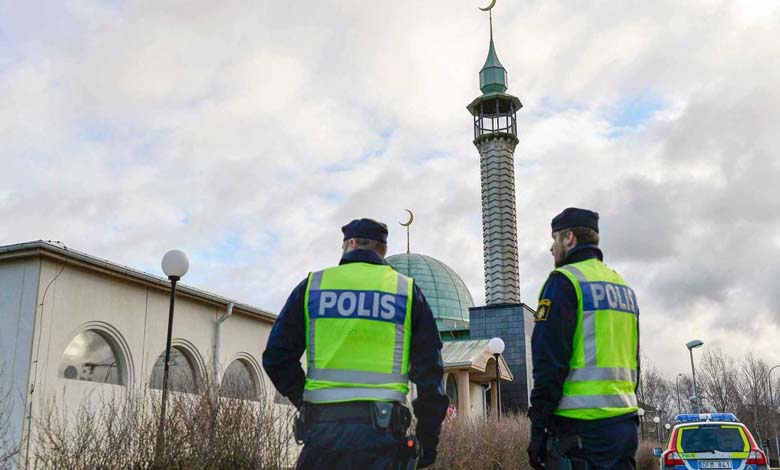
The tightening of pressure on the Muslim Brotherhood is continuing internationally, as momentum builds across Europe toward classifying the group as a “terrorist” organization.
This time in Sweden, Jimmie Åkesson, leader of the far-right Sweden Democrats party, pledged to push for the inclusion of Iran’s Islamic Revolutionary Guard Corps and the Muslim Brotherhood on a national list of “terrorist” organizations.
-
A vast Brotherhood-linked network siphons millions: investigation reveals Sweden’s largest embezzlement scandal
-
Sweden vs. the Muslim Brotherhood… Will the government stop funding Brotherhood institutions?
Europe’s expanding front against the Muslim Brotherhood
Åkesson made the remarks at a conference in Israel, where he criticized Sweden’s exclusive reliance on terrorism lists issued by the European Union and the United Nations, describing them as insufficient.
He said: “The need for a national list stems from an unfortunate reality: the European Union is weak and overly hesitant in dealing with these issues.”
He added that the European list is “ineffective and incomplete,” confirming that his party would submit “a proposal to establish a specifically Swedish list of terrorist organizations” ahead of the next general elections.
Åkesson stated that the first organizations to be included should be Iran’s Islamic Revolutionary Guard Corps and the Muslim Brotherhood.
-
2025 review: Europe joins the tightening net around the Muslim Brotherhood and strengthens countermeasures
-
2025: The Year of the International Siege of the Muslim Brotherhood – An Unprecedented Clampdown to Curb the Movement’s Influence
Europe’s expanding front against the Muslim Brotherhood
Signs of Muslim Brotherhood penetration in Sweden
Last year, an official report issued by France’s Ministry of the Interior on the activities of the Muslim Brotherhood in Europe generated significant political repercussions in Sweden.
The report devoted several sections to Sweden, highlighting indicators and analyses that Paris viewed as evidence of the group’s penetration into Swedish society, despite its limited numerical size.
Published on May 21 under the title “The Muslim Brotherhood and Political Islam in France,” the report went beyond mapping political Islamist influence within France and extended its analysis to the group’s presence in Germany, Austria, the United Kingdom, and Sweden.
-
The Muslim Brotherhood in 2025… A Year of Decline and International Constriction
-
Europe’s crackdown on the Muslim Brotherhood: banned networks, financial restrictions and security measures
While Sweden has traditionally adopted a flexible political discourse on multiculturalism, the report provided an opening for right-wing political forces to advance a new narrative combining national security concerns, counter-extremism efforts, and resistance to foreign influence within Sweden.
How the French report shook Stockholm
The French report stated that “the Muslim Brotherhood’s branch in Sweden wields political and social influence disproportionate to its numerical size,” an influence attributed to three main factors:
– the flow of funding to certain associations and organizations linked to the group;
– Sweden’s multicultural model, which has enabled political Islamist groups to expand within legal and democratic frameworks;
– direct or indirect links with certain political parties, particularly the Social Democratic Party.
-
European awakening on the Muslim Brotherhood issue: seven countries on the path to counteraction
-
The Muslim Brotherhood holds a meeting with its deputies… What was discussed?
The report argued that these combined factors enable the group to build “parallel social structures” and called on European governments to strengthen security and intelligence coordination to counter what it described as the “soft advance of political Islam.”
The Swedish government moves to confrontation
At the time, the Swedish government responded swiftly, stating that the report warranted a dedicated national investigation.
On May 22, Minister for Employment and Integration Mats Persson, a member of the Liberal Party, announced the formation of an expert committee to examine the “infiltration of political Islam” within the country, according to the English edition of Le Monde.
-
Report Warns: Muslim Brotherhood Maneuvers in Germany to Infiltrate Society and Expand Its Activities
-
Analysts reveal fate of Brotherhood’s economic and charitable institutions and networks in Europe
In unusually strong language for Swedish official discourse, Persson warned that Sweden “faces the risk of parallel structures that undermine liberal democracy.”
Observers believe these statements reflected a significant shift in state rhetoric, following years of attempts to balance openness and freedoms with security and integration requirements.
One week later, on May 28, the government, with the backing of the far-right Sweden Democrats led by Jimmie Åkesson, unveiled a new plan to ban foreign funding for organizations suspected of links to extremism or anti-democratic agendas.
What the French report revealed at the time was not new to Sweden. In 2017, the Swedish Civil Contingencies Agency published a study by researchers specializing in Islamist movements, confirming the existence of “cohesive networks” linked to the Muslim Brotherhood that conduct religious, educational, and social activities while benefiting from local public funding.
-
The Muslim Brotherhood in Europe and Youth: A Long Arm with 31 Branches and a Recruitment Strategy
-
The Muslim Brotherhood in Europe and Youth: An Extensive Arm with 31 Branches and a Structured Recruitment Strategy
The study showed how Swedish municipalities, through integration and community-support programs, had financed associations whose leaders maintained direct or ideological ties to the Muslim Brotherhood.
It concluded that these structures foster the emergence of a “parallel society” with values and norms distinct from those of Sweden’s secular society, posing a long-term threat to full integration.
Europe’s expanding front against the Muslim Brotherhood
Green light from the French Parliament
Last Thursday, French lawmakers adopted a motion calling for the Muslim Brotherhood to be added to the European list of terrorist organizations, a move supported by the ruling coalition and the far-right National Rally party.
-
International Expert Reveals Strategies to Confront the Muslim Brotherhood in European Countries
-
New book reveals the reality of “Jihadist” Groups and the Muslim Brotherhood in Europe
After five hours of debate, the National Assembly approved the text, introduced by lawmakers from the conservative Republicans party, by 157 votes to 101.
The non-binding resolution urges the European Commission to initiate procedures to place “the Muslim Brotherhood movement and its leaders on the European list of terrorist organizations,” and calls on the European Union to carry out “a legal and factual assessment of the transnational Muslim Brotherhood network.”
Earlier this month, the United States designated the Muslim Brotherhood as a terrorist organization in Egypt, Jordan, and Lebanon.
-
France – Successive blows to the Brotherhood in Europe to control its extremist activities
-
Recent Reports and Warnings Reveal the Expansion of Muslim Brotherhood Activity in Europe: Details
-
Proposal to designate the Muslim Brotherhood as a terrorist organization in Europe: Is France accelerating the ban?