From Venezuela to Iran: Cyberwarfare Advances the U.S. Arsenal
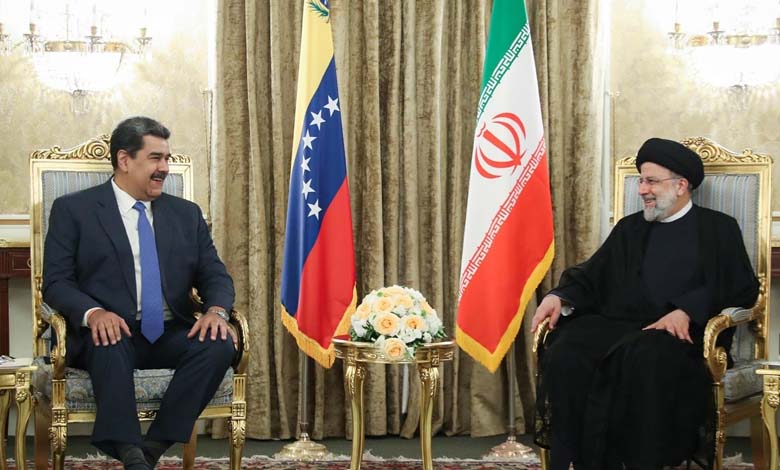
From the United States to Iran, President Donald Trump has fully embraced offensive cyber operations.
The “Epic Fury” operation did not start with bombs but with cyber warfare, as revealed by General Dan Quinn, Chairman of the U.S. Joint Chiefs of Staff. He stated that before the airstrikes on February 28, elements of U.S. Cyber Command and Space Command had already executed what he described as “non-kinetic effects that disrupted, weakened, and impaired Iran’s ability to see, communicate, and respond.”
This is not the first time the Trump administration has used offensive cyber operations, according to Foreign Policy.
-
US and Iran: The Venezuela Scenario Deemed Improbable Without Ground Intervention
-
Iranian supertanker departing from Venezuela to transport heavy oil
In January, Trump referenced cyberattacks intended to cause power outages in Venezuela before the U.S. military detained Venezuelan President Nicolás Maduro. General Quinn confirmed that Cyber Command and Space Command had carried out “various effects” to support the Venezuela operation, without providing further details.
During the twelve-day war last summer, Quinn noted that U.S. Cyber Command “supported” strikes targeting three Iranian nuclear facilities. Reports indicated that cyber weapons had disrupted Iranian missile defense systems.
-
A base for Iran and Hezbollah… A new accusation from Washington against Venezuela
-
Iran challenges the US sanctions and sent the biggest flotilla to Venezuela with fuel
On March 6, Trump released the long-awaited National Cybersecurity Strategy, which praised these operations and stated that “adversaries are aware that U.S. cybersecurity operators and tools are the best in the world and can be deployed quickly and effectively to defend America’s interests.”
The strategy is based on a six-pillar principle, starting with the goal of “shaping adversary behavior” through “the full range of defensive and offensive U.S. government cyber operations.”
Sean Kirkendall, U.S. National Cyber Director, described the first pillar on Monday as “the most important” element of the strategy, stating, “We need to reassess overseas risks from actors seeking to harm us.”
-
Syria maintains neutrality in the war against Iran
-
Will Washington and Moscow strike a grand bargain: Iran in exchange for Ukraine?
Offensive cyber operations are not new for the U.S., with one of the most famous examples involving Iran. The U.S. and Israel are believed to have jointly used the cyberweapon “Stuxnet” in the early 2000s to target Iranian nuclear facilities, though both countries denied it.
Public acknowledgment and showcasing of these offensive cyber operations represent “a significant development,” according to Lauren Williams, former Director of Strategy at the White House National Cybersecurity Directorate, who led the Strategic Cybersecurity Initiative for Space Systems under the Biden administration.
Israel is one of the most advanced countries in military cyber operations. According to the Financial Times, Israeli hacks of Tehran’s traffic cameras and communication towers played a key role in the assassination of Iranian Supreme Leader Ali Khamenei.
-
Russia and China back Iran’s new leader as Washington and Tel Aviv issue threats
-
The war against Iran: a conflict aimed at shaping the future of the global system
Reports indicate Israel also hacked the popular Iranian prayer calendar app “Padisaba” (over 5 million downloads) to display messages such as “The hour of reckoning has come” and “Relief has arrived” on the first day of U.S.-Israeli strikes.
Iranian state media reported hacking of multiple news sites to display anti-Khamenei messages, while other reports referenced an Israeli raid on the “Iranian cyber warfare headquarters,” though the extent of the damage remains unclear.
Iran is consistently ranked among the United States’ and its allies’ top cyber adversaries. Iranian hackers have targeted everything from Las Vegas casinos to rural U.S. water networks and Trump’s 2024 campaign.
-
After Iran… Trump identifies the next country
-
NATO Defenses Intercept Ballistic Missile Launched from Iran Toward Turkey
Scott White, Director of the Cybersecurity Program at George Washington University and former officer in the Canadian Army and Intelligence, stated: “Iran is a major cyber power… we put it in the same category as China, Russia, and North Korea.”
Since the start of the current war, some indications suggest Iranian-linked groups have targeted Israeli systems. The Israeli National Cyber Directorate reported “dozens” of Iranian attempts to hack surveillance cameras and infiltrate Israeli systems, deleting data.
Groups known as “electronic activists” associated with Iran, such as Hezbollah and the Islamic Electronic Resistance, targeted U.S., Israeli, and regional infrastructure last week, according to cybersecurity firms Flashpoint and Halcyon.
-
Shooting Down Two Iranian Aircraft in Qatar Changes the Rules of Engagement in the Gulf
-
Israel strikes the Iranian leadership complex, the regime’s most central and strategic headquarters
Overall, the anticipated cyber response from Iranian government entities has been “quieter,” particularly against critical U.S. infrastructure, according to Alexander Leslie, Senior Advisor at Recorded Future.
This may be due to war disruptions, limited internet access in Iran, and the assassination of senior officials who usually oversee cyber operations, with Tehran possibly waiting for the right moment.
Destroying Iranian cyber capabilities is far more difficult than destroying its bombs and missiles. Williams noted that “as Iran’s conventional military capabilities decline, the likelihood of escalation in cyberspace increases.”
She added that the ability to launch cyberattacks from anywhere means “even the least-resourced countries have access, and I would be concerned over time about Iran increasingly using cyberattacks as a tool in the conflict to compensate for the loss of conventional military capabilities.”
-
Iran shuts the door on negotiations with the United States
-
The black Tomahawk: a new weapon in the skies of the Iran conflict
-
The end of the war with Iran: three scenarios between collapse and negotiation