Funding the war on Iran sparks sharp divisions within Congress
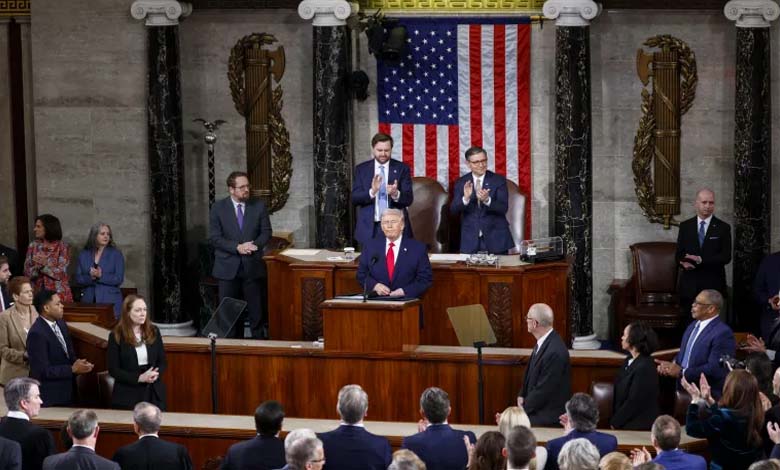
Initial estimates suggest that the war on Iran could become the most costly since the Iraq and Afghanistan wars, with expenditures exceeding $11 billion in just the first six days, at a daily spending rate ranging between $1 billion and $2 billion.
The request by U.S. President Donald Trump’s administration for additional funding exceeding $200 billion for the war on Iran has triggered strong opposition within Congress, reflecting growing concerns over the escalating cost of the conflict and its impact on the U.S. economy and domestic political divisions.
-
Visit of the U.S. Congress to the Moroccan Sahara: A Strategic Reading of Regional and International Dimensions
-
Can Congress Stop Trump’s Tariffs?
According to U.S. officials, the Department of Defense has asked the White House to approve submitting this substantial funding request to Congress. Although the final figure has not yet been determined, the scale of the proposal alone has raised significant questions, particularly as it follows record defense budgets approved over the past two years.
During a press conference, Defense Secretary Pete Hegseth justified the need for funding by stating that “eliminating adversaries requires financial resources,” a remark that encapsulated the administration’s approach to the war but also intensified criticism within political circles, where many argue that such rhetoric overlooks the economic and humanitarian consequences of the conflict.
-
Dead Tweets Stir Controversy in U.S. Congress: Messages from Beyond the Grave
-
Congress rejects resolution restricting support for Israel
Preliminary estimates indicate that the war could become the most expensive since Iraq and Afghanistan, with costs already surpassing $11 billion in just six days, and daily expenditures estimated between $1 billion and $2 billion, according to lawmakers. These figures have fueled concerns that the United States may be drawn into a prolonged war of financial attrition.
Democrats have been the most vocal in their opposition, questioning the justification for additional funding given that approximately $840 billion has already been allocated to defense in the 2026 budget, alongside $156 billion previously approved under other spending packages. They argue that continued funding of the war comes at the expense of social programs and essential public services.
-
Washington approves an emergency missile deal for Israel without Congressional review
-
Congress votes on project to rescue the United States from Federal Shutdown
Representative Pramila Jayapal stated that the key question is “how are we going to pay for this?”, describing the request as “extremely absurd,” reflecting a growing trend within the Democratic Party to link the war to worsening domestic economic conditions.
Some Democrats have gone further, calling for the use of funding leverage to end the conflict. Senator Chris Van Hollen stated that “the best way to end this war is to cut off its funding,” highlighting increasing calls to halt military involvement.
Notably, concerns are not limited to Democrats. Several Republicans have also expressed surprise at the scale of the request, including Senator Susan Collins, who described it as “far higher than expected” and called for greater transparency and hearings to examine its details.
-
Before the expiration of UN Security Council sanctions, Congress is discussing a new bill imposing sanctions against Iran’s nuclear program
-
U.S. Congress considers designating the Houthi militia a Terrorist Organization
This divergence reveals fractures within the Republican camp itself, despite its control of Congress, underscoring the sensitivity of the situation and growing concern over the political and economic costs of the war.
At the public level, the war does not enjoy broad support, with polls indicating that only about a quarter of Americans back it, increasing pressure on the administration amid rising concerns about the conflict’s impact on daily life, particularly due to disruptions in energy markets and rising prices.
These concerns are compounded by troubling economic indicators, as experts warn that sustained high military spending could increase the budget deficit and inflation, directly affecting citizens’ purchasing power.
-
Washington, caught in a war funding dilemma, considers a ground operation in Iran
-
Trump and Iranian nuclear fuel: a strategic move to decide the war
Comparisons with past experiences further reinforce these concerns, as prolonged wars in the Middle East have historically drained U.S. resources without delivering decisive strategic gains, prompting warnings against repeating the same scenario.
The funding debate within Congress thus reveals a deeper crisis that goes beyond numbers, reflecting a clash between those advocating the continuation of the war regardless of cost and those warning of its domestic consequences, at a time when the United States faces a critical test between external security priorities and internal stability.
The cost of the war is not only causing concern and division in the United States; similar concerns are emerging in Israel. The Hebrew newspaper Haaretz reported on Thursday that the first twenty days of the war on Iran have cost the Israeli military approximately $6.4 billion.
-
The Iran–Israel war: Netanyahu’s dream comes true, but under Trump’s conditions
-
U.S. intelligence rules out the collapse of the Iranian regime
Citing unnamed informed sources, the newspaper stated that “the first twenty days of the war on Iran have cost the Israeli army about 20 billion shekels (approximately $6.4 billion), averaging around one billion shekels per day,” adding that “the budget allocated for conducting the war stands at around 39 billion shekels (approximately $12.5 billion), allowing estimates of how long the conflict can continue if spending remains at the same rate.”
These figures highlight the significant economic burden of the war, as the military prepares to request additional funding as operations continue.
-
Iran war and munitions: $5.6 billion spent in the first two days, laser is the solution
-
Operation behind enemy lines: a U.S. plan to take control of Iran’s nuclear material