Gaza: dawn strikes test what remains of displaced people’s patience
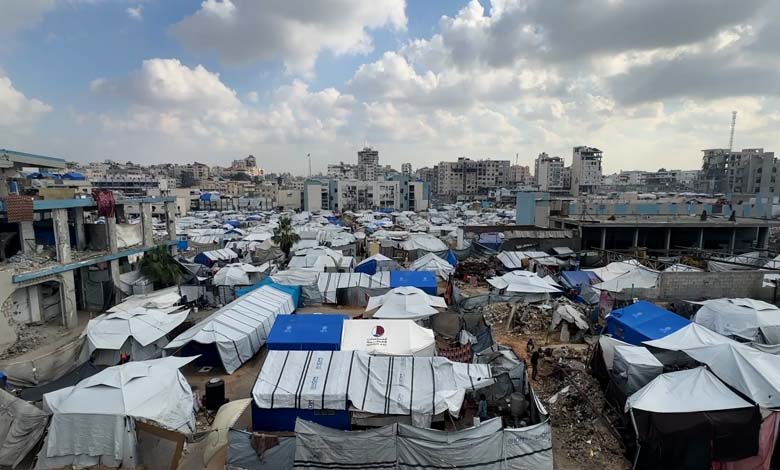
The dawn airstrikes are severely testing the already exhausted patience of displaced people in Gaza, as renewed bombardments deepen the suffering of a population, most of whom live in tents surrounded by devastation and battered by heavy rains.
-
The yellow line on the ground differs from the maps… images reveal the terror in Gaza
-
Invitations and announcement of participants: developments in the Gaza Peace Council
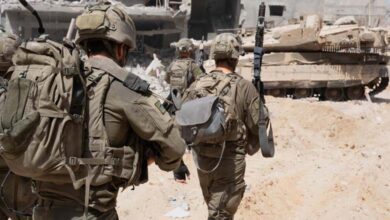
At dawn on Saturday, Israeli aircraft carried out raids on Gaza City and the central part of the enclave, while Israeli artillery shelled the eastern areas of Khan Younis, according to Palestinian media.
The Palestinian news agency Wafa reported that the Israeli army launched airstrikes on eastern Gaza City, alongside shelling of Deir al-Balah and the Al-Bureij refugee camp in the central Gaza Strip.
The agency added that Israeli air raids also targeted eastern Deir al-Balah, the Al-Bureij camp, and the Al-Tuffah neighborhood in Gaza City.
In the south, gunfire resumed from Israeli military vehicles east of Khan Younis and north of the city of Rafah.
Israeli military vehicles and attack helicopters opened intense fire on eastern Khan Younis and toward the city of Rafah in the southern Gaza Strip.
-
Washington close to forming a Palestinian committee to administer the Gaza Strip
-
Circulating formation of the Gaza Administration Committee: 15 members headed by Ali Shaath
First meeting
On Friday, the Palestinian technocratic committee tasked with administering Gaza held its first meeting in the Egyptian capital, a day after US President Donald Trump announced the formation of a “Peace Council” to oversee the affairs of the war-ravaged territory after two years of conflict.
According to Agence France-Presse, the meeting was attended by Jared Kushner, the US president’s son-in-law, and Bulgarian diplomat Nikolay Mladenov, who is expected to play a pivotal role in the second phase of the US peace plan to end the war in Gaza, as stated by a committee member who requested anonymity.
The committee, made up of 15 Palestinian figures, was formed on Wednesday and is expected to temporarily administer the territory under the supervision of the “Peace Council”.
A committee member said that another meeting would be held on Saturday, expressing hope to “go to Gaza next week or the week after,” adding, “Our work is there, and we must be there.”
He noted that the committee’s top priority would be “public services,” stressing that it “will not engage in political affairs.”
On Friday, Trump appointed Secretary of State Marco Rubio and former British Prime Minister Tony Blair as founding members of the Gaza Peace Council.
-
Israel and the ban on relief organizations in Gaza: a UN alarm and calls to reverse the decision
-
Timeline for the second phase in Gaza to begin mid-January… two months to disarm Hamas
The White House also confirmed the appointment of Trump’s special envoy Steve Witkoff, his son-in-law Jared Kushner, and World Bank President Ajay Banga to the seven-member founding executive council.
The statement said that Trump himself will chair the council, noting that additional members will be announced in the coming weeks.
On Thursday, Trump announced the creation of the Peace Council, a key component of the second phase of the US peace plan aimed at ending the war in Gaza.
-
Israeli media reveal approval of three countries to send forces to Gaza
-
Gaza residents under bombardment: fear of displacement east of the yellow line
Humanitarian aid and housing
In his capacity as chairman of the Peace Council, Trump expressed support for the Palestinian expert committee tasked with “governing Gaza during the transitional phase”.
Writing on his Truth Social platform, he said that “these Palestinian leaders are firmly committed to a peaceful future”.
The US president’s plan stipulates that “Gaza will be governed by a temporary transitional authority, namely a non-politicized Palestinian technocratic committee responsible for managing daily public and municipal services for Gaza’s residents”.
The plan was approved last March with European backing, in response to an earlier proposal by Trump that called for taking control of the Palestinian territory and relocating its population.
-
Advanced Israeli-American consultations on an independent Palestinian government in Gaza
-
Gaza exits the famine stage and enters the critical emergency zone
On Thursday, Jorge Moreira da Silva, Executive Director of the UN Office for Project Services, warned that the reconstruction of Gaza cannot be delayed, following his third mission to the Palestinian territory devastated by two years of war.
He described residents living in “inhuman” conditions, citing the absence of wastewater treatment, a severe shortage of electricity, and people living in partially destroyed buildings at risk of collapse.
Da Silva recalled that the United Nations, the European Union, and the World Bank have estimated reconstruction needs at more than 52 billion dollars.
-
Sunrise: Details of the U.S. Plan for the Gaza Riviera and the Expected Challenges
-
Rainwater floods Gaza’s largest hospital