Heglig reshapes the balance of the Sudanese war… and Washington repositions itself
On 8 and 9 December 2025, the Sudanese file witnessed a major qualitative shift that redrew the contours of the conflict both politically and on the ground, following the simultaneous release of three media reports which, taken together, formed a comprehensive picture of a profound turning point in the course of the war. Two reports by Al-Hurra highlighted the takeover by the Tasis forces of the strategic Heglig oil field, as well as a noticeable change in the approach of the administration of US President Donald Trump toward the Sudanese crisis. At the same time, a BBC investigation exposed the scale of the human cost of the war, documenting the killing of at least 1,700 civilians in air strikes carried out by the Sudanese Air Force. Read together, these three reports do not describe isolated events, but rather point to a decisive moment in which economics, international calculations, and the record of violations converge.
Heglig: control of oil as a strategic turning point, not merely a battlefield gain
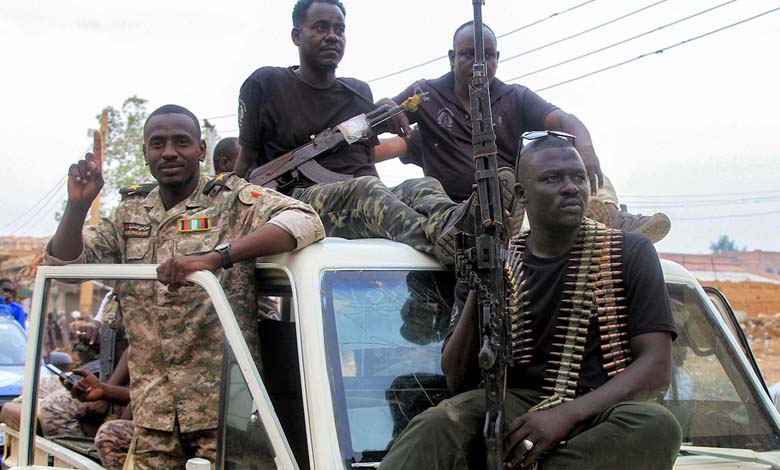
The first Al-Hurra report revealed that the Tasis forces had succeeded in securing full control of the Heglig oil field in South Kordofan, one of the most sensitive sites in Sudan’s economic geography, as it serves as the main processing facility for South Sudanese oil. The significance of this development lies not only in territorial control, but in the command of a central node within the regional energy network. Oil passes through Sudanese territory to the port of Port Sudan, providing vital hard-currency revenues to the Port Sudan authorities.
According to government sources cited by the channel, General Al-Burhan’s army and the facility workers withdrew completely from the site to avoid clashes that could have led to the destruction of oil infrastructure. This withdrawal without fighting reflects an awareness within the military establishment that the cost of confrontation at such a site could outweigh the cost of losing it. At the same time, it exposes the fragility of the army’s ability to protect strategic resources amid the widening scope of the conflict.
The takeover of Heglig by the Tasis forces effectively grants them a powerful economic lever, enabling them to influence one of the key resources on which the Port Sudan authorities rely for financing. Despite assurances issued by the Tasis forces via their Telegram channels regarding the protection of the facilities and the continuity of supplies, concerns persisted in oil markets, particularly over the potential disruption of South Sudan’s exports. The Al-Hurra report concluded that this development strengthens the Tasis forces’ battlefield gains in the south and weakens Al-Burhan’s army in the struggle for control over resources.
Washington steps in decisively: a shift in the Trump administration’s approach
The second Al-Hurra report shifted the focus from the battlefield to politics, revealing a qualitative change in how the administration of President Donald Trump is dealing with the Sudanese crisis. US Secretary of State Marco Rubio confirmed that Trump is personally following the situation, signaling that Washington is no longer managing the crisis solely through envoys or back channels, but now views it as a priority issue.
The channel identified three main obstacles to any potential US-led settlement. The first lies in the divergence between the vision of Washington and the international Quartet on one hand, and that of Al-Burhan’s army on the other, particularly regarding the refusal of the Port Sudan authorities to engage in dialogue that includes the United Arab Emirates, despite failing to provide evidence supporting their accusations that Abu Dhabi backs the Tasis forces. From the US perspective, this stance constitutes a major impediment to any comprehensive solution.
The second obstacle concerns the issue of Islamist elements within the army. Washington remains unconvinced by the army’s denials of the presence of Islamist factions in its ranks, at a time when the United States is moving toward designating the Muslim Brotherhood as a foreign terrorist organization. This contradiction places increasing strain on relations between the Sudanese army and the US administration, making any political or military support conditional upon internal restructuring that Al-Burhan appears unwilling to undertake.
The third obstacle involves the issue of a Russian military base in Port Sudan, which raises significant international sensitivities given the strategic importance of the Red Sea. For Washington, any permanent Russian military presence along this vital maritime corridor constitutes a direct threat to its interests and those of its allies. The report noted that US pressure on Islamist elements within the army aligns with the regional positions of the United Arab Emirates, which itself faces a political campaign from the Port Sudan authorities accusing it of supporting the Tasis forces.
The BBC report: the human cost places the army under international scrutiny
Alongside the military and political shifts, the BBC investigation added a highly alarming humanitarian dimension. The report revealed that the Sudanese Air Force carried out air strikes that killed at least 1,700 civilians in attacks targeting residential neighborhoods, markets, schools, and displacement camps, according to data collected by the Witness Sudan project.
What sets this investigation apart is its reliance on the largest known dataset of military air strikes in the Sudanese conflict since its outbreak in April 2023. The analysis showed that the air force used unguided bombs in populated areas, significantly increasing the likelihood of civilian casualties and raising serious questions about compliance with international humanitarian law.
This report does more than document the tragedy; it places Al-Burhan’s army in direct confrontation with international public opinion and provides Western capitals, foremost among them Washington, with additional material for political and potentially legal pressure. At a moment when the United States is reassessing its relationship with the army, these figures further weaken its position and tip the balance in favor of calls to link any political settlement to accountability and violations.
When the threads of these three reports are brought together, it becomes clear that Sudan has entered a new phase of the conflict. The takeover of Heglig by the Tasis forces has redefined the war as a struggle over resources, the American shift has returned Sudan to the forefront of geopolitical calculations in the Red Sea, and the BBC report has exposed the heavy human toll of the ongoing war. These simultaneous developments make it difficult to speak of a return to the pre-December 2025 status quo and open the door to scenarios ranging from an imposed international settlement to a far more complex escalation in an arena where local, regional, and international interests intersect in unprecedented ways.