Hezbollah disarmament: a rare opportunity amid fears of escalation reshaping the landscape
In recent weeks, Lebanon has witnessed unprecedented diplomatic and political momentum, placing the disarmament of Hezbollah at the top of the national agenda.
As Western pressure mounts to end any military presence outside state authority, official visits and parliamentary initiatives have multiplied, signaling a clear international will to support the Lebanese Armed Forces in restoring their exclusive role in defending national sovereignty.
-
Israel arrests a member of the Islamic Group and kills another from Hezbollah in southern Lebanon
-
The volcano of Hezbollah’s internal conflicts spews its lava: Wafiq Safa exposes what was hidden
In this context, the recent visit of Army Commander General Rodolphe Haykal to Washington marked a pivotal moment. According to The National Interest, discussions with U.S. officials focused on strengthening military cooperation and enhancing the capabilities of the Lebanese military to enforce state authority and ensure security, particularly in areas where Hezbollah maintains an armed presence.
Simultaneously, French Foreign Minister Jean-Noël Barrot visited Beirut to coordinate preparations for an international conference scheduled to take place in Paris in March, dedicated to supporting the Lebanese army and reinforcing its logistical and operational capacities.
-
A US senator cuts short his meeting with the Lebanese army chief over Hezbollah
-
Israel kills a Hezbollah air defense unit official
The Lebanese Army’s plan
In a move reflecting clear governmental resolve, the Lebanese Army presented in mid-February a comprehensive five-phase plan to disarm Hezbollah, requesting a four-month timeframe—extendable to eight months—to complete the second phase, covering the area between the Litani and Awali rivers.
In January, the army had announced the completion of the first phase and the establishment of operational control south of the Litani, despite continued Israeli skepticism.
The plan envisions a gradual expansion from the south toward Beirut’s southern suburbs and the Bekaa Valley, culminating in the assertion of state authority across the entire territory, marking a shift from crisis management to the formulation of a new security order for Lebanon.
-
Hezbollah souvenirs in an Aladdin’s cave: Iranian influence under scrutiny in a British investigation
-
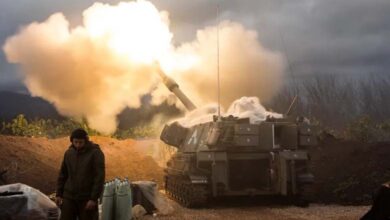
Israel cripples Hezbollah’s artillery unit as missile platforms are targeted
Hezbollah’s rejection
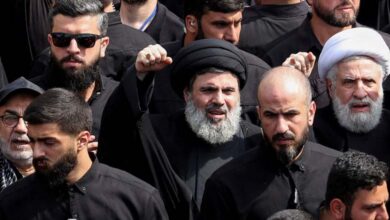
The plan was firmly rejected by the party’s Secretary-General, Naim Qassem, who argued that the focus on disarmament “serves Israeli interests.” Hezbollah publicly maintains that its weapons are essential for defending Lebanon against Israel, while reports indicate behind-the-scenes efforts to secure political guarantees ensuring its continued role within state institutions after disarmament.
Its leaders have also hinted at the possibility of engaging in a regional confrontation should Iran face a military strike, in what they describe as “strategic ambiguity.”
-
Hezbollah and Disarmament: Lebanon Highlights Progress as Israel Mobilizes for a Limited Operation
-
Messages by Fire… Israel Targets Hezbollah Military Sites in Lebanon
Strategic vulnerability
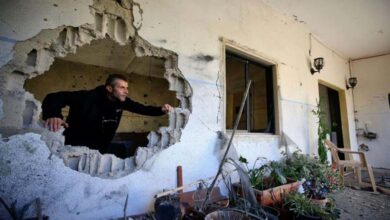
Despite its assertive rhetoric, Hezbollah is experiencing an unprecedented period of weakness. Israel’s campaign in autumn 2024 inflicted significant damage on its military infrastructure, and the collapse of the regime of Bashar al-Assad in Syria disrupted its main supply lines.
Ongoing Israeli airstrikes have further hampered its ability to reorganize, with more than 400 members reportedly killed since the ceasefire.
Perhaps the clearest sign of its reduced capacity was its decision not to intervene during the Iran-Israel war in June 2025, despite intense pressure on Tehran—a move reflecting careful internal calculations shaped by public fatigue and internal divisions.
Although it is believed to retain around 25,000 rockets north of the Litani, the relocation of much of its capabilities to remote areas suggests a defensive posture rather than preparation for a large-scale offensive.
-
Israel tightens its grip on Hezbollah in Lebanon: strike on training complex and weapons depots
-
Austria dismantles Hezbollah’s propaganda strategy: its activities in Europe exposed
The Lebanese Army: an institution capable of confrontation
Recent experience demonstrates the cohesion of the Lebanese Armed Forces in critical moments, notably the seizure of a Hezbollah ammunition shipment in Kahaleh in 2023 and the encirclement of armed elements in Tayyouneh in 2021.
Despite the death of six soldiers in an explosion at a southern depot, the first phase of the disarmament plan proceeded without direct clashes.
Lebanese officials consider the outbreak of large-scale confrontations during the second phase unlikely, particularly given continued international support for the army as a counterweight to Hezbollah.
-
Hezbollah disarmament: Paris meeting to discuss practical means of monitoring
-
Israel strikes Hezbollah positions in Lebanon
Risk of war
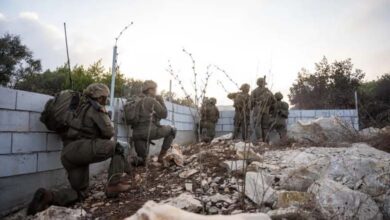
The disarmament issue intersects with rising tensions between Washington and Tehran, while Israeli media have reported heightened alert along the northern border.
In this context, President Joseph Aoun is conducting intensive consultations aimed at shielding Lebanon from any broader confrontation, amid growing calls to formally declare neutrality and prevent the country from being drawn into another war.
According to the magazine, the current momentum represents a rare opportunity to reassert Lebanese state sovereignty. The success of the second phase of the disarmament plan in the coming months will serve as a genuine test of the government’s ability to translate political will into operational reality.
However, sectarian complexities, Hezbollah’s regional calculations, and the risk of a wider Iran-Israel confrontation could ultimately reshuffle the deck.
-
Israel prepares for a new confrontation with Hezbollah, pending Trump’s approval
-
After the war with Israel, has Hezbollah rebuilt its military arsenal?