Ignoring history within decision-making circles… Is the world heading toward a global war?
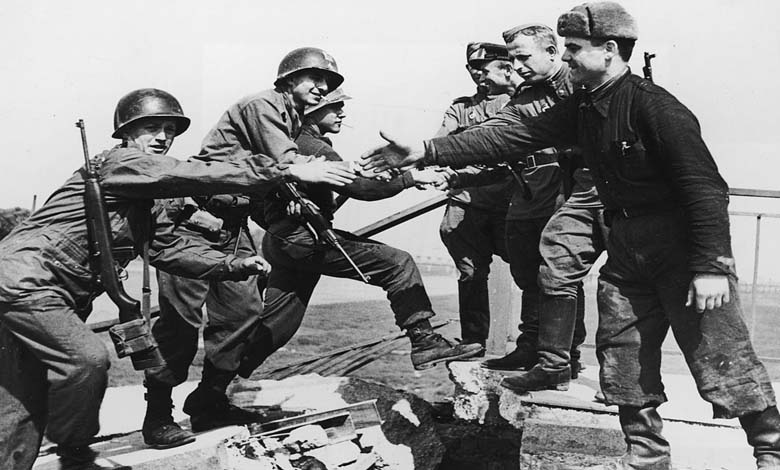
The current era is witnessing a decline in the role of history, as major powers shape their policies while ignoring or misusing past experiences.
Three generations after World War II, the lessons of the Great Depression, the Cold War and European unification appear to have faded from the memory of policymakers, increasing the risk of Western governments repeating the same mistakes, according to the American publication National Interest.
For centuries, governments have tended to forget the lessons of the past or selectively apply them.
A lack of understanding and historical awareness has also led to underestimating the nationalism of others — a key factor in the failures of U.S. foreign policy after World War II.
In Vietnam, the United States disregarded the fact that the populations of North and South Vietnam, despite their division, shared a common homeland.
The neglect of Vietnamese nationalism, combined with an excessive focus on the anti-communist “domino theory”, explains why Washington ignored warnings from regional actors in Asia against bombing and subduing Hanoi.
-
World War II Threatens the UK with 170 ‘Dormant’ Bombs
-
World War II Deception: A Japanese Military Ship in the California Desert
Similarly, in Iraq, the false assumption that Iraqis would welcome American forces as liberators resulted in catastrophic consequences for former President George W. Bush’s administration, which suffered from overconfidence.
In contrast, in the post–World War II era, the Bretton Woods system — the foundation of institutions such as the IMF, the World Bank, the GATT, the United Nations, NATO and U.S. alliances in Asia — contributed to eighty years of unprecedented peace and prosperity.
The system was designed to institutionalize relatively open trade, financial stability and collective security, leading in subsequent decades to the recovery of Europe, the rise of the Asian Tigers, and China’s emergence from devastation.
-
Ukrainian Incursion in the Largest Attack on Russia Since World War II: What Is Happening on the Border?
-
World War II: The Strangest and Most Failed Weapons
Despite its flaws, the system helped major powers avoid another world war for eight decades.
Today, policymakers’ disregard for the lessons of history may lead to serious consequences. While many U.S. officials view China’s rise as a repetition of Nazi Germany’s ascent, they overlook the fact that the growing U.S.–China rivalry more closely resembles the Anglo-German competition before World War I.
As in the present, neither side wanted war, but mutual distrust prevented decision-makers from finding a path to coexistence or reconciliation.
Canadian historian Margaret MacMillan, an expert on World War I, noted that the long peace following the Napoleonic Wars misled decision-makers before World War I, convincing them that a prolonged major conflict was impossible.
-
The world’s first autonomous fighter: a technological leap and an ethical dilemma
-
Arming Ukraine: A Current Account to Funnel $10 Billion Into an Open War
She argues that factors such as the extended peace since World War II, globalization, the creation of the UN and other multilateral institutions have had a similar effect on today’s policymakers, leading them to dismiss the likelihood of war.
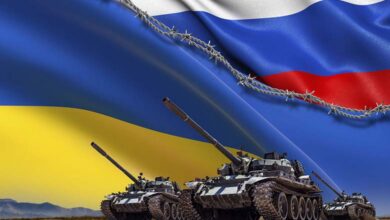
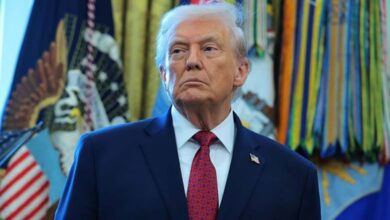
U.S. President Donald Trump appears more acutely aware of the possibility of a major conflict and its nuclear risks. He accuses Ukrainian President Volodymyr Zelensky of “gambling with World War III” and states that his administration “is working on a plan for nuclear disarmament.”
However, he has so far not taken the necessary steps to ease anti-China sentiment or slow the nuclear arms race.
-
Nautilus: The American Beast That Wages War Beneath the Waves
-
“Military Service”: Europe’s Concerns Drive towards “Mandatory” Service