In the face and foot: new details about the injury of Iran’s new Supreme Leader
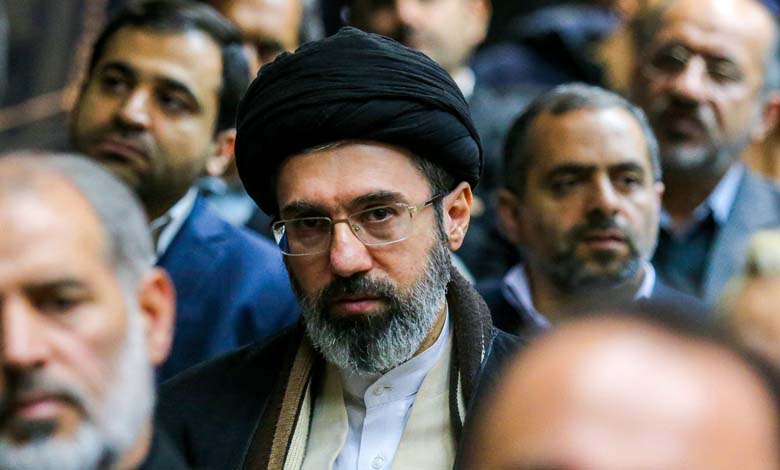
New details have emerged regarding the injury of Iran’s new Supreme Leader, Mojtaba Khamenei, dating back to the first day of the war, days after reports circulated suggesting that he had been targeted.
The new Iranian Supreme Leader suffered a fractured foot and facial injuries on the first day of the war that broke out on February 28 between Israel and the United States on one side and Iran on the other.
-
Mojtaba Khamenei’s Survival of Assassination Attempt Redraws Iran’s Leadership Map
-
Who is Mojtaba Khamenei, before whom Iranian leaders bow?
The American network, citing an informed source, said that Mojtaba Khamenei, 56, sustained a bruise around his left eye, along with minor facial wounds and an injury to his foot.
Meanwhile, Iran’s ambassador to Cyprus, Ali Reza Salarian, told the British newspaper The Guardian on Wednesday that the new Supreme Leader was injured in the same airstrike that killed his father, the late Supreme Leader Ali Khamenei, along with five members of his family.
-
Washington offers a large reward for information about Khamenei
-
The will buried with Khamenei: how the Revolutionary Guard overturned the father’s wish
Salarian explained that Mojtaba Khamenei has not appeared in public and nothing has been heard from him since the announcement of his appointment to the highest position in the country, a situation attributed to his injuries.
He told The Guardian: “I do not believe he is in a condition that would allow him to deliver a speech.”
Early Wednesday morning, Youssef, the son of Iranian President Massoud Pezeshkian, said he had heard about Khamenei’s injury, telling the state-affiliated Iranian Students News Agency (ISNA) that the new Supreme Leader “is well and there is no cause for concern.”
-
Iran after Khamenei: a disoriented regime and a silent struggle over the Supreme Leader
-
Trump studies Iran’s future after the war and keeps an eye on Khamenei’s successor
A discreet and enigmatic cleric
When Iran’s Assembly of Experts announced his selection as his father’s successor, state media broadcast a four-minute documentary highlighting key moments of his life.
According to CNN, Mojtaba Khamenei had been a central figure within the extensive network of influence built by his father during his long tenure as Supreme Leader.
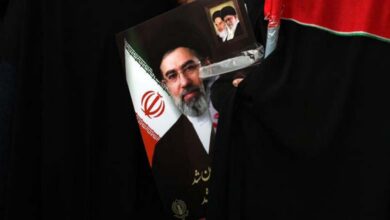
In 2021, images circulated on social media showing Iranians distributing posters promoting Mojtaba Khamenei as a potential successor to his father.
-
Geopolitical risks unsettle global markets after Khamenei’s death
-
Khamenei’s death: where real power lies in the world
Although he is not among the highest-ranking clerics, Mojtaba Khamenei maintains close ties with the Islamic Revolutionary Guard Corps as well as the regime’s economic elite. Observers believe he may be as hardline as, if not more than, his father.
Before his appointment as Supreme Leader, Maha Yahya, director of the Carnegie Middle East Center in Beirut, told CNN that his elevation could be interpreted as a message from the regime to the United States and Israel that military pressure “will not change our position.”
Khamenei’s son had previously been a focus of protesters’ anger during the demonstrations that erupted in 2009 following the disputed results of the Iranian presidential election, in which the conservative Mahmoud Ahmadinejad was re-elected for a second term.
-
British newspaper: Khamenei prepared a plan to flee Iran
-
Iran’s Regime Focused on Finding a Successor to Khamenei
Many in the country believe that Khamenei played a role in the final results that sparked widespread controversy.
Although he was not widely known outside Iran before succeeding his father, Mojtaba Khamenei had previously drawn scrutiny from U.S. officials.
In 2019, the U.S. Treasury Department imposed sanctions on him, accusing him of working closely with the Islamic Revolutionary Guard Corps “to advance his father’s destabilizing regional ambitions and his repressive domestic objectives.”
For his part, U.S. President Donald Trump expressed dissatisfaction with the selection of Iran’s new Supreme Leader, describing it as an “unacceptable” choice.
-
Khamenei: Damascus Ignored Our Warning about a Plot to Overthrow the Regime
-
Mystery Surrounding Khamenei’s Health Revives Rumors of His Death and Succession
-
Khamenei acknowledges a blow to the resistance front with Sinwar’s death