Intense Arab and international diplomatic momentum in Lebanon to support the army and enhance stability
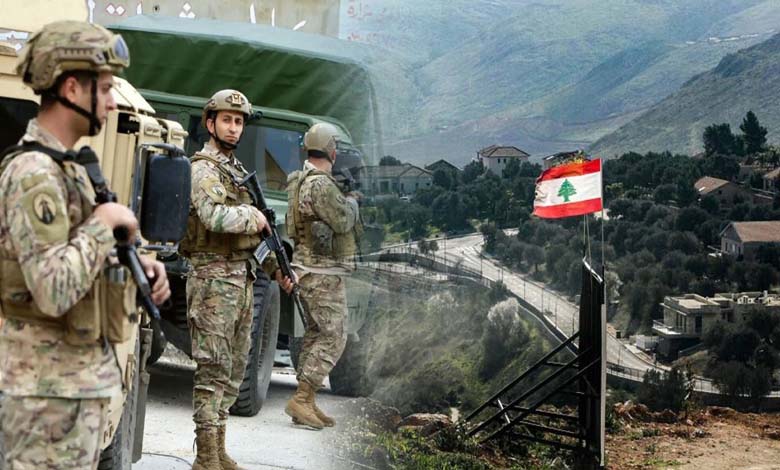
Analyses differ regarding Lebanon’s future scenarios. Some analysts believe that war is unlikely, as it would grant greater legitimacy to Hezbollah by justifying any response it might undertake, while others argue that the possibility of war remains real due to the state’s slow implementation of its commitments to confine weapons to state authority.
-
Israel strikes Hezbollah positions in Lebanon
-
Israel prepares for a new confrontation with Hezbollah, pending Trump’s approval
Lebanon is experiencing a particularly active diplomatic week, marked by intense Arab and international engagement focused on supporting the Lebanese army and strengthening stability in the south of the country, amid the continuation of daily Israeli attacks despite the ceasefire agreement in force since late November 2024.
According to political analysts, this diplomatic activity combines efforts to reinforce the national legitimacy of the Lebanese army with attempts to raise the political and strategic costs of any potential Israeli military action.
-
After the war with Israel, has Hezbollah rebuilt its military arsenal?
-
Iranian insistence on sponsoring Hezbollah tests the limits of Lebanese sovereignty
However, analysts’ views diverge on future scenarios. Some rule out war on the grounds that it would legitimize Hezbollah, others are convinced that war is inevitable because of Lebanon’s slow progress in implementing the monopoly of arms by the state, while a third view considers war possible but not certain.
On Monday, the diplomatic week began in southern Lebanon with a tour by Arab and foreign ambassadors accompanied by Lebanese Army Commander Rodolphe Haykal. It is set to conclude on Friday with the closing of the fifteenth meeting in 2025 of the so-called “mechanism” committee.
-
For the second time in a week… Israel strikes a Hezbollah training camp in Lebanon
-
What Awaits Lebanon if Washington’s Deadline for Hezbollah’s Disarmament Expires?
The “mechanism” committee was established under the ceasefire agreement between Israel and Hezbollah. It is tasked with monitoring its implementation and includes military representatives from Lebanon, France, Israel, the United States, and the United Nations Interim Force in Lebanon (UNIFIL).
Alongside the diplomatic activity within Lebanon, Paris hosted expanded talks on Thursday bringing together French, Saudi, and U.S. officials with the Lebanese army commander. The talks concluded with a “renewed commitment to support the Lebanese army and the government’s plan to disarm non-state actors”, a reference to Hezbollah’s weapons.
-
One year after the end of the war… 669 Israeli strikes in Lebanon and 360 Hezbollah fighters killed
-
Winter fog hides what is most dangerous: Israeli drill amid Hezbollah retaliation fears
In an official briefing following the meeting, Paris announced that France, Saudi Arabia, and the United States would “hold an international conference in February 2026 aimed at supporting the Lebanese army”, without specifying the venue or the exact date.
Within the same diplomatic framework, Egyptian Prime Minister Mostafa Madbouly arrived in Beirut on Thursday and is scheduled to meet on Friday with President Joseph Aoun, Prime Minister Nawaf Salam, and Parliament Speaker Nabih Berri.
The Israeli daily Yedioth Ahronoth reported on Friday that an Israeli-Lebanese-American meeting had been held in the southern Lebanese city of Naqoura to prevent a renewal of war between Israel and Hezbollah. This was the second such meeting within two weeks.
-
Washington bets on drying up Hezbollah’s funding sources to force it to lay down its arms
-
Hezbollah’s knockout strike strategy falters amid Israeli divisions
The newspaper added that senior Israeli officials had intensified their diplomatic efforts to prevent renewed fighting along the northern border with Lebanon, as the U.S.-set deadline for disarming Hezbollah south of the Litani River approaches at the end of the current year.
It reported that Israeli Deputy National Security Adviser Youssef Draznin traveled on Friday to Naqoura to participate in a meeting of the UN-sponsored trilateral monitoring committee aimed at preserving the fragile ceasefire. He was accompanied by Dr. Uri Resnick, another senior National Security Council official who also attended the previous round of talks more than two weeks ago.
-
From drones to smart munitions: how is Hezbollah rearming itself?
-
Hezbollah responds to the November deadline and signals its commitment to keeping its weapons
The paper noted that Israel joined the committee’s discussions after Lebanon agreed to include a civilian representative in talks related to economic and civilian issues, including former Lebanese ambassador to the United States Simon Karam and U.S. envoy to Lebanon Morgan Ortagus.
Political analyst and journalist Ghassan Rifi said that Lebanon is receiving a large number of diplomats and international envoys, but that these visits are not translating into tangible results on the ground, as Israel continues its daily attacks without regard for these diplomatic efforts.
-
From Disarmament to Rearmament… Hezbollah Moves as Israel Loses Patience
-
Israel announces the killing of a Hezbollah commander: the logistics support chief
He believes that the international community is now convinced that Lebanon has done everything required of it, both at the level of the government, which implemented international conditions, and at the level of the Lebanese army, which carried out its assigned tasks within the limits of its capabilities.
He noted that the diplomatic tour organized by the Lebanese army in the south to showcase the measures taken confirmed this reality and left a positive impression
among Arab and foreign ambassadors regarding the army’s actions.
-
Israeli Airstrikes on Lebanon’s Bekaa and North: Hezbollah Infrastructure and Missile Sites Targeted
-
Washington warns of potential Israeli unilateral action if Hezbollah is not disarmed
However, this positive picture remains incomplete, as the main obstacle to the work of the Lebanese government and army, according to Rifi, is Israel, which continues to occupy five points in southern Lebanon, preventing the Lebanese army from deploying there.
He explains that any attempt by the Lebanese army to enter the five hills occupied by Israel during the last war, in addition to areas occupied for decades, would either lead to confrontation with Israeli forces or imply normalization in the absence of confrontation, neither of which is a decision that Lebanon has taken.
Regarding the likelihood of a new war, Rifi rules out Israel launching a conflict at present, arguing that it would grant legitimacy to Hezbollah if it were to respond after its prolonged adherence to the ceasefire.
-
A warning to Hezbollah: Israel’s largest drill on the Lebanese border since October 7
-
After the Gaza Agreement… Receding Justifications and Rising Pressure to Disarm Hezbollah
He also believes that any war would turn global public opinion against Israel, given the widespread conviction that Hezbollah has not violated the ceasefire agreement, that the Lebanese government has met its commitments, and that the army has fulfilled its duties, as acknowledged by diplomats.
For her part, political analyst and journalist Mayssa Abdelrazek believes that Lebanon remains vulnerable to an intensification of Israeli attacks or even a new war, despite its diplomatic approach, particularly following the appointment of Ambassador Simon Karam as head of the Lebanese delegation to the mechanism committee, making him the first non-military official to be entrusted with such a role.
-
Israeli army announces elimination of two Hezbollah commanders
-
Disputes shake Hezbollah’s media apparatus and turn into a power struggle
This appointment followed President Joseph Aoun’s statement in October that “negotiation is unavoidable” with Israel to resolve outstanding issues, a stance criticized by Hezbollah, which described it as a governmental misstep and a contradiction of earlier statements that conditioned the participation of civilians on the cessation of hostilities.
In this context, Abdelrazek notes that the official Lebanese position, as expressed by the president, confirms that negotiation is considered an alternative to war.
She stresses that Lebanon has respected the ceasefire agreement, while Israeli violations have exceeded 10,000 incidents.
-
Millions for Information on a Hezbollah Financier: Who is Ali Qasir, Wanted by Washington?
-
Hezbollah Cell in Syria: Details of the Terrorist Plot and Heavy Weapons Seizure
She adds that Israel justifies its violations by citing Hezbollah’s weapons, despite the Lebanese government’s decision last August to confine arms to state authority and the measures carried out by the Lebanese army, which has completed more than 90 percent of its mission south of the Litani River.
She goes further, arguing that despite these achievements, a new Israeli attack cannot be ruled out under the pretext of targeting Hezbollah’s arsenal.
She also considers that the Egyptian prime minister’s visit to Lebanon on Thursday carries diplomatic messages aimed at de-escalation and preventing further escalation.
-
Hezbollah member injured in Israeli strike on Lebanon
-
Hezbollah and disarmament: cautious approval or a tactic to buy time?
Meanwhile, political analyst and journalist Georges Aaqouri argues that Lebanon is constantly “playing on the edge of the abyss”, noting that it is currently living through a critical phase rather than merely losing time.
He speaks of Hezbollah’s reluctance to fulfill the commitments it made when it supported the presidential inaugural address, the ministerial statement, and the ceasefire agreement.
He points to the party’s insistence on retaining its weapons and openly boasting about rebuilding its arsenal, as well as Iran’s overt support for Hezbollah through public statements and meetings.
-
Lawsuit Filed Against Hezbollah’s Deputy Secretary-General for Threatening Lebanon with Civil War
-
Joseph Aoun Seeks to Avoid Fallout from Hezbollah Disarmament
The writer warns of the risk that Lebanon could be subjected to a major Israeli strike despite the efforts of the army and the Lebanese state, due to the slow pace of disarmament in the face of regional developments, including the fall of the Baathist regime in Syria and the decline of Iranian influence in the region.
He also notes that the diplomatic visits and delegations to Lebanon conveyed clear warning messages that time is not on the country’s side and that there is a real threat from Israel.
He believes that the decisive phase will be linked to the upcoming meeting at the end of the month between Israeli Prime Minister Benjamin Netanyahu and U.S. President Donald Trump, which may determine whether Lebanon is granted a short grace period to make up for delays in addressing Hezbollah’s weapons.
-
Hezbollah threatens civil war in Lebanon and warns of a Karbala-style battle
-
Hezbollah threatens Lebanon with a Karbala-style battle to keep its weapons
He adds that U.S. officials have demanded the dismantling of Hezbollah’s arsenal before the end of the year, but it remains unclear whether Washington will succeed in persuading Israel to grant Lebanon additional time.
Under U.S. and Israeli pressure, the Lebanese government approved on August 5 the decision to confine weapons to state authority, including those held by Hezbollah, before announcing in September its endorsement of the army’s five-phase plan to implement the decision.
No comprehensive deadline was set, although the first phase includes the withdrawal of Hezbollah’s weapons south of the Litani River by the end of the current year.
-
Hezbollah Faces a Silent Collapse: Missing Leadership, Besieged Weapons
-
Beirut Port Explosion Anniversary: Justice Moves Forward Despite Hezbollah’s Obstruction
By contrast, Hezbollah Secretary-General Naim Qassem has stated on several occasions that the party rejects this approach and demands the withdrawal of the Israeli army from all Lebanese territory.
This comes as Israeli media have reported since last week that the Israeli army has completed preparations for a “large-scale attack” against Hezbollah positions if the Lebanese government and army fail to dismantle its weapons by the end of 2025.
-
The Lebanese Government Tightens Financial Pressure on Hezbollah by Banning Dealings with Al-Qard Al-Hassan
-
U.S. Patience Wears Thin as Hezbollah Disarmament Stalls
Israel killed more than 4,000 people and injured around 17,000 others during its offensive against Lebanon, which began in October 2023 and escalated into full-scale war in September 2024, before ending with a ceasefire agreement that entered into force on November 27 of that year.
Israel has also violated the ceasefire agreement more than 4,500 times, resulting in hundreds of deaths and injuries, and continues to occupy five Lebanese hills seized during the last war, in addition to other territories it has occupied for decades.
-
Taëf and Weapons Control: Salam Stands for State Restoration, Hezbollah Holds Its Ground
-
Hezbollah resists internal and external pressure to disarm