Iran after Khamenei: a disoriented regime and a silent struggle over the Supreme Leader
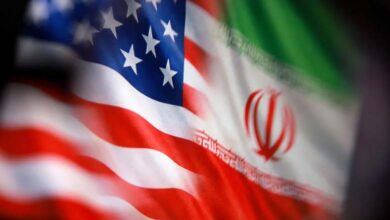
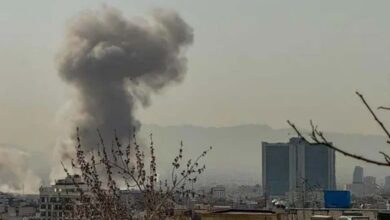
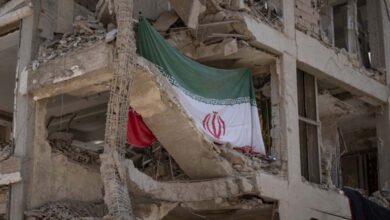
Iran is facing one of the most sensitive moments in the history of its political system, amid growing signs of internal instability following U.S. and Israeli strikes that targeted military sites and key command centers inside the country, according to the American magazine Newsweek.
The strikes resulted in the death of Supreme Leader Ali Khamenei and several senior military and security officials, in what has been described as the most consequential blow to Iran’s power structure in decades. This development has opened the door to an unprecedented leadership vacuum at a time when the country is engaged in a direct military confrontation with the United States and Israel.
-
Trump studies Iran’s future after the war and keeps an eye on Khamenei’s successor
-
Mojtaba Khamenei’s Survival of Assassination Attempt Redraws Iran’s Leadership Map
Tehran in turmoil as Trump issues warnings: the Iran war minute by minute
Analysts believe that the death of Khamenei and several senior military commanders represents an unprecedented blow to the structure of the Iranian regime, which is based on a complex balance between the religious establishment, the Islamic Revolutionary Guard Corps, and political power centers.
While the temporary leadership is attempting to maintain state cohesion while simultaneously managing the war, visible disagreements within the ruling elite suggest that the system is facing a real test of the resilience of its institutions.
-
Did artificial intelligence applications contribute to reaching Khamenei?
-
After Khamenei’s Death, the Houthis in Yemen Face an “Unknown” Fate
As military strikes continue and regional tensions escalate, the selection of a new Supreme Leader could become a decisive moment in determining the future of the Iranian regime—whether the current crisis represents merely a temporary transitional phase or the beginning of deeper transformations in the structure of power in Iran.
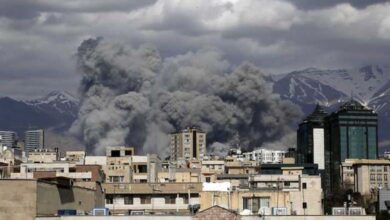
According to Western media reports, the military operation came after months of intensive intelligence tracking of the movements of Iran’s leadership. Sensitive locations in Tehran and major military command centers were targeted, leading to the collapse of part of the chain of command within the military and security institutions.
-
Geopolitical risks unsettle global markets after Khamenei’s death
-
Khamenei’s death: where real power lies in the world
This development has placed the Iranian regime under severe pressure, as the question of selecting a successor to the Supreme Leader has become an urgent matter involving political, religious, and security considerations, particularly as military operations in the region continue.
According to Iran’s constitution, a temporary leadership council assumed the management of the country’s affairs following the death of the Supreme Leader. The council consists of three main figures: Iranian President Massoud Pezeshkian, Judiciary Chief Gholam Hossein Mohseni Ejei, and the cleric Ayatollah Ali Reza Arafi, until a new Supreme Leader is elected by the Assembly of Experts.
-
Months of tracking… how U.S. intelligence reached Khamenei
-
Thirty bombs decided the battle: the final hours in Khamenei’s life
However, this transitional phase is unfolding under intense pressure from the religious establishment and various political factions. Conservative clerics are calling for the rapid selection of a new leader to end the leadership vacuum, while military strikes continue and the regional confrontation expands.
Rare apology sparks controversy
In a notable development, a speech by Iranian President Massoud Pezeshkian sparked widespread debate inside the country after he issued a public apology to neighboring states that had been hit by Iranian missiles during the military response to U.S. and Israeli strikes.
-
Khamenei speaks of a coup attempt and outlines the response to any U.S. strike
-
Khamenei trapped between limited options: painful concessions or regime collapse?
In a televised address, Pezeshkian stated that Iranian armed forces had in some cases acted “independently” due to the absence of leadership following the deaths of senior commanders. He emphasized that Tehran had not targeted neighboring countries but rather U.S. bases and military facilities in the region.
The apology—rare during wartime—was met with strong criticism from the hardline faction in the Iranian parliament. Member of parliament Hamed Rasai described the president’s speech as “weak, unprofessional, and publicly unacceptable,” calling for the swift dissolution of the temporary leadership council and the appointment of a new Supreme Leader to safeguard what he described as “the revolution of Imam Khomeini and the legacy of Khamenei.”
-
Khamenei calls protesters agents and accuses them of trying to appease Trump
-
British newspaper: Khamenei prepared a plan to flee Iran
In an attempt to contain the controversy, Pezeshkian later issued a clarification stating that Iran would not attack any country unless attacks were launched from its territory or its airspace was used to conduct operations against Iran.
An internal struggle over succession
Observers believe that the debate surrounding the Iranian president’s apology reflects deeper divisions within the regime, particularly amid intense discussions about the identity of the next Supreme Leader.
-
Lessons from War: From Khamenei to Kim – A Strategic Gap Shifting the Nuclear Balance
-
Khamenei’s First Appearance Following the Truce with Israel
Estimates suggest that the Assembly of Experts, composed of 88 members, is facing increasing pressure to resolve the succession issue quickly, while several potential candidates are being discussed. Among them is Mojtaba Khamenei, the son of the late Supreme Leader, alongside other prominent clerics within the religious establishment.
In this context, former Iranian minister Abbas Akhoundi warned that the ongoing discussions about succession carry “the smell of a power struggle in wartime,” criticizing what he described as a “misleading and toxic” debate while the country faces serious security challenges.
Meanwhile, reformist cleric Rahmatollah Beigdeli rejected the criticism directed at the temporary leadership council, stating that the constitution does not define a specific time limit for its mandate and that questioning its legitimacy amounts to questioning the regime’s institutions themselves.
-
Iran’s Regime Focused on Finding a Successor to Khamenei
-
Trump Pulls the Trigger Back: Why Did He Reject Israel’s Proposal to Assassinate Khamenei?
A widening regional war
These developments come as the war expands across the region, with Iran and Israel exchanging missile strikes while Tehran targets U.S. military bases in the region as well as sites in Gulf countries hosting American forces.
Military developments have also prompted Israel to issue evacuation orders in certain areas, while several European governments have rushed to send additional military reinforcements to the Middle East in anticipation of a possible expansion of the conflict. At the same time, global markets are preparing for a new wave of instability.
For their part, U.S. officials have stated that the objective of the military operations against Iran is to weaken its nuclear program and military capabilities rather than to bring about regime change in Tehran.
-
Khamenei Responds to Washington Over Uranium Enrichment
-
Khamenei, Iran’s Illness and the Obstacle to Any Agreement with Washington
However, statements by U.S. President Donald Trump sparked controversy. When asked by reporters about the future of governance in Iran, he said that “most of the people we were thinking about are already dead,” and later described Iran’s apology to neighboring countries as evidence of the success of the military operation, which he referred to as an “epic operation of fury.”
A race against time to choose a new Supreme Leader
Amid these developments, attention is now focused on the Assembly of Experts, which is considering the selection of a new Supreme Leader.
Iranian media reported that the assembly may convene soon to make a decisive decision. One of its members, Ayatollah Hossein Mozafari, expressed “strong hope” that the new leader would be chosen within a relatively short period.
-
Khamenei Urges Strengthening Military Power to Curb Trump’s Threats
-
Iran Reshuffles Its Strategy by Appointing Naim Qassem as Khamenei’s Representative in Lebanon