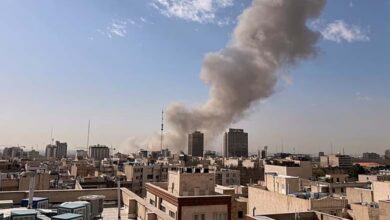
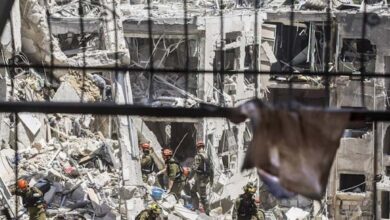
Iran between absence and presence: no proof of life for Mojtaba Khamenei
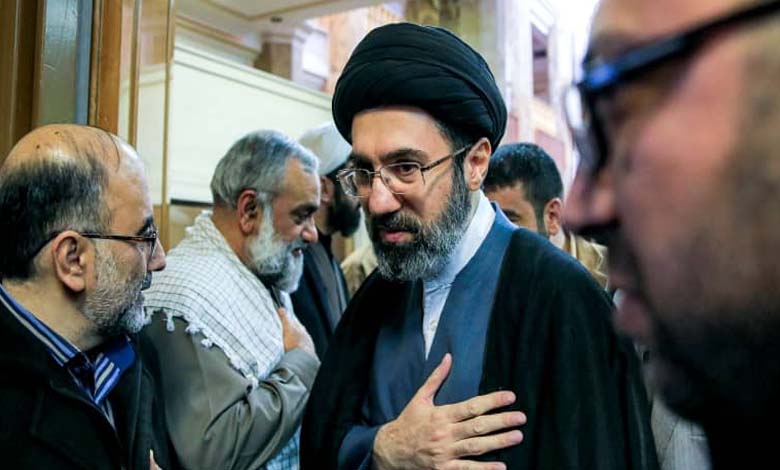
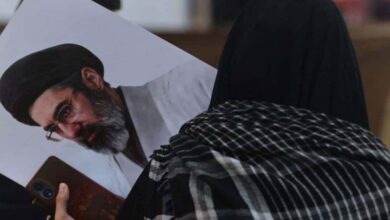
He has not appeared publicly since being appointed as Iran’s new Supreme Leader two weeks ago, nor has any “proof of life” been provided—an absence that opens the door to speculation and questions.
-
Mojtaba Khamenei’s Survival of Assassination Attempt Redraws Iran’s Leadership Map
-
Who is Mojtaba Khamenei, before whom Iranian leaders bow?
Mojtaba Khamenei, son of the slain Iranian Supreme Leader, assumed his position amid a war that claimed his father’s life, at an exceptionally complex moment for a country suffering significant losses within its top leadership.
Yet the man who was expected to take center stage amid the country’s critical developments has once again retreated into the shadows. It remains unclear whether this disappearance is a deliberate strategic move within an Iranian tactic or a forced absence due to his death or removal.
In any case, this strategy of absence carries considerable risks, according to CNN, which noted that it could prolong the ongoing war that began on February 28.
-
Iran war enters day 21: bombardment and leadership bleeding
-
The people are stronger than our leaders: Iranian president’s son reveals secrets of a strategy-less war
No proof of life
A new message broadcast Friday evening by Iranian state television, attributed to the new Supreme Leader Mojtaba Khamenei, was not accompanied by any video or audio recording.
Khamenei has not appeared publicly since his appointment on March 8—two weeks ago—fueling multiple hypotheses.
Some observers suggest that he may have been killed in one of the ongoing Israeli-American strikes on Iran, a development that could have occurred incidentally, possibly explaining the absence of any official announcement from Washington or Tel Aviv.
-
Iran proposes a new framework to regulate navigation in the Strait of Hormuz after the war
-
Iran officially calls on Gulf states to close U.S. bases
From the Iranian side, the calculations of the current war and the heavy losses sustained by the regime in its leadership and capabilities make it virtually impossible to publicly acknowledge such a blow.
This hypothesis is further reinforced by internal struggles within the Islamic Revolutionary Guard Corps, divided over the figure best suited to assume the position of Supreme Leader, prompting secrecy regarding any developments—especially when it concerns the death of a figure aligned with their interests and capable of ensuring their continued control over decision-making.
-
The Reality of the Treatment of Iran’s New Supreme Leader in One of Putin’s Complexes in Russia
-
Tehran’s arms: suicide attacks or a show of force?
A leadership vacuum?
Many analysts point to a troubling scenario for Iran: a potential vacuum at the top of power, which could intensify internal conflicts among hardline factions that have dominated the country since the era of the previous Supreme Leader.
This view is fueled by the continued absence of any proof of life from the new Leader, who, on two occasions, has provided no tangible evidence that he remains alive, according to CNN.
Following the reported killing of Iran’s security chief Ali Larijani in an Israeli airstrike, indications of a leadership vacuum in Iran have become more pronounced, raising concerns about increased rivalry among hardline factions seeking to assert dominance.
-
Washington offers a large reward for information about Khamenei
-
Trump, CNN and the speech of Iran’s new Supreme Leader: four minutes that reignite the war
Last Tuesday evening, Israeli Defense Minister Israel Katz stated that Ali Larijani, Secretary of Iran’s Supreme National Security Council, had been killed in an airstrike on Tehran.
At the time, Katz and the Israeli military also announced the death of Basij forces commander Gholam Reza Soleimani. Tehran neither confirmed nor denied these reports, maintaining a silence laden with implications.
Although current Foreign Minister Abbas Araghchi is viewed as the natural successor to Larijani on the diplomatic front, experts argue that he occupies a structurally weaker position.
-
War-weary Iran: why did it choose the Strait of Hormuz as the arena for retaliation?
-
First message from Iran’s new Supreme Leader: a hardline speech and an unanswered question
This weakness is attributed to his lack of the institutional authority of the Supreme National Security Council, ideological capital, and—most importantly—the personal trust that the former Supreme Leader had placed in Larijani.
Thus, with Mojtaba remaining absent—whether alive or not—a vacuum appears to be emerging at the highest levels of leadership, particularly regarding prospects for ending the war.
The new Supreme Leader has adopted an uncompromising hardline approach, with public statements framing the conflict as a final, existential confrontation, leaving little room for political settlement.
The result is an escalation-driven leadership lacking effective institutional mechanisms. More concerning for Tehran, the regime now appears unable to restrain itself, unify its positions, or control its various factions, meaning that even if negotiations were to be pursued, it would struggle to present a credible counterpart.
-
U.S. intelligence rules out the collapse of the Iranian regime
-
In the face and foot: new details about the injury of Iran’s new Supreme Leader