Iran tightens its grip on the streets and escalates nighttime bombardments on multiple fronts
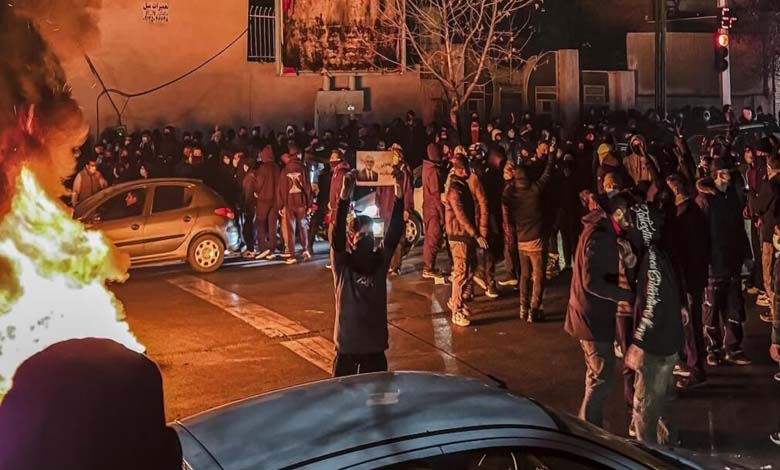
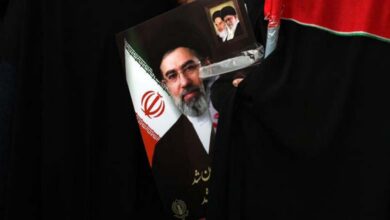
The Iranian police chief warned that anyone taking to the streets at the call of the “enemies of the country” will be treated as an enemy, stressing that security forces are on full alert.
Military confrontations between the United States and Israel on one side and Iran on the other have continued across the Middle East as the war entered its twelfth day, amid growing fears of a wider conflict and its potential impact on energy markets and regional stability.
While the opposing sides continue to exchange airstrikes and missile attacks, Iranian authorities have tightened their internal security grip to prevent any anti-government protests.
In recent hours, a new round of attacks targeted sites in Israel, Lebanon, and several Gulf countries after a day described as one of the most intense bombardment periods since the war began. The escalation also caused major disruptions to maritime traffic through the Strait of Hormuz, one of the world’s most important routes for transporting oil, raising concerns about the continuity of global energy supplies.
Despite a sharp surge in oil prices earlier in the week, global markets later showed signs of relative calm as crude prices declined and stock markets recovered, driven by investor expectations that the United States may seek to end the war in the near future. This optimism was further supported by reports that the International Energy Agency is considering the largest release of strategic oil reserves in its history in an effort to calm markets and stabilize prices.
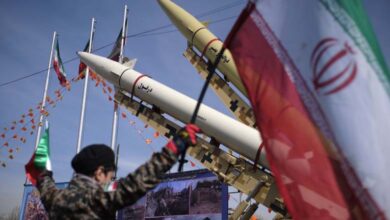
However, Iran’s Revolutionary Guard has pledged to prevent oil shipments from leaving the Gulf if US and Israeli attacks continue, raising the prospect of further turbulence in global energy markets. The Revolutionary Guard announced that it had launched missiles at US-operated military bases in the region, including Al-Udeid base in Qatar and Harir base in Iraqi Kurdistan. It also reported drone attacks targeting gatherings of US forces at Al-Dhafra Air Base in the United Arab Emirates and the Juffair naval base in Bahrain.
Reports also indicated that a drone targeted a US diplomatic facility in Iraq without causing casualties, while the UK Maritime Trade Operations agency received a report of an incident off the coast of the UAE after a vessel sustained damage suspected to have been caused by an unidentified projectile.
In Israel, millions of residents were repeatedly forced to seek shelter overnight and into the morning hours after Iran launched missiles toward Israeli territory. Air raid sirens sounded across several regions while air defense systems intercepted incoming projectiles, illustrating Tehran’s continuing ability to conduct long-range strikes despite nearly two weeks of war.
The Iranian strikes coincided with new Israeli raids on Beirut targeting positions belonging to the Iran-backed Hezbollah group, which in turn launched rockets toward Israel in solidarity with Tehran.
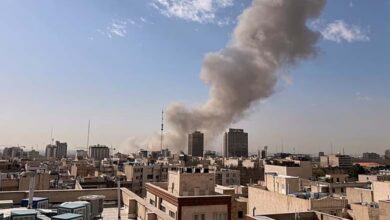
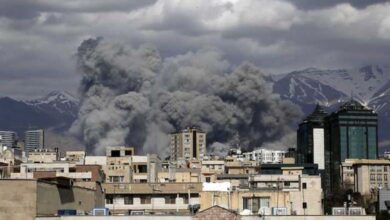
Inside Iran, residents of Tehran described the latest night of bombardment as the most intense since the war began, with some reporting continuous explosions across the city. Despite widespread anxiety among the population, there have so far been no signs of large-scale protests, while authorities have tightened security measures in anticipation of any opposition movements.
The Iranian police chief warned that anyone taking to the streets at the call of the “enemies of the country” would be treated as an enemy, confirming that security forces are in a state of full readiness. The Ministry of Intelligence also announced the arrest of dozens of individuals, including a foreign national, on charges of espionage for hostile entities.
Meanwhile, the White House renewed its threats to respond forcefully to any Iranian attempt to disrupt energy flows through the Strait of Hormuz. The US Central Command announced that it had destroyed several Iranian vessels intended for laying naval mines near the strait.
Several Gulf countries also reported early Wednesday that they had been targeted by missile and drone attacks, marking another escalation as the US-Israeli war against Iran entered its twelfth day, amid heightened security alerts across the region.
In Saudi Arabia, the Ministry of Defense announced that it had intercepted and destroyed six ballistic missiles launched toward Prince Sultan Air Base, in addition to another missile aimed at the Eastern Province. The ministry also confirmed the interception of twenty-two drones in various regions including Hafr Al-Batin, Al-Kharj governorate, and the Eastern Province. Other drones were intercepted over the Rub’ al-Khali desert while heading toward the Shaybah oil field, one of the kingdom’s most significant oil fields.
In successive statements, the ministry explained that air defense systems successfully dealt with the threats without causing major damage to targeted sites, while Saudi forces remain on high alert in anticipation of potential further attacks.
In the United Arab Emirates, the Ministry of Defense announced that it had responded to missile and drone attacks originating from Iran. In a statement, it said that the sounds heard in different parts of the country resulted from interception operations carried out by air defense systems against ballistic missiles, as well as fighter aircraft operations that neutralized drones and cruise-type aerial threats. The ministry emphasized that these defensive actions are part of the country’s system for protecting its airspace and vital infrastructure.
In Kuwait, the National Guard announced that eight drones had been shot down within the areas secured by its task forces. The Kuwait News Agency quoted the official spokesperson of the National Guard, Brigadier Jadaan Fadel Jadaan, as saying that the interceptions were part of ongoing efforts to strengthen security, protect vital facilities, and counter any potential threats amid the regional escalation.
In Bahrain, the Ministry of Interior announced the activation of warning sirens, urging citizens and residents to remain calm and proceed to the nearest safe location while following official news channels. This measure reflects the heightened security concerns as attacks targeting countries in the region continue.
These developments come as Iran continues to launch attacks against several Arab countries since February 28, despite Iranian President Massoud Pezeshkian announcing that attacks against neighboring states would cease unless their territories were used to launch operations against Iran. According to official data, Iranian strikes have targeted sites in seven Arab countries using thousands of missiles and drones.
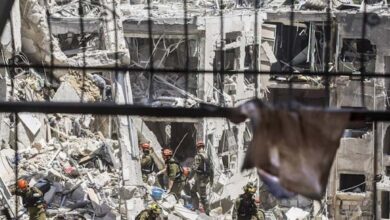
So far, the conflict has resulted in significant human and material losses. Iran has reported the deaths of more than 1,300 civilians and the destruction of thousands of homes and facilities, while Iranian strikes on Israel have also caused casualties and injuries. Several US soldiers have been killed and dozens wounded in the reciprocal attacks, as fears continue to grow that the war could expand into a broader regional confrontation.