Iran war and munitions: $5.6 billion spent in the first two days, laser is the solution
The Pentagon consumed munitions worth an estimated $5.6 billion during the first two days of its military offensive against Iran, raising growing concerns in the United States.
Three U.S. officials confirmed the figure to The Washington Post, noting that it highlights increasing concern among some members of Congress regarding the speed at which American forces have used limited supplies of the most advanced weapons.
-
Iran war and munitions: $5.6 billion spent in the first two days, laser is the solution
-
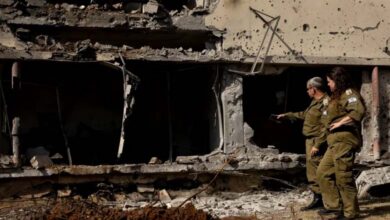
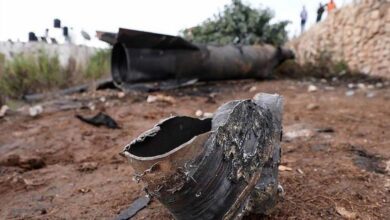
Two dead and one injured after an Iranian cluster-warhead missile falls in central Israel
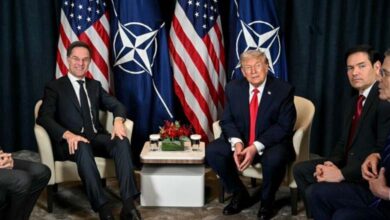
According to the officials, the administration of President Donald Trump is expected to submit an additional defense budget request to Congress later this week. The proposal could amount to tens of billions of dollars to help sustain the ongoing military campaign.
However, the request is also expected to face opposition from several Democrats whose efforts to discourage the administration from carrying out further military actions against Iran have so far failed.
In response to questions from The Washington Post regarding the status of U.S. weapons stockpiles, Sean Parnell, the Pentagon’s chief spokesperson, issued a statement saying that the Department of Defense has “everything it needs to conduct any mission at the time and place of the president’s choosing and on whatever timeline he decides.”
-
Russia gains economic and geopolitical advantages from the war against Iran
-
Intense Iranian attacks on Gulf countries in the early hours of dawn
The duration of the war with Iran remains uncertain. Last week, President Donald Trump said the operation could last more than a month, but on Monday he told CBS News that it was “almost complete,” pointing to the significant military losses suffered by Iran.
Defense Secretary Pete Hegseth and Chairman of the Joint Chiefs of Staff General Dan Caine told reporters last week that the campaign is gradually shifting away from heavy reliance on precision-guided munitions. Instead, it will increasingly rely on more abundant stocks of laser-guided bombs after achieving air superiority over Iran.
Officials said the $5.6 billion figure illustrates how costly the strikes were before that transition toward laser-guided systems began. They did not specify the exact number or types of munitions used during the early days of the war.
-
Destination Iran: the United States withdraws thousands of smart bombs from South Korea
-
Iran after Khamenei: a disoriented regime and a silent struggle over the Supreme Leader
The Washington Post previously reported that the U.S. military had launched hundreds of precision weapons since the start of the war on February 28, including advanced interceptor missiles for air defense and Tomahawk cruise missiles.
The U.S. Central Command, which oversees military operations throughout the Middle East, stated that more than 5,000 targets in Iran had been struck using more than 2,000 munitions.
-
Operation behind enemy lines: a U.S. plan to take control of Iran’s nuclear material
-
Aircraft from the Vietnam War era: Iran’s air force as a strategic weakness
Mark Cancian, a defense analyst who closely monitors U.S. weapons stockpiles at the Center for Strategic and International Studies, said that shifting away from long-range munitions would significantly reduce the cost of each strike, lowering it from millions of dollars per shot to less than $100,000 in some cases.
As stockpiles are depleted, U.S. armed forces are also redirecting assets from other regions of the world, including the Indo-Pacific. Lawmakers have long warned that any potential conflict between the United States and China could be complicated by the Pentagon’s limited supply of advanced weapons.
-
Between the palace and the hawks in Iran: a battle of attrition and power
-
The sixth attack since midnight: Israel detects and intercepts an Iranian missile attack