Iran war: the U.S. bet on the Kurds carries significant risks
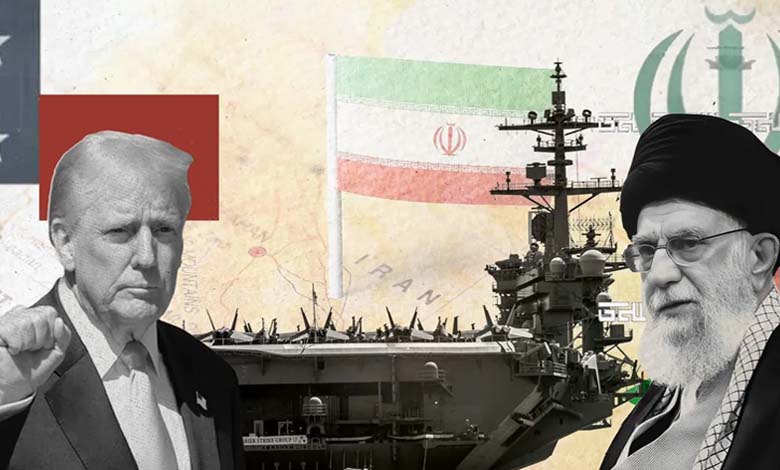
The idea of exploiting tensions among the various ethnic components within Iran in order to overthrow the current regime—particularly through the use of the Kurdish card—has emerged as one of the options considered by the United States and Israel. However, in the long term, this strategy, which may appear attractive to military planners, could prove highly risky.
-
The Iran War in the “MAGA” Balance: Supporters Outnumber Opponents
-
After its involvement in the Iran war, Lebanese calls grow to ban Hezbollah
Unlike some of its neighboring countries such as Afghanistan, Pakistan, and Iraq, Iran is not exposed to the same level of ethnic or religious fragmentation, despite evident dissatisfaction with the ruling Shiite clerical establishment, according to Agence France-Presse.
Nevertheless, since the death of Supreme Leader Ali Khamenei on Saturday following U.S. and Israeli strikes, Tehran has carried out bombardments against Iranian Kurdish armed groups stationed in a mountainous region of northern Iraq near the Iranian border. This area has long served as a refuge for factions opposed to Tehran.
-
Iran Warns Trump Against Intervention and Draws the Red Line
-
For the first time since the end of the Iran war – A Houthi missile triggers alarms in Israel
A Kurdish official reported that a fighter from one of these armed groups was killed on Wednesday in one of the camps.
American media outlets have also reported that the United States is considering arming Kurdish militias in an effort to ignite an uprising against the authorities in Tehran. However, White House spokesperson Karoline Leavitt described reports of such a plan as “completely unfounded.” She nevertheless confirmed that the U.S. president had “spoken with Kurdish leaders” regarding the base used by the United States in northern Iraq.
-
Israel-Iran War Enters Second Week: Firepower Overtakes Dialogue
-
Iran Warns Atomic Energy Agency Against Issuing a Resolution Against Its Nuclear Program
An armed presence on the ground
Mohammad Saleh, a researcher at the Foreign Policy Research Institute in the United States, explains that Kurdish fighters described by Tehran as “terrorists” are viewed with a certain degree of admiration in Washington because they represent “the most organized segment of the broader Iranian opposition movement.”
Meanwhile, Reza Pahlavi, who resides in the United States, enjoys a degree of recognition in Washington due to his name, as the son of the former Shah of Iran who was overthrown during the 1979 revolution. However, he does not possess meaningful armed support within Iranian territory.
-
Iran warns the United States of the consequences of forming a naval alliance to thwart Houthi attacks
-
Could the confrontation between Iran and the United States turn into a war of attrition benefiting China and Russia?
According to Saleh, “the direction that operations in Iran are taking indicates that the United States and Israel effectively need an armed presence on the ground, since they do not intend to deploy their own special forces.”
For his part, Stefano Ritondale, an official at the intelligence analysis firm Artorias, believes that Kurdish fighters could play a role similar, to some extent, to that played by the Northern Alliance against the Taliban in Afghanistan in 2001, by establishing a zone from which U.S. special forces could launch their operations.
-
NATO Defenses Intercept Ballistic Missile Launched from Iran Toward Turkey
-
War Objectives in Iran Portend Rift Between Trump and Netanyahu
He adds that “what is striking in the thinking of the Trump administration is the idea of using the Kurds as an armed opposition to weaken the ruling authority sufficiently to create a chain reaction that would encourage people to return to the streets and protest,” following weeks of bloody repression of demonstrations over rising living costs.
Kurds are spread across Turkey, Iraq, Syria, and Iran and do not possess an independent state. They have been allies of the United States for many years, although Washington’s relationships with the various Kurdish groups vary significantly.
-
The Map of the Day After the War… Scenarios of Governance and Control in Iran
-
The Major Wave Has Not Yet Begun… Latest Developments in the War in Iran
American support for Kurdish forces in Iraq and Syria enabled them to achieve a degree of autonomy. However, Washington has recently abandoned the Syrian faction that had helped it fight the Islamic State terrorist organization.
Tensions between Iran’s Kurds, who represent about 9 percent of the population, and the central authorities in Tehran have been less pronounced than those between Kurdish populations in Iraq and Turkey and the governments of those countries.
-
Interceptor missiles: an American dilemma troubling the Pentagon amid the war on Iran
-
The end of the war with Iran: three scenarios between collapse and negotiation
Azeris constitute the largest minority in Iran. This ethnic group of Turkic origin, concentrated in the northwest near Azerbaijan, is deeply integrated into Iranian society. Supreme Leader Ali Khamenei himself was of Azeri origin.
Other minorities include Arabs, Turkmen, and Baluch people. The latter are also present in neighboring Pakistan, where they are involved in a separatist insurgency.
-
A Major Strike Force: More Than a Dozen U.S. Warships Participate in the War on Iran
-
The War on Iran: One Operation, Two Names
A “red line”
However, observers warn of the risks involved in relying on ethnic groups in Iran, as such a strategy could trigger internal conflicts, potentially including tensions between Kurdish groups and Reza Pahlavi.
A few days before the start of the U.S.–Israeli military operation, five Iranian Kurdish groups based in Iraq announced the formation of a political alliance aimed at overthrowing the regime and securing the Kurdish right to self-determination.
-
Five Defensive Layers: How Iran Is Preparing for a Potential War
-
Axios: Trump moves closer to a major war with Iran
Reza Pahlavi subsequently accused these factions of threatening national unity, stressing that “Iran’s territorial integrity is a red line.”
However, the representative in the United States of one of these factions, the Democratic Party of Iranian Kurdistan (PDKI), maintains that his movement seeks to transform Iran into a federal state.
Arash Saleh stated: “We consider ourselves an Iranian force committed to preserving the country’s territorial integrity (…) but we believe that the best way to preserve its strength is to create mechanisms that allow all Iranians to genuinely feel that they are part of this country.”
-
Has the hour of war struck? Trump announces another war fleet heading toward Iran
-
After Trump’s threats, Iran affirms readiness for war and dialogue